
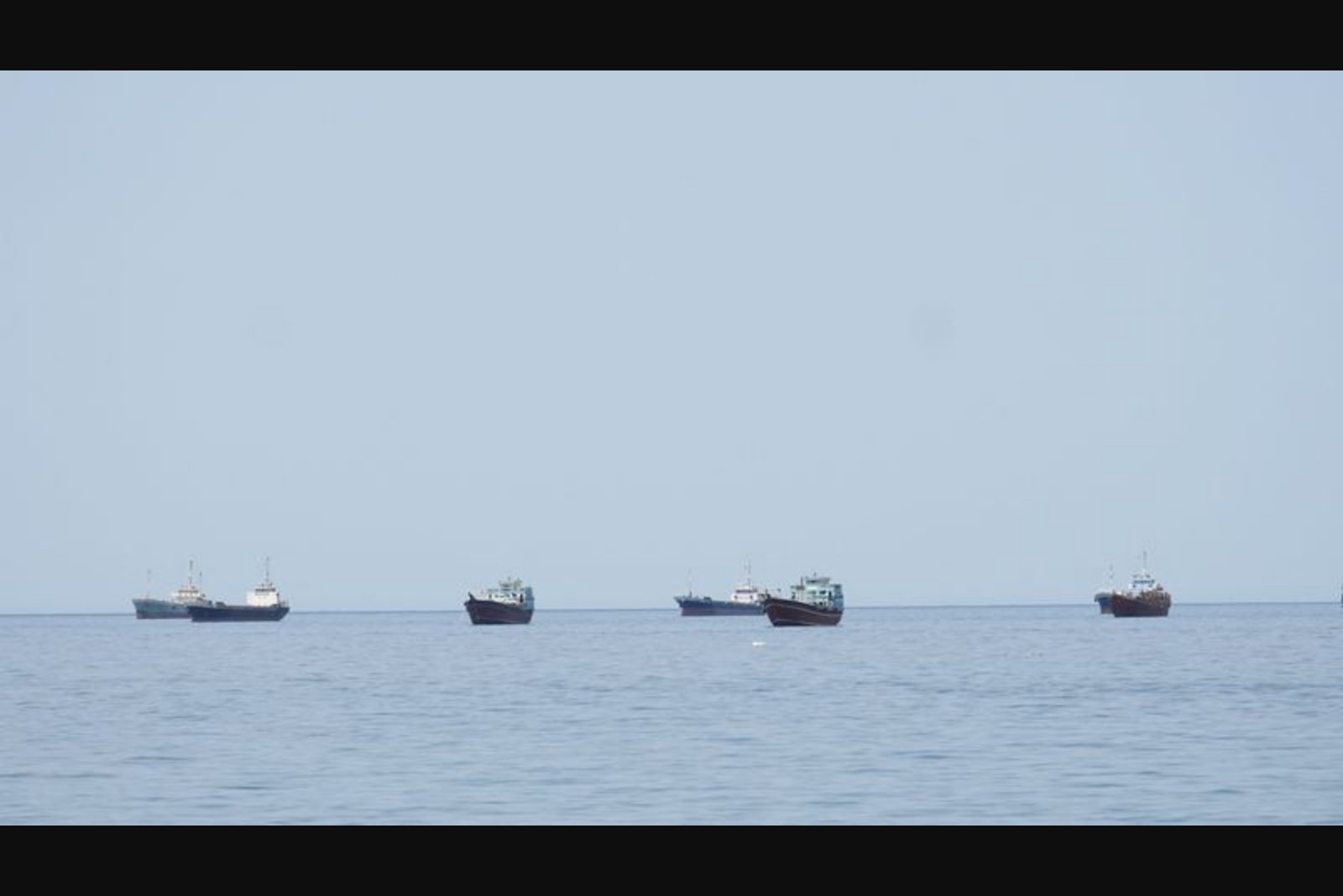
Ankit Yadav, a seaman in his early 30s, has been confined to a small boat at an inland Iranian port for roughly two and a half weeks, sharing meagre rations with three fellow crew members. The vessel was transporting steel and operating on routes between Iran, Kuwait and Oman when fighting in Iran interrupted normal operations and left him unable to secure passage home.
Yadav said the crew could have departed the area if their ship had been granted permission to sail to Oman, followed by repatriation to India. That option was blocked, he said, because the U.S. Navy’s blockade is preventing vessels from transiting the area. The shipping firm that employs him has declined to sign off on their leave, he added, citing the increased cost of airline tickets that the company does not want to cover, while the crew cannot afford to purchase their own return travel.
"The shipping company I work for is not ready to give us the sign-off because they do not want to pay higher air ticket prices, and we cannot afford to buy them on our own. The only way out is the government’s help," Yadav said by phone.
Another Indian seafarer, Salman Siddiqui, is also stuck at an Iranian port aboard a Comoros-flagged cargo ship that had been bound for Oman from Iran. His vessel is currently harboured at Khorramshahr.
"The only thing we do here is plan how to spend the night and pray to God that we do not get hit during an attack," Siddiqui said by phone from the ship. He described relief when a ceasefire reduced the frequency of explosions, saying, "It is a kind of relief that a ceasefire is in place and we do not hear the same number of explosions like we used to see and hear earlier."
Security concerns have hardened among mariners operating in the Gulf. India supplies a substantial portion of the global seafaring workforce - ranking among the world’s top three suppliers with more than 300,000 personnel - and incidents in the region have made many reluctant to return to sea. Siddiqui reported hearing more than 100 explosions and described the fear that comes with watching projectiles strike dangerously close to one’s vessel. "We have heard more than 100 explosions. It is scary when you see projectiles flying and exploding very near your vessel," he said.
Not all stranded crew have remained in port indefinitely. Surindra Kumar Chaurasia was among those who managed to return to India after being held near Sharjah port along with 20 other crewmembers while awaiting approval to load urea. He recounted being stranded in the Persian Gulf for about four days until his shipping company secured a negotiated safe passage through talks with Iranian authorities.
Chaurasia described the chaos the crew endured while stuck: drones attacking ships, warning messages broadcast by the Islamic Revolutionary Guard Corps on VHF radio, fighter jets in the vicinity and other visible signs of active hostilities. According to him, his captain received routing instructions from the IRGC and the vessel hugged the coasts of Iran and Oman because sea mines made other routes unsafe.
At the government level, India’s shipping ministry has organised the return of about 2,680 Indian seafarers since the conflict began. The fighting has already resulted in casualties: three Indian sailors have died as a consequence of the ongoing hostilities. Separately, on April 18 two Indian-flagged vessels were fired upon by the Islamic Revolutionary Guard Corps while attempting to transit the Strait of Hormuz.
The combined effects of naval blockades, attacks on vessels and companies refusing to authorize crew leave have left many mariners in a precarious position: confined to ships or ports with limited provisions, facing repeated explosions and dependent on government intervention or company decisions to secure a way home. For those still aboard vessels in and around the Strait of Hormuz, daily life has become an exercise in risk management and endurance as the wider disruption to one of the world’s busiest shipping routes continues to ripple through maritime operations.
Related operational details:
- Many crew members are stranded at Iranian ports or aboard ships near the Strait of Hormuz.
- Shipping firms have at times declined to approve sign-off for crew because of higher air ticket costs to repatriate them.
- India’s shipping ministry has repatriated roughly 2,680 Indian seafarers since the conflict began; three Indian sailors have died.