
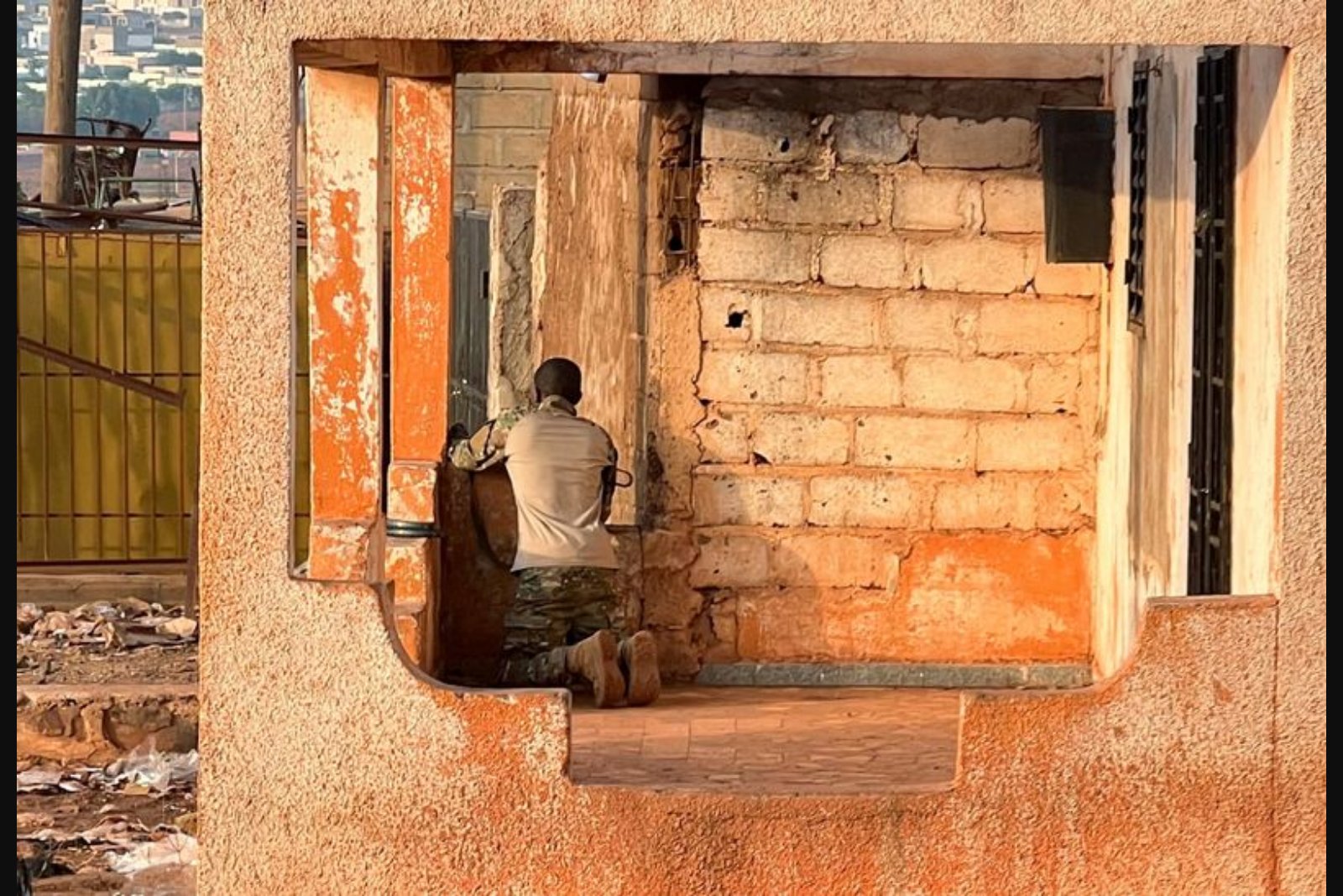
Armed groups launched simultaneous strikes against multiple military positions across Mali on Saturday in what government officials described as one of the most extensive insurgent operations in recent years. The attacks hit sites in and near the capital, Bamako, as well as towns further north in the gold-producing country.
Mali’s military reported that it had repelled the assault and killed "several hundred" attackers. It said a large-scale sweep operation was under way in Bamako, the nearby garrison town of Kati and other areas.
Jama’at Nusrat al-Islam wal-Muslimin (JNIM), an organisation linked to al Qaeda, released a statement published by SITE Intelligence Group claiming responsibility for attacks in Kati, at the Bamako airport and in localities further to the north, including Mopti, Sevare and Gao. The statement also said the city of Kidal had been "captured" in a coordinated operation with the Azawad Liberation Front (FLA), a Tuareg-led rebel movement.
FLA spokesperson Mohamed Elmaouloud Ramadane posted on social media earlier that his forces had taken control of positions in Gao and one of two military camps in Kidal. Reuters could not independently verify the assertions made by JNIM and the FLA.
Observers described the scale and coordination of the strikes as unusually large. "This looks like the biggest coordinated attack for years," said Ulf Laessing, head of the Sahel programme at Germany’s Konrad Adenauer Foundation.
Airport closure and embassy warnings
Authorities closed the airport, and flights were turned back or cancelled. The U.S. embassy advised U.S. citizens to shelter in place, while British authorities recommended against travel to Mali. South of Bamako, passengers attempting to reach the airport encountered intense gunfire nearby and helicopters overhead, one traveller reported.
Two explosions and sustained gunfire were heard shortly before 6 a.m. close to the military’s main base in Kati, north of Bamako. Shots were still reported there more than four hours later, according to a Reuters witness and two residents. Two witnesses said the house of Mali’s Defence Minister Sadio Camara in Kati was destroyed during the attack.
In the central town of Sevare, a witness said shooting began at 5 a.m. and that gunfire came from all directions. In Gao, a major northern military hub, a resident reported hearing a loud explosion and firefights between soldiers and insurgents at about 12 p.m., even though the army had said shortly after 11 a.m. that the situation was under control. By evening an uneasy calm prevailed in Gao, where the governor imposed an overnight curfew.
Target selection and political context
Security analysts noted the significance of the locations chosen for the operation. Heni Nsaibia, senior West Africa analyst at the Armed Conflict Location & Event Data Project, said the targeting was striking because Kati and Bamako sit "at the heart of the regime," and Kidal - the site of a symbolic military victory in 2023 - has been central to the government’s narrative of "regaining territorial control."
The attacks mark a potential escalation in an insurgency that began in 2012. The militant group JNIM previously attacked a gendarmerie training school near Bamako airport in September 2024, killing about 70 people, and a year later announced a blockade on fuel imports.
Mali is also contending with a long-standing Tuareg-led rebellion in the north. The current administration, led by Assimi Goita, assumed power after coups in 2020 and 2021 and pledged to restore security, a goal it has struggled to achieve. The government has relied on Russian mercenaries for support while initially spurning cooperation with Western partners, though it has recently moved to pursue closer ties with Washington.
In a statement reported by SITE, JNIM said it had not targeted the Malian military’s Russian partners and expressed a desire to build a "balanced and effective future relationship." Separately, Mali’s foreign minister told Reuters on Monday that neighbouring states and foreign powers were supporting terrorist groups, but declined to identify which countries were involved.
Current situation and outlook
At the time the army reported control of the situation shortly after 11 a.m., pockets of violence were still observed in northern towns. Authorities imposed curfews and carried out sweep operations in affected areas. The scale and simultaneity of the strikes underline the persistent security challenges the government faces across both southern and northern regions of the country.
Many of the claims by militant groups remain unverified, and the full extent of material damage, casualties and territorial changes had not been independently confirmed as of the latest reports.
Summary
Coordinated attacks struck military positions in and around Bamako and across northern Mali. The army said it had repelled the assault and killed "several hundred" attackers, while JNIM and the FLA claimed responsibility for strikes that included Kati, the Bamako airport, Mopti, Sevare, Gao and Kidal. Observers called the operation unusually large, flights were cancelled and curfews imposed as authorities conducted sweep operations. Independent verification of militant claims was not available.