
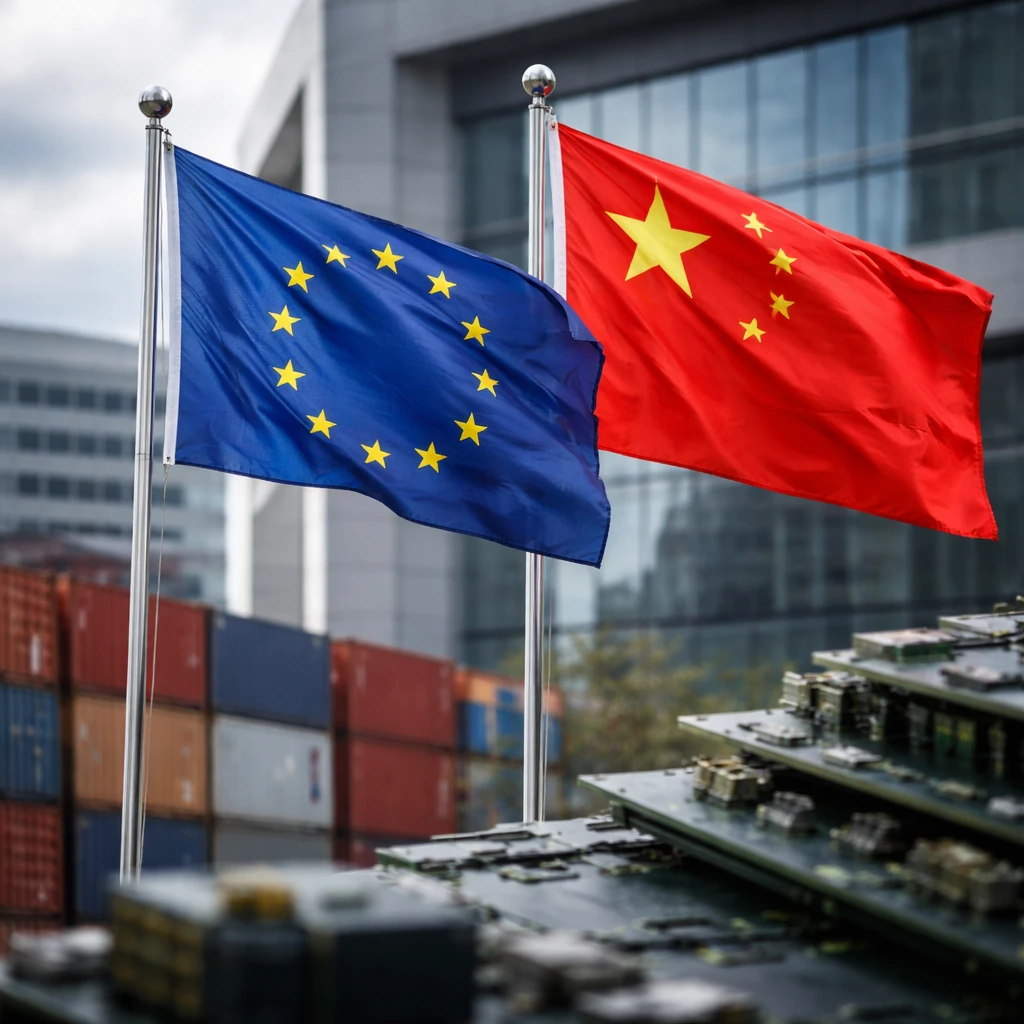
China's commerce ministry on Saturday issued a formal protest against the European Union's decision to include Chinese entities in its 20th package of sanctions aimed at Russia, calling for those companies to be removed from the list immediately.
The EU measures at the center of the dispute are described as targeting suppliers from third countries that provide critical high-tech components. The bloc singled out firms based in China that it alleges supplied dual-use goods or weapons systems that support Russia's military-industrial sector.
In an official statement, the ministry said the action ran counter to the "spirit of the consensus" reached between Chinese and EU leaders and said it undermined mutual trust and the stability of bilateral relations.
The ministry warned it would take "necessary measures" to safeguard Chinese firms and added that "all consequences will be borne by the EU side."
The EU package expands its list of entities considered to be providing direct or indirect support to Russia's military industrial complex or engaged in sanctions circumvention by 60 names. According to the announcement, 32 of these entities are established in Russia while 28 are located in third countries, specifically China - including Hong Kong - as well as Türkiye, the United Arab Emirates and Thailand.
Officials did not provide further detail in the statement about what specific actions Beijing might take in response or the timing of any such measures. The ministry's language, however, makes clear that it regards the move as damaging to bilateral trust and has signaled its intent to defend the interests of Chinese companies named in the package.
The dispute highlights the tensions that can arise when sanctions policies extend beyond the borders of the primary target country to include foreign-based suppliers and intermediaries. The affected companies span categories described by the EU as providers of high-technology components and, in some cases, items classified as dual-use or relevant to weapons systems.
Beyond the immediate diplomatic protest, the announcement leaves unanswered questions about how trade relations and commercial cooperation between China and the EU will evolve in the near term, and what concrete steps either side may take as the situation develops.