
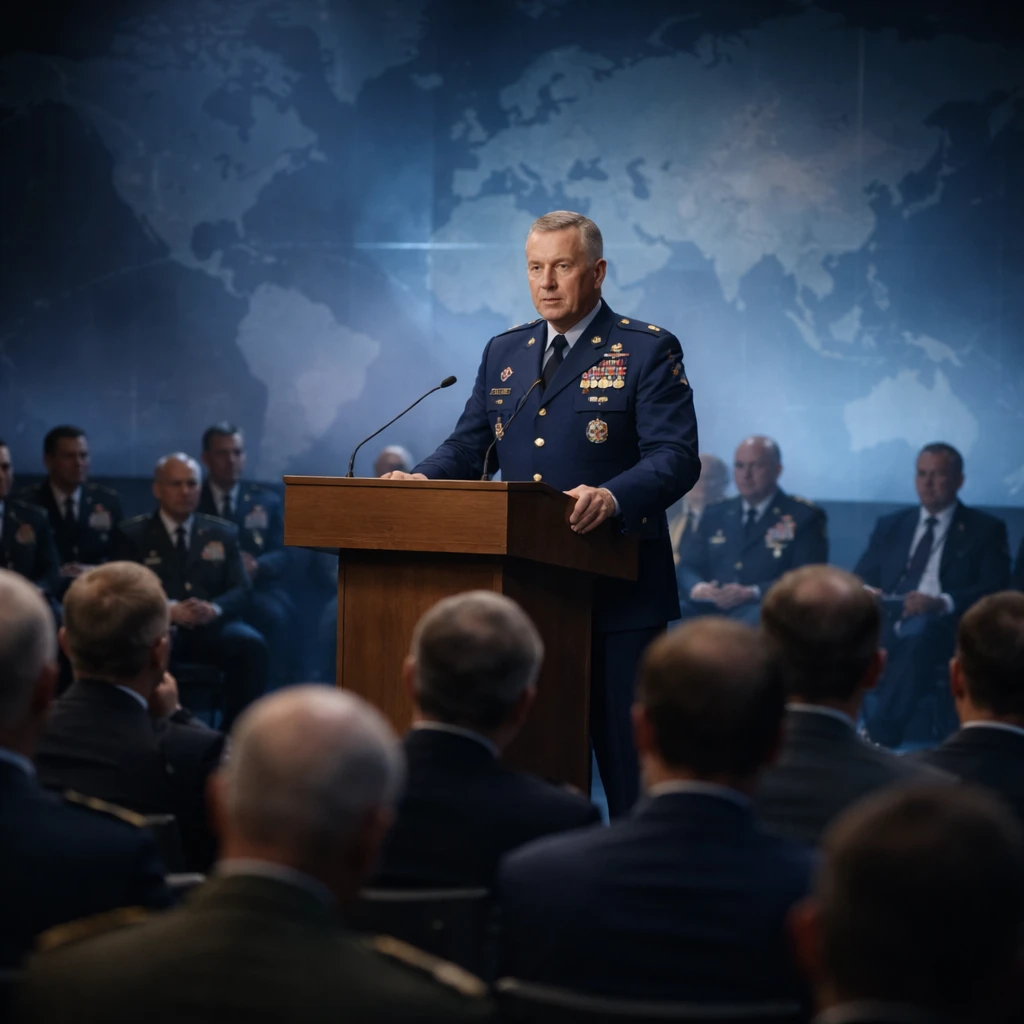
NATO’s foremost military leader delivered a stark warning at the Warsaw Security Forum, saying his forces would obliterate "anything and everything" that supports an assault if any adversary was "foolish enough" to attack alliance territory.
U.S. Air Force General Alexus Grynkewich framed NATO as a defensive coalition while outlining a three-pronged operational approach intended to render an attack "utterly futile." He said the alliance would first block, then blunt, and finally break enemy forces, underlining that response measures would extend beyond the units directly engaged in an initial strike.
Grynkewich did not name a specific country during his remarks, but much of his language pointed at Moscow amid heightened tensions between Russia and European governments. NATO’s 2022 Strategic Concept identifies Russia as the alliance’s most significant security threat.
"If someone is foolish enough to attack us, we will fight," Grynkewich said. "We will, in short, ensure any attack, against any ally, proves utterly futile."
Scope of NATO’s response
The general emphasized that NATO’s countermeasures would not be restricted to the forces directly conducting an initial aggression. "Should the adversary choose to press the attack or commit his reserves, we will break the warfighting system engaged against us," he said. "This includes not just the attacking force itself, but anything and everything that supports, sustains, and controls that force."
That wider targeting philosophy implies strikes on a range of support elements and command-and-control capabilities tied to attacking formations, a point Grynkewich stressed to underline the defensive depth of NATO planning.
Context and allied concerns
Grynkewich’s address occurs against a backdrop of frayed relations between Europe and Russia and lingering doubts among some European partners about Washington’s reliability under U.S. President Donald Trump. In recent days, Trump announced an agreement with Russian President Vladimir Putin to allow Russia to supply diesel to global markets and renewed criticism of Ukrainian President Volodymyr Zelenskiy.
European governments have alleged Moscow has increased activities they characterize as sabotage, including drone incursions and cyberattacks. Russia has repeatedly denied involvement in such hybrid operations. Last month, Moscow warned it could employ nuclear weapons in the event NATO attempted to isolate its Kaliningrad exclave.
Grynkewich said he spoke publicly because recent sabotage and arson incidents had left people within the alliance unsettled. "What I want to do is assure the one billion citizens of our alliance that we’ve got this. We know what we need to do. We know how we would do it," he said.
He added that part of his purpose was to send a direct message to any actor contemplating harm to NATO members.
Reassuring alliances amid political uncertainty
The commander also sought to reduce speculation about the solidity of U.S. backing for NATO. He referenced a moment at a NATO summit in Ankara in July when, according to Grynkewich, President Trump expressed affection for the alliance. "I was in the room and I felt the love," the general said.
The public comments aim to reassure allies that NATO leadership has a clear deterrence plan in place and is prepared to act decisively to protect member states.
Reporting contributors and editing details were part of the original dispatching process.