
Stock Markets October 12, 2026 09:02 AM

BYD Plans Major European Hiring Drive to Support Local Manufacturing Ambitions

Chinese EV maker aims for a regional workforce exceeding 40,000 by 2030 as it shifts from exports to in-continent production

By Leila Farooq
Share
Twitter Reddit Facebook LinkedIn
BYDDY

BYD Co is preparing a substantial expansion in Europe, targeting more than 40,000 employees across the region by the end of the decade. The Shenzhen automaker plans to grow from an expected near-term headcount above 10,000 to roughly four times that level by 2030, building local manufacturing capacity while navigating tightening European oversight of Chinese vehicle imports.

BYD Plans Major European Hiring Drive to Support Local Manufacturing Ambitions
BYDDY
Summarize with
ChatGPT Perplexity Claude Grok Gemini

Key Points

  • BYD aims for a European workforce surpassing 40,000 employees by the end of the decade, growing from an expected near-term headcount above 10,000 to about four times that level by 2030.
  • The company is transitioning from exporting vehicles to establishing local manufacturing operations, with its first European plant in Hungary preparing for commercial production targeted for the fourth quarter; France and Spain are being evaluated for further facilities.
  • The expansion plan will draw talent from traditional automotive roles and adjacent industries, including workers displaced by local layoffs, and affects the automotive, manufacturing and labor markets.

BYD Co is moving to deepen its industrial footprint in Europe with an ambitious hiring and manufacturing strategy that aims to shift the company from a primarily export-focused model to one rooted in local production.

According to Executive Vice President Stella Li in an interview with Bloomberg TV, the Shenzhen-based electric vehicle maker is targeting a European workforce that tops 40,000 employees by the end of the decade. In the near term, BYD expects to pass the 10,000-employee mark in the region and plans to expand that base to roughly four times its size by 2030.

To meet those staffing goals, BYD intends to recruit broadly across traditional automotive occupations and into adjacent industries. That hiring campaign explicitly includes the absorption of workers impacted by recent layoffs in local industries, as the company seeks to draw experienced talent into its European operations.

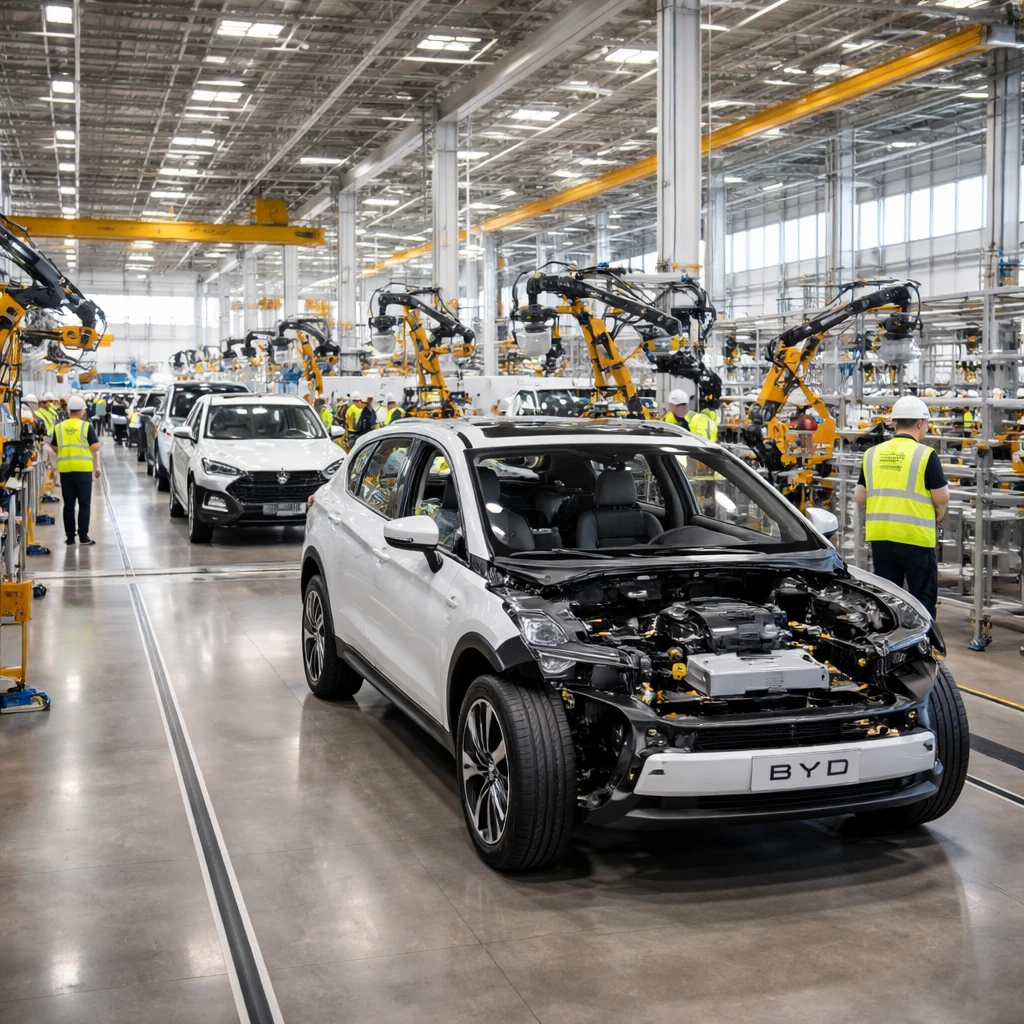
Concrete steps toward localized production are already in motion. BYD is preparing its first European factory in Hungary and is finalizing preparations there ahead of commercial production, which the company is targeting for the fourth quarter. The automaker is also weighing sites for additional plants in the region, with France and Spain under consideration for subsequent facilities.

The push to manufacture more vehicles inside Europe is unfolding in a more restrictive trade environment. European regulators have been tightening oversight of Chinese vehicle imports, and recent framework discussions between Beijing and Brussels have addressed possible import limits on hybrid vehicles. BYD says it is assessing how such trade restrictions would affect its financial and operational plans while continuing efforts to entrench its industrial presence on the continent.

The company’s combined approach - hiring at scale, building local plants and evaluating further sites - is presented as a strategy to anchor long-term industrial operations in Europe even as regulatory scrutiny on imports increases.


Sector impacts - The plan touches the automotive manufacturing sector directly and has implications for labor markets and regional industrial supply chains. It also intersects with trade and regulatory policy affecting vehicle imports.

Risks

  • Rising regulatory scrutiny and tighter oversight of Chinese vehicle imports in Europe could lead to import limits or trade restrictions that would affect BYD’s operating and financial plans - impacting the automotive and trade policy sectors.
  • Uncertainty remains around the financial and operational impact of potential import limits on hybrid vehicles discussed between Beijing and Brussels, which could influence BYD’s manufacturing strategy and investment decisions.
  • Execution risk tied to scaling workforce and establishing multiple production sites across different countries could affect cost, timelines and local supply chain integration in the manufacturing sector.

More from Stock Markets

S&P 500 Stalls in Choppy No-Trade Band Below 7,897 Oct 12, 2026 Options Signal a 2.9% Move for Steel Dynamics on Oct. 19 Results Oct 12, 2026 Analyst Upgrades Propel ServiceNow Shares Higher Ahead of Q3 Report Oct 12, 2026 SanDisk Shares Drop as Investors Trim Risk Ahead of Earnings Oct 12, 2026 Frasers Increases Holding in Burberry to 7.42% as Luxury Push Continues Oct 12, 2026