
World September 16, 2026 12:35 PM

Guterres Urges Accountability for States Supplying Weapons Used Against Civilians in Sudan

UN chief warns external arms transfers are fuelling a humanitarian catastrophe as displacement tops 14 million

By Derek Hwang
Share
Twitter Reddit Facebook LinkedIn

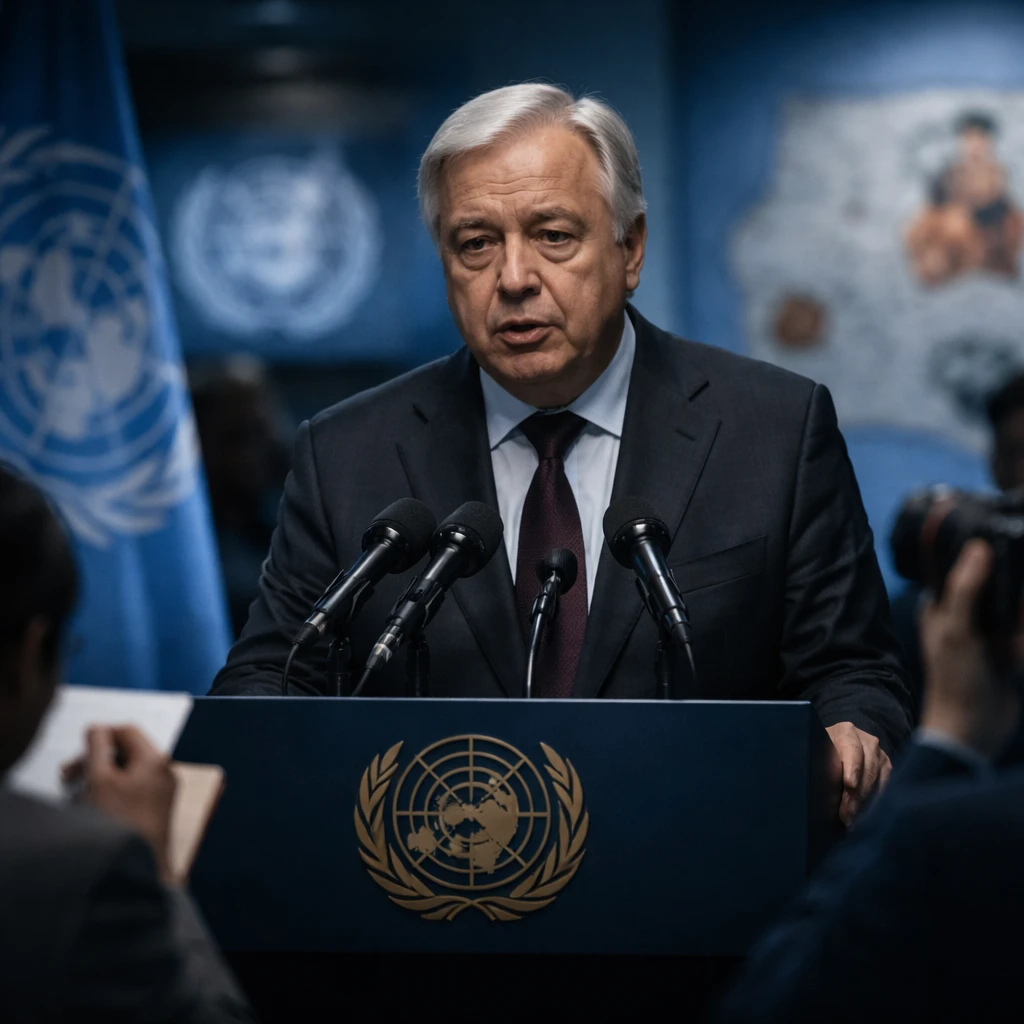
United Nations Secretary-General Antonio Guterres called for accountability for countries that supply weapons used to attack civilians in Sudan, describing the humanitarian situation as devastating and intolerable. He flagged external interference as a driver of the conflict and cited a U.N. fact-finding mission that identified foreign arms, technology, fighters and logistical support as expanding the warring parties' reach, including strikes on distant civilian areas with drones.

Guterres Urges Accountability for States Supplying Weapons Used Against Civilians in Sudan
Summarize with
ChatGPT Perplexity Claude Grok Gemini

Key Points

  • United Nations Secretary-General Antonio Guterres called for accountability for countries supplying weapons that are used to attack civilians in Sudan - sectors impacted include defense and international diplomacy.
  • The conflict, which began after a power struggle between the military and the Rapid Support Forces in April 2023, has displaced more than 14 million people and created a devastating humanitarian crisis - sectors impacted include humanitarian aid and public services.
  • A U.N. fact-finding mission reported that foreign weapons, military technology, fighters and logistical networks sustain the conflict and expand the warring parties' ability to strike distant civilian areas with drones - sectors impacted include defense, technology, and logistics.

UNITED NATIONS, Sept 16 - United Nations Secretary-General Antonio Guterres on Wednesday urged that countries supplying arms to parties in Sudan be held to account when those weapons are employed to attack civilians. Speaking to reporters ahead of the annual gathering of world leaders at the United Nations in New York next week, Guterres described the scale of human suffering in Sudan in stark terms.

"What is happening in Sudan is absolutely horrible. The humanitarian situation in Sudan is devastating. The level of suffering of the Sudanese people is intolerable," he said, drawing attention to the depth of the crisis that has unfolded since violence began in April 2023.

The conflict erupted following a power struggle between the military and the Rapid Support Forces. Since then, more than 14 million people have been displaced and the situation has produced one of the world’s most severe humanitarian emergencies, according to the figures cited by the United Nations.

Guterres also pointed to outside involvement in the fighting. "It is true that the conflict is fueled by a number of countries from the outside," he said. "In my opinion, there should be accountability for the kind of interference in which some countries provide weapons to parties to a conflict when those weapons are used massively to attack civilians."

A U.N. fact-finding mission reported earlier this month that foreign weapons, military technology, fighters and logistical networks are helping to sustain Sudan’s conflict. The mission found such external support has increased the warring parties' capacity to strike civilian areas at greater distances, notably through the use of drones.

Guterres delivered his comments as leaders prepare to meet at the United Nations in New York. He framed the issue of external arms supplies and interference as central to both the humanitarian toll on civilians and the broader dynamics prolonging the violence.

The secretary-general's remarks underscore the United Nations' call for international scrutiny of external actors whose material support is tied to attacks on civilian populations. His statement also highlights the findings of the recent U.N. mission that point to a complex mix of foreign-sourced materiel, personnel and logistics that bolster the ability of combatants to strike beyond local battlefields.


Context and implications

Guterres' appeal for accountability addresses the intersection of humanitarian calamity and external military support. The U.N. fact-finding mission's conclusions about drones and long-range strike capabilities reflect how outside-supplied materiel and networks can alter the course and scope of a conflict.

As the international community prepares for high-level discussions next week, the secretary-general's statements signal a focus on the responsibilities of states whose transfers of weapons and related support are implicated in civilian harm.

Risks

  • Continued use of externally supplied weapons and military technology could lead to further attacks on civilians, worsening the humanitarian crisis - this affects humanitarian aid operations and regional stability.
  • Ongoing foreign interference and provision of fighters and logistical support may prolong the conflict and complicate diplomatic efforts to resolve it - this introduces uncertainty for international diplomatic channels and humanitarian funding.
  • Expansion of drone-enabled long-range strikes increases risks to civilians in areas previously out of reach, straining emergency response capacity and aid delivery - this impacts humanitarian logistics and relief organizations.

More from World

Family Sues Texas Officials After Pregnant Woman’s Death, Saying Abortion Would Have Been Life-Saving Sep 16, 2026 UK Prime Minister to Host Canada's Carney at Everton Match During Liverpool Visit Sep 16, 2026 U.N. chief urges tighter oversight of AI as U.S. president downplays risks Sep 16, 2026 Ukrainian Drone Unit Says It Killed Russian General in Donetsk Sep 16, 2026 Russia says treaty could still halt an arms race in space after U.S. confirms on-orbit weapons Sep 16, 2026