
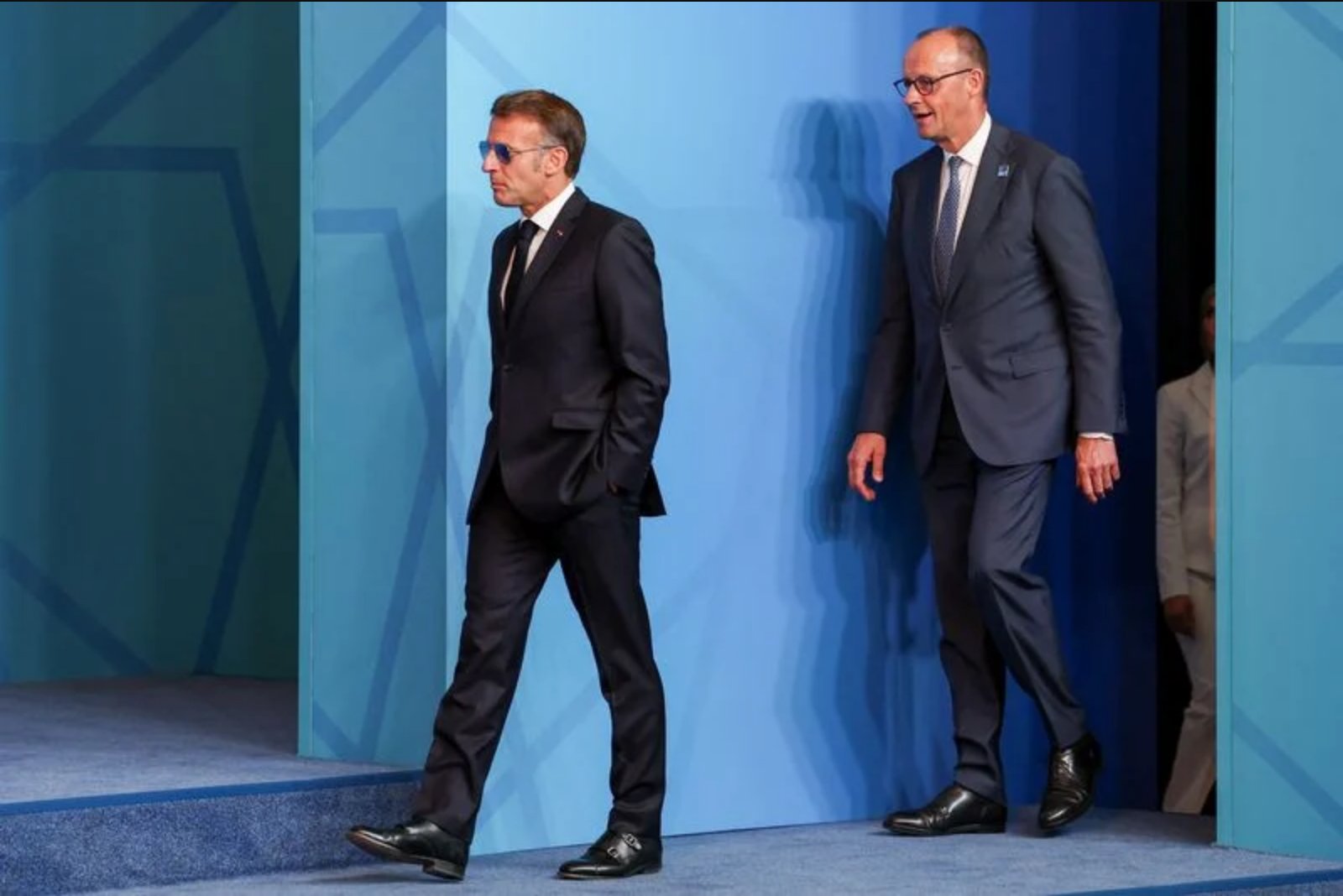
Ankara, July 8 - President Emmanuel Macron told NATO leaders on Wednesday that a summit of Ukraine’s supporters next week will be the venue to unveil new collective defence measures and combined military exercises. He described the upcoming gathering as further confirmation that European states are taking on more responsibility for their security.
Macron said the July 13 meeting of the Coalition of the Willing, expected to bring together around 35 leaders, would concentrate on several concrete priorities: combating Russia’s so-called shadow fleet, developing new military capabilities for Ukraine, mobilising defence industries more effectively, and deepening operational cooperation among Kyiv’s partners.
More than seven years after he famously warned that NATO was suffering from "brain death", Macron used the Ankara summit to argue that Europe has been strengthening its defence posture. He said European countries were increasing defence investment, asserting their sovereignty and advancing strategic autonomy within the NATO framework.
Macron, a long-standing advocate of a stronger European defence pillar, said the war in Ukraine and doubts about long-term U.S. military commitments had accelerated efforts by European states to build up their own capabilities - while still remaining anchored in NATO.
He recalled the controversy his 2019 "brain death" comment sparked, when he criticised a perceived lack of strategic coordination and the unpredictability of then-U.S. President Donald Trump. Speaking in Ankara, Macron argued that many of the shifts he had pushed for were now becoming tangible: higher European defence spending, a larger operational role for European forces within the alliance, and steps to develop a more resilient European defence industrial base.
"France has long advocated that Europeans must support and defend a European defence industry. If we spend more, it should not simply be to buy non-European equipment," Macron said, underlining the link he sees between procurement choices and industrial sovereignty.
He listed areas where Europe is working to increase its capabilities, citing the development of missile-defence systems, long-range precision-strike weapons, early-warning networks and command systems powered by artificial intelligence. The remarks framed a defence agenda that blends capability development with industrial policy.
Macron also sought to address lingering concerns among some allies about Washington’s commitment to NATO. He said that, despite episodic public criticism of partners, U.S. support for the alliance had been reiterated in private discussions with former U.S. President Donald Trump. "The United States has announced a redeployment of its efforts, which seems entirely legitimate to me, and Europeans must organise themselves accordingly," he said. "But we should not do this because someone asks us to. We should do it for ourselves."
The speech reiterated France’s historically complex relationship with NATO. Paris, a founding member, left the alliance’s integrated military command in 1966 under Charles de Gaulle and returned to full participation in 2009 under Nicolas Sarkozy. Since taking office, Macron has sought to both deepen France’s role within NATO and to bolster what he describes as a European pillar inside the alliance.
Russia’s invasion of Ukraine, Macron said, has reinforced the case for stronger European defence capabilities. He noted that, even amid pressures on public finances, France has sustained defence spending in line with NATO targets and expanded its military footprint along the alliance’s eastern flank. France has offered increased cooperation with European partners on nuclear deterrence and has deployed troops to Romania and the Baltic states.
At the Ankara summit Macron announced that France will take part in NATO force rotations in Finland alongside Finnish and Swedish forces, becoming one of the first allies to contribute to the newly established deployment near the alliance’s border with Russia.
What to watch
- Whether the July 13 Coalition of the Willing meeting produces detailed timelines and resource commitments for the initiatives Macron outlined.
- How European defence industries respond to calls for greater mobilisation and whether procurement decisions shift to favour European equipment.
- How NATO partners interpret U.S. redeployment comments and what that means for burden-sharing and forward deployments.