
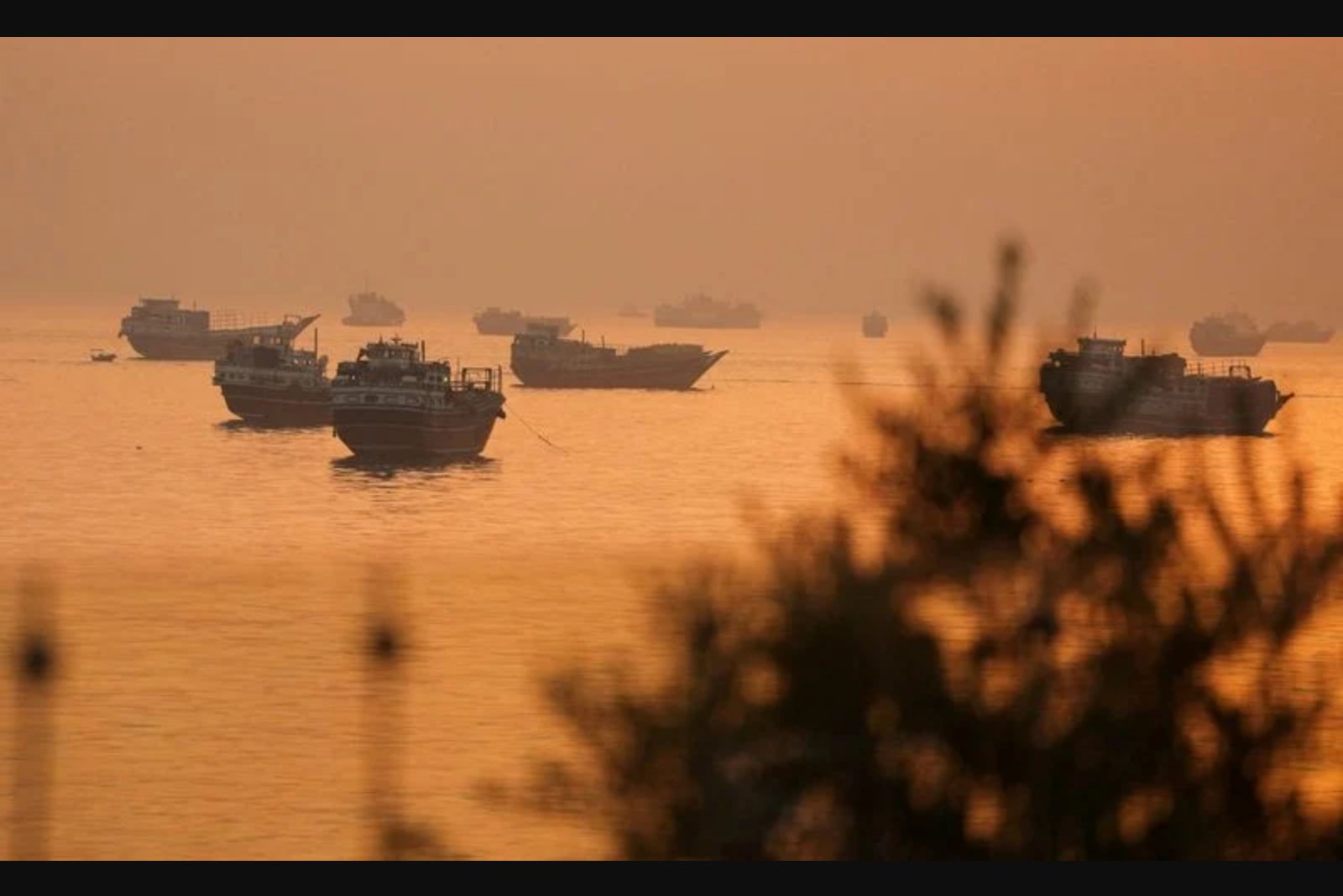
DUBAI, July 8 - Control of the Strait of Hormuz has become a central strategic priority for Iran, one Tehran now treats as a "golden weapon" worth risking renewed confrontations with the United States. Incidents this week in which vessels passed the strait without Tehran's approval and were fired upon led to a direct exchange of fire with U.S. forces and have put at risk the interim peace agreement reached last month.
Iranian leaders, who for years refrained from completely blocking the waterway through which roughly one-fifth of global energy supplies transit, now view custody of the strait as their most potent leverage in disputes with the West and the very reason the United States agreed to end the war. That posture is widely shared across the leadership, according to two senior Iranian sources involved in deliberations.
On social media, Ebrahim Azizi - a member of Iran's parliament committee on national security and foreign policy - addressed the United States directly, writing:
"Recognise the new Iranian order in the Strait of Hormuz: this is the only way forward."
Inside Tehran there is reportedly little disagreement about prioritising control of the strait. Senior officials weighed whether Iran might be overplaying its hand, but the prevailing view among the highest circles was that no rational state would willingly surrender such a critical source of leverage, one of the senior sources said. The source added:
"The issue of Hormuz, which is Iran's golden weapon, is something they now want to take away from Iran, and that will be absolutely impossible."
Last month's interim memorandum of understanding - signed by U.S. President Donald Trump - opened the strait to increased maritime traffic but left the long-term status of the waterway unspecified. The memorandum states that Iran "will make arrangements using its best efforts for the safe passage of commercial vessels with no charge for 60 days only."
Iranian negotiators interpret that clause as implicit recognition by Washington of the Islamic Republic's right to manage the strait, albeit with a temporary restriction barring fees or tolls for two months. The United States and Gulf governments reject that reading, contending the language obliges Iran merely to facilitate safe passage and not to impose enforceable restrictions backed by force.
Distrust of the United States is a key driver of Tehran's posture, exacerbated by President Trump's 2018 decision to cancel an earlier nuclear agreement, his return to war this year after a prior ceasefire, and the manner in which the war was launched - without prior public notice during ongoing diplomatic talks, senior sources said. Those developments have hardened attitudes in Tehran.
One senior Iranian source warned that if Iran were to yield on Hormuz, Washington would escalate demands on other contentious issues - including the nuclear programme and Iran's stock of conventional missiles - characterising such a retreat as tantamount to surrender, which leaders in Tehran say is unacceptable.
For years Iranian officials had publicly warned they could close the strait - once remarking it would be "as easy as drinking a glass of water" - yet they had privately framed a shutdown as a last resort. The hesitation stemmed from concerns that such an action would deepen Iran's international isolation, antagonise Gulf neighbours and global energy consumers, and ultimately damage Iran's own economy.
That calculus shifted dramatically after a combined U.S. and Israeli attack on February 28 that killed Iran's supreme leader and several other senior officials. In the wake of those strikes, Iranian leaders concluded they had little to lose. They closed the strait to all but their own vessels, producing what the sources describe as the largest disruption to global energy supplies in history.
Washington hesitated over the impact of the shutdown on global oil markets but subsequently imposed its own blockade of Iranian ports in April. The escalating economic cost of the blockade on both sides eventually prompted agreement to the interim deal. Yet, having demonstrated the ability to force the United States to negotiate by closing the strait once, Tehran now seeks to formalise that capability.
Academic commentator Ali Ansari observed that both sides experienced acute economic anxieties and emerged from initial talks feeling they had achieved gains, leaving each to press further for additional concessions.
As a result, Iran has placed far greater emphasis on control of Hormuz than on the nuclear dispute. Tehran also believes the United States has effectively acknowledged Iran's right to enrich uranium and to dilute existing stocks of highly enriched uranium domestically - points that have softened the centrality of the nuclear issue in recent bargaining, according to the senior Iranian sources.
The nuclear programme had been the principal source of confrontation between Iran and the United States for nearly 25 years, spawning broad international sanctions and serving as the primary public rationale for President Trump's return to war. Nevertheless, the interim agreement postponed substantive negotiation of Iran's nuclear activities to later talks.
Crucially, Tehran has made clear it will not commence formal discussions on the nuclear question until Washington accepts Iran's full management of the Strait of Hormuz, the senior Iranian sources said. That linkage elevates the strait from a tactical instrument into a strategic precondition for broader diplomatic engagement.
The implications of Iran's demand are wide-ranging: the status of the waterway is now central to ongoing diplomacy, to the security calculations of regional states, and to the stability of global energy flows. With control of the strait positioned as an irreversible Iranian objective, prospects for a durable settlement on other contentious issues hinge on whether the United States and its partners will accept Tehran's asserted prerogatives over maritime passage.