
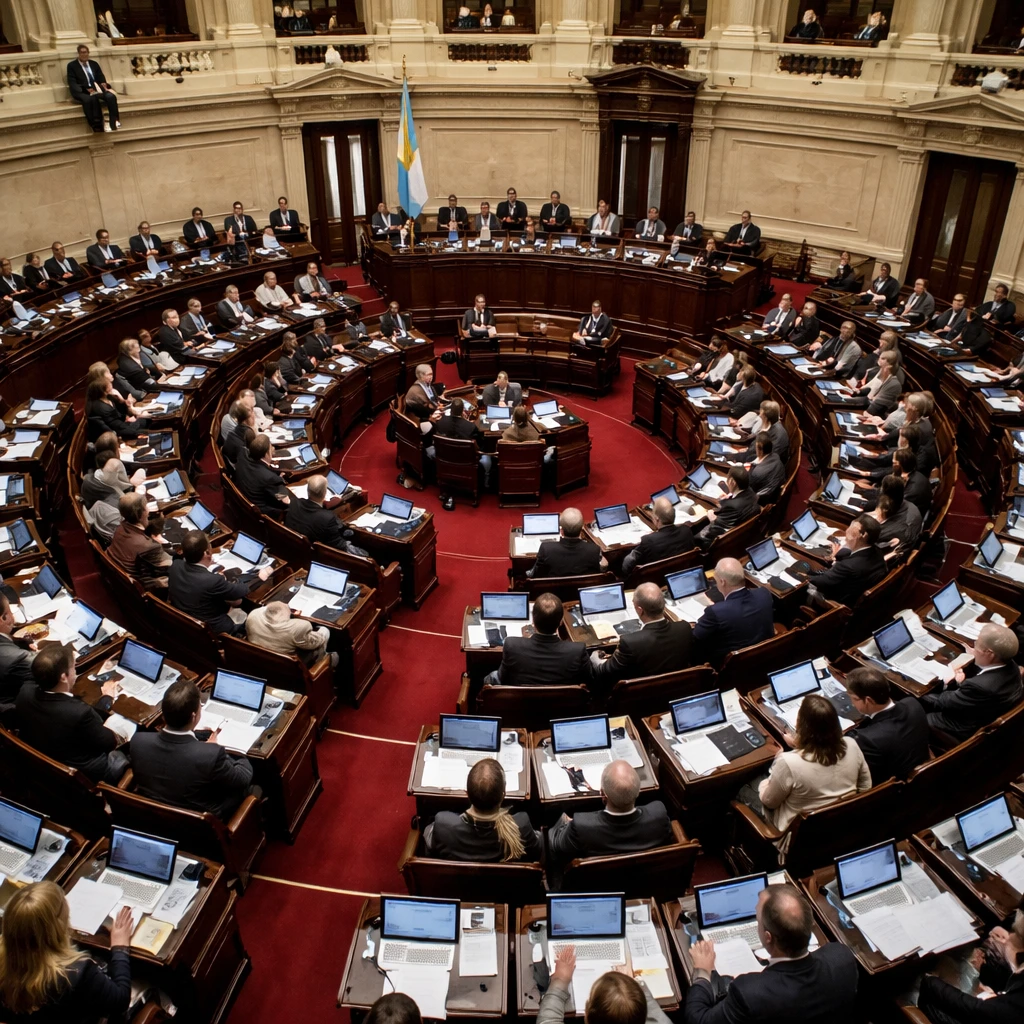
BUENOS AIRES, Nov 26 - Argentina’s Senate is due to debate a proposal on Thursday that would suspend next year’s primary elections, cut public financing available to political parties and scrap the compulsory presidential debate that precedes the general election slated for October 2027. The measure would still require endorsement by the lower house before becoming law, but passage in the Senate would be read as a demonstration of President Javier Milei’s capacity to marshal congressional backing even without commanding a majority in either chamber.
The administration has said it expects to muster support from centrist and center-right allies to secure the 37 votes needed for approval in the Senate. Lawmakers in Milei’s minority coalition initially introduced the electoral reform earlier this year, and a successful vote in the upper chamber would resuscitate momentum for an agenda that has struggled to advance since the bill was sent to Congress in April.
Argentina’s economy provides the backdrop to the political maneuvering. After three years of fiscal retrenchment, most economists estimate the nation entered a technical recession in the third quarter of 2026. The unemployment rate is rising and inflation remains high relative to regional peers. Against that economic landscape, investors have signaled that eliminating the primaries would increase Milei’s chances of re-election by removing an early, nationwide test of voter sentiment that has in past cycles shaped market expectations and at times sparked sharp financial volatility.
President Milei’s approval ratings have declined from levels above 40% in January to the mid-30s in recent polls, and some surveys indicate that the center-left Peronist movement still has a credible route back to power. Political strategists argue that without PASO, the divided Peronist opposition would be compelled to resolve internal rivalries behind closed doors, absent the public contest provided by primaries, which could hinder efforts to coalesce around a single challenger.
Supporters of the reform portray it as a cost-saving and calendar-simplifying measure. They say suspending the primaries would reduce electoral expenses and streamline the overall timetable for campaigns. Critics counter that removing PASO - a mechanism introduced in 2009 and typically held about two months before general elections to allow parties to settle internal disputes - would erode an important democratic safeguard by making intra-party contestation less open and less transparent.
Political analyst Sergio Berensztein cautioned that the change could create an impression among voters that Milei is reluctant to face electoral scrutiny or to participate in debates. That concern highlights a political trade-off: while the reform could blunt an early test of public opinion and give the incumbent an organizational advantage, it may also fuel narratives about avoidance of accountability.
If the Senate approves the proposal and it clears the lower house, the immediate impact would be institutional rather than policy-specific: an altered electoral timeline, reduced party financing and no mandatory televised presidential debate ahead of the 2027 general election. For markets and investors, the chief implication underscored by observers is reduced chance of the pre-election shocks historically prompted by PASO results. For political actors, the reform would reshape how competing factions within major parties manage leadership contests and candidate selection.
As the Senate vote approaches, the outcome will be watched both for its direct effects on the electoral calendar and for what it signals about Milei’s ability to cultivate cross-ideological support in Congress amid an increasingly challenging economic environment.