
MOSCOW, Nov 26 - The Kremlin on Thursday accused Ukraine of seeking to broaden the war between the two countries into the Mediterranean and Baltic seas, calling such actions "potentially very dangerous." The statement from Moscow responded to a joint message from US President Donald Trump and NATO chief Mark Rutte issued on Wednesday after a meeting in Florida, which urged Russia to avoid steps that would widen the full-scale war that Moscow began in 2022.
The Kremlin framed the US-NATO remarks as a warning aimed at curbing any Russian escalation in response to recent Ukrainian attacks on Russian interests located far beyond the immediate conflict zone. In Moscow's view, however, it is Kyiv that has been extending hostilities into distant maritime areas.
"As regards the escalation of the conflict in Ukraine, this appears to refer to attempts by the Kyiv regime to expand the geographical scope of this conflict. We are witnessing terrorist activity by the Kyiv regime in the Mediterranean and the Baltic," Kremlin spokesman Dmitry Peskov told reporters on a conference call. "This cannot fail to cause concern amongst coastal states, and most likely within the Alliance as a whole - the North Atlantic Treaty Organization. Of course, nobody would want the conflict to spread geographically, and these are potentially very dangerous actions on the part of the Kyiv regime."
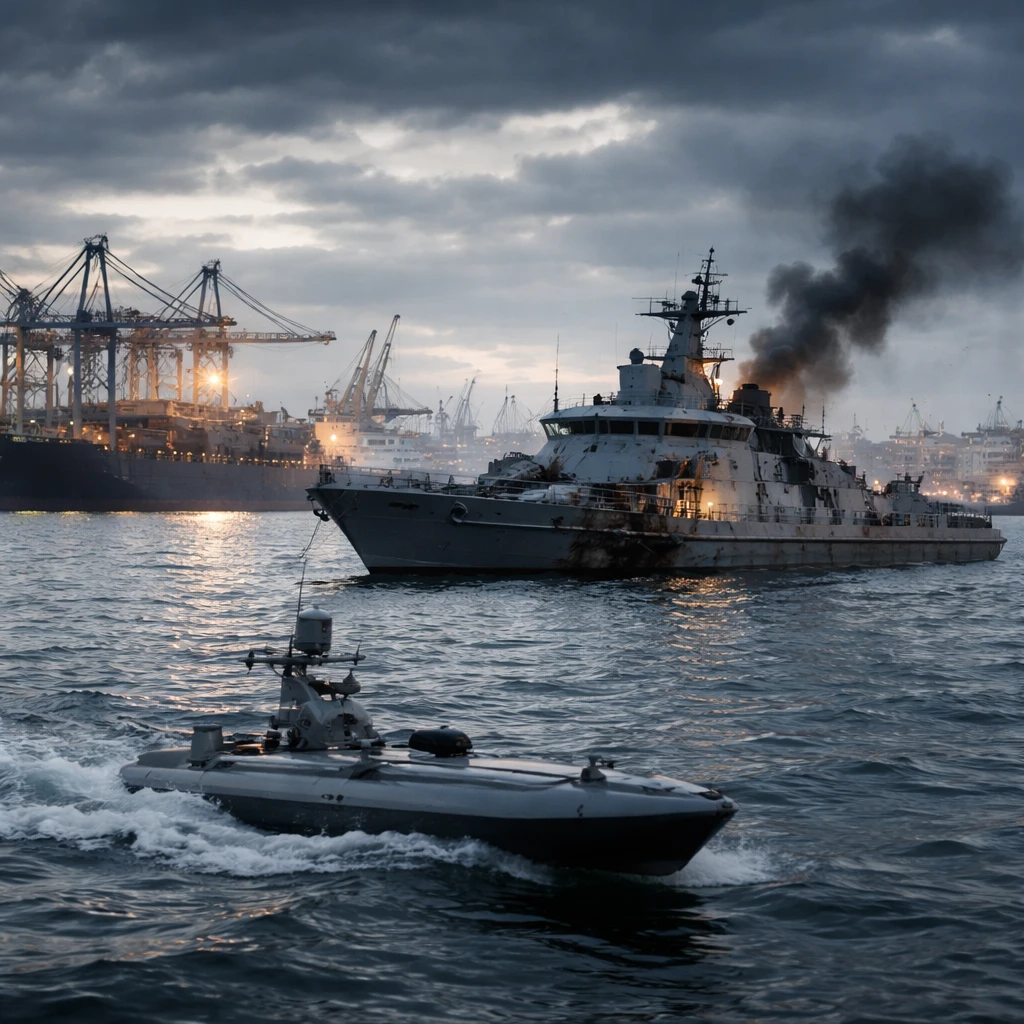
The Kremlin's comments followed two maritime incidents over the weekend in which Ukraine struck vessels linked to Russia. On Sunday, Ukrainian maritime drones sank a Russian naval corvette while it was in a Libyan port. That attack came a day after a drone strike hit a Russian military-linked cargo ship in the Gulf of Finland.
Officials in Libya condemned the attack on the corvette. Italy also criticized the action, telling Kyiv it was wrong to strike Russian vessels in Libyan waters and warning against efforts to spread the war into new regions. Norway, a vocal backer of Kyiv, likewise urged caution regarding operations in the Baltic Sea and emphasized the importance of preserving stability in nearby waters.
The sequence of events — distant maritime strikes followed by public admonitions from multiple governments and a joint US-NATO appeal — highlights concerns among both coastal states and alliance members about the potential for escalation when military actions occur far from the land front in Ukraine. Moscow has seized on those developments to cast Ukraine as the actor attempting to widen the conflict rather than as one responding to Russian military actions.
Beyond the public statements, the situation has prompted diplomatic pushback from countries whose waters or regional stability are implicated, reflecting heightened sensitivity to military operations in maritime zones that host commercial shipping and naval traffic.
For now, public remarks from Moscow, Kyiv and several European governments frame the episode largely as a contest over narrative and responsibility, with each side pointing to the other's conduct as the catalyst for rising tensions along key sea lanes.