
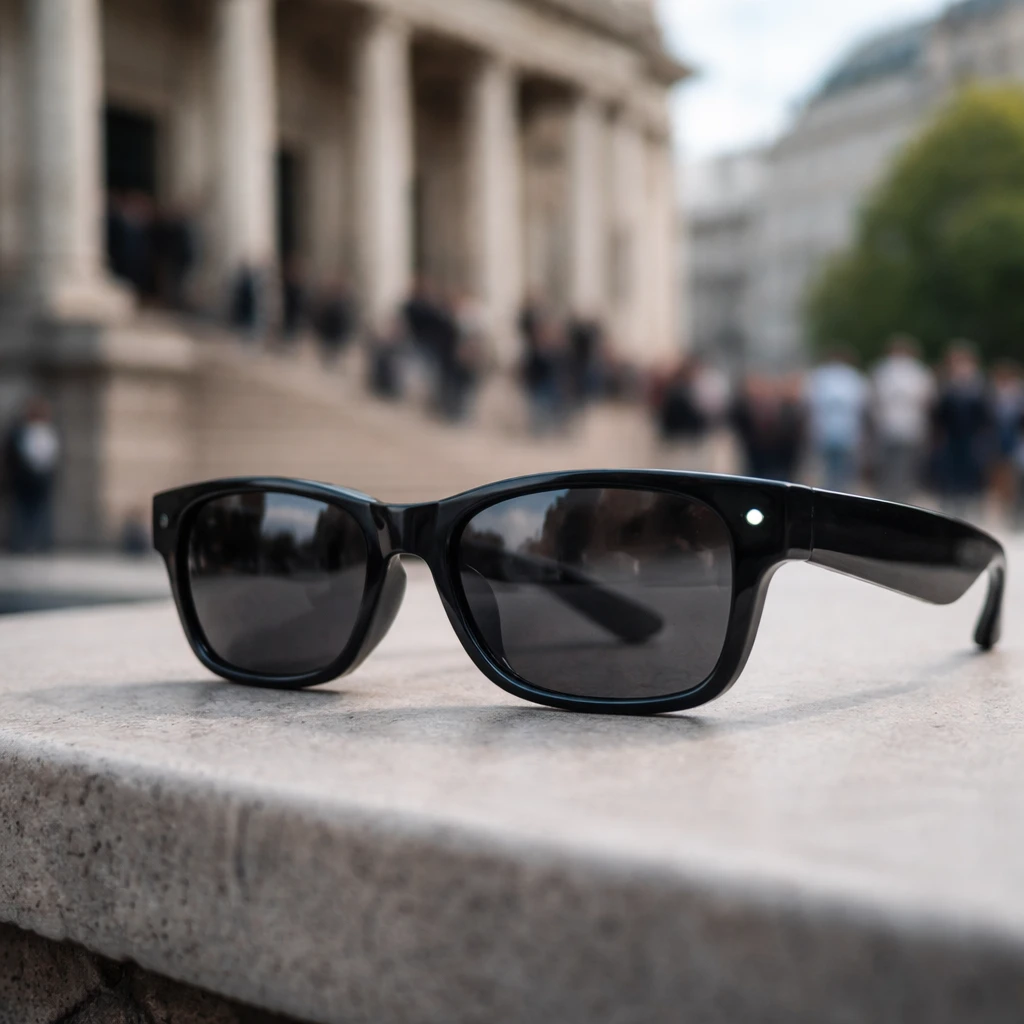
AMSTERDAM, Nov 26 - Dutch consumer and digital rights groups on Thursday asked an Amsterdam court to stop the sale of Meta-branded, AI-enabled smart glasses in the Netherlands, arguing the devices allow wearers to record people without their knowledge and therefore breach European privacy rules.
The civil suit, brought by organisations including the Netherlands' principal consumer association Consumentenbond and Offlimits - a group that campaigns against online sexual abuse - seeks a summary ruling at the Amsterdam District Court. While the request applies only to the Netherlands, the plaintiffs warned a court decision could create a legal precedent at a moment of growing public concern and regulatory scrutiny of such devices globally.
Plaintiffs' demands
The claimants asked the court to order Meta to take measures that would prevent the smart glasses from being used to record people without their knowledge, to cease using any recordings from the glasses to train artificial intelligence models, and to stop sales of the devices in the Netherlands until Meta complies with these requirements.
They proposed daily penalties for non-compliance of 100,000 per defendant, up to a combined cap of 100 million. In her opening remarks, Offlimits' lawyer Karlijn Han said the glasses were being used for what she described as "creep shots." She told the court that covert recordings were taking place in sensitive locations such as exams, changing rooms, swimming pools, hotel rooms and hospitals, as well as public spaces like playgrounds and beaches, adding: "Each invasion of privacy is worse than the last."
Defence arguments
Meta's lawyer Bastiaan Kemp urged the court to dismiss the suit. Kemp said the remedies sought would harm ordinary users of the glasses, undermine Meta's competitive position, and in effect act as a product recall without addressing similar devices from other makers. He argued that product providers cannot be held accountable for every deliberate instance of misuse by individuals, and he pointed to a recording indicator on the glasses' frame, saying this light makes it obvious when the device is recording.
Kemp also rebutted claims presented by Consumentenbond's counsel that Meta processes images recorded by the glasses in Europe or uses them to train AI models in violation of European law. He said the court should not accept those allegations.
Representing manufacturing partner EssilorLuxottica, a lawyer argued the company neither processes nor has access to footage recorded by the devices and that a sales ban would be disproportionate and ineffective, given similar products are available from other manufacturers.
Market presence and sales figures
The parties confirmed that Meta and EssilorLuxottica together sold more than 7 million smart glasses in 2025, representing around 80% of the global market for such devices, according to the figures presented in the hearing.
Broader regulatory and judicial backlash
The case in Amsterdam comes amid a widening international backlash against smart glasses and related wearables. The article of record notes proposed restrictions in Australia and Norway, court bans in jurisdictions including England, Wales and New York state, and retailers and operators introducing limits for privacy and other concerns. Cinema operators in the United Kingdom have implemented restrictions over privacy and the risk of film piracy.
Germany's national consumer federation has announced legal action against Meta and Ray-Ban on similar privacy grounds, arguing the glasses make it nearly impossible for consumers to comply with European data protection rules in public settings.
The European Data Protection Board issued a warning in October that smart glasses raise serious privacy concerns and called for stronger safeguards. In the Netherlands, the national privacy regulator AP advised consumers this month not to buy smart glasses, saying they posed safety risks for both users and bystanders.
Retail action has followed regulatory concern: in October, Dutch store chain Hans Anders suspended sales of Meta's Ray-Ban smart glasses in the Netherlands and Belgium.
Meta is also facing proposed class-action litigation in the United States alleging improper sharing of private images gathered by the glasses.
Next steps
A date for a court decision in the Dutch case has not yet been set, but the parties said a ruling is expected in mid-December. The hearing record includes a currency note used in the proceedings: ($1 = 0.9124 euros).
Context for markets and sectors
The litigation and regulatory attention touch on several sectors including consumer electronics, retail distribution of wearable technology, data privacy compliance services, and legal services handling class actions and regulatory challenges. The case may influence retail decisions, manufacturer liability discussions, and policy approaches to AI-enabled consumer devices.