
World November 25, 2026 11:20 PM

Trump and NATO Leader Call on Russia to Avoid Steps That Would Broaden Ukraine Conflict

Leaders meeting in Florida emphasize rapid peaceful resolution and discuss defense spending amid wider diplomatic fallout from presidential meetings in Asia

By Priya Menon
Share
Twitter Reddit Facebook LinkedIn

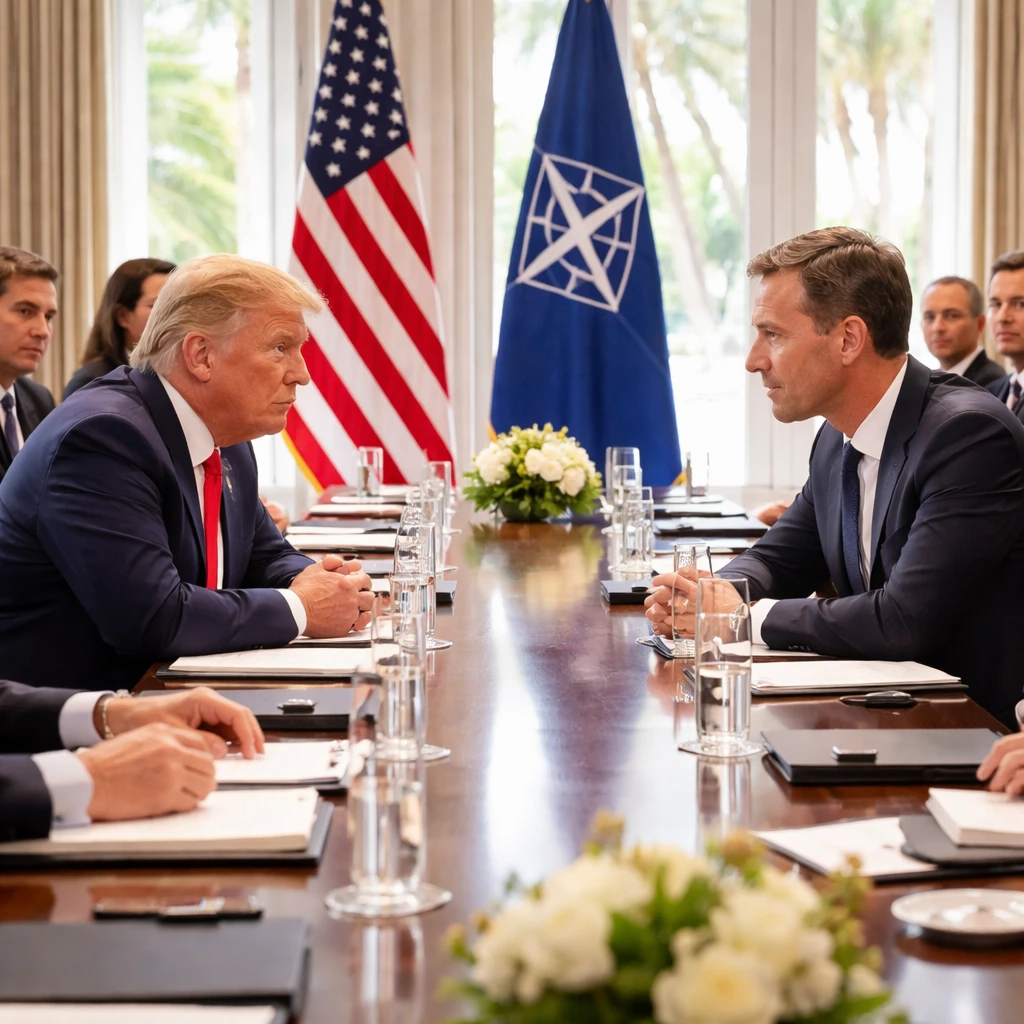
In a joint statement following a Florida meeting, U.S. President Donald Trump and NATO Secretary-General Mark Rutte urged Russia to refrain from actions that could intentionally or unintentionally widen the war in Ukraine. The leaders highlighted the need for a rapid, peaceful resolution, touched on the conflict involving Iran, and discussed reinforcing defense spending and investment across the United States and NATO. The talks follow the U.S. president's recent meetings with Russia's Vladimir Putin and China's Xi Jinping in Asia, which drew criticism from domestic Democrats and some European partners.

Trump and NATO Leader Call on Russia to Avoid Steps That Would Broaden Ukraine Conflict
Summarize with
ChatGPT Perplexity Claude Grok Gemini

Key Points

  • Trump and NATO chief Mark Rutte issued a joint statement urging Russia not to take actions that widen the war in Ukraine and stressed the importance of rapidly obtaining a peaceful resolution - defense and security sectors impacted.
  • The leaders discussed the war in Ukraine and the U.S.-Israeli conflict with Iran, though the statement did not provide details about Iran-related discussions - geopolitical risk affecting markets and defense investment decisions.
  • Rutte and Trump agreed on the need to boost defense spending and investment in the United States and across NATO, indicating potential implications for defense contractors and related supply chains.

WASHINGTON, Nov 25 - In a joint statement after meeting in Florida, U.S. President Donald Trump and NATO chief Mark Rutte urged Moscow to avoid steps that would expand the war in Ukraine, whether those steps were intentional or accidental. The statement also underscored the importance of achieving a peaceful resolution to the conflict as quickly as possible.

The two leaders said they had discussed the broader regional security picture, including the separate conflict between the United States and Iran, though the statement did not provide specifics about the Iran-related portion of their talks. The declaration identified the war in Ukraine and the U.S.-Israeli confrontation with Iran as the primary subjects addressed during the meeting.

The Florida talks followed a sequence of high-profile engagements by the U.S. president in Asia last week, where he held meetings with Russian President Vladimir Putin and Chinese leader Xi Jinping. In those encounters, the president referred to each as his "friend," a characterization that has provoked criticism at home and concern from some European capitals.

Trump's outreach to Putin prompted pushback from domestic Democratic opponents and from some European allies, who have been vocal about wanting a role in any U.S.-backed diplomatic process to end the war in Ukraine. European leaders, the statement noted through reference to reactions, sought inclusion in such talks.

Mark Rutte, who has sought to manage tensions within the transatlantic alliance and to keep the U.S. president engaged with NATO, defended meetings among major nuclear powers as normal. Rutte and Trump also used their joint statement to confirm discussions aimed at increasing defense spending and investment both in the United States and across NATO.

The leaders reiterated the need to avoid actions that would broaden the Ukraine conflict and emphasized obtaining a peaceful resolution as rapidly as possible. The statement did not elaborate on specific measures or timelines for either de-escalation or the proposed increases in defense spending and investment.

Ukrainian President Volodymyr Zelenskiy, who has faced criticism from President Trump, has maintained that Europe must be included in any peace negotiations. The joint statement reflected ongoing diplomatic friction over who should participate in discussions aimed at bringing the war to an end.

Throughout the meeting, Trump continued to voice longstanding criticisms of Washington's Western and democratic partners on matters such as NATO spending, trade tariffs, and what he describes as insufficient support regarding the confrontation with Iran. The joint statement captures a moment of diplomatic engagement intended to address immediate security concerns while leaving numerous details unresolved.

Risks

  • Possibility that further actions by Russia, intentional or accidental, could broaden the war in Ukraine, increasing demand for defense resources and heightening geopolitical risk for markets - affects defense, energy, and financial sectors.
  • Uncertainty stemming from limited public detail on discussions about Iran and on concrete steps to increase defense spending and investment - impacts defense procurement planning and investor confidence in related industries.
  • Diplomatic friction over inclusion in peace talks, including European calls to be part of negotiations, creates uncertainty about the structure and timeline of any negotiated resolution to the Ukraine conflict - relevant to defense and international trade sectors.

More from World

Argentina Senate Set to Consider Suspension of Primaries, Bolstering Milei’s Re-election Prospects Nov 26, 2026 Kremlin Says Kyiv Is Seeking to Push Fighting Into Mediterranean and Baltic Waters Nov 26, 2026 China Tells Japan to Stop 'Stirring Up Trouble' Over South China Sea Amid Rising Regional Tensions Nov 26, 2026 Eisenkot Reopens Talks with Left-Wing Democrats as Coalition Negotiations Move Forward Nov 26, 2026 U.S. National Security Officials Split Over Allegations Tying Nvidia CEO’s Affair Partner to Chinese Intelligence Nov 25, 2026