
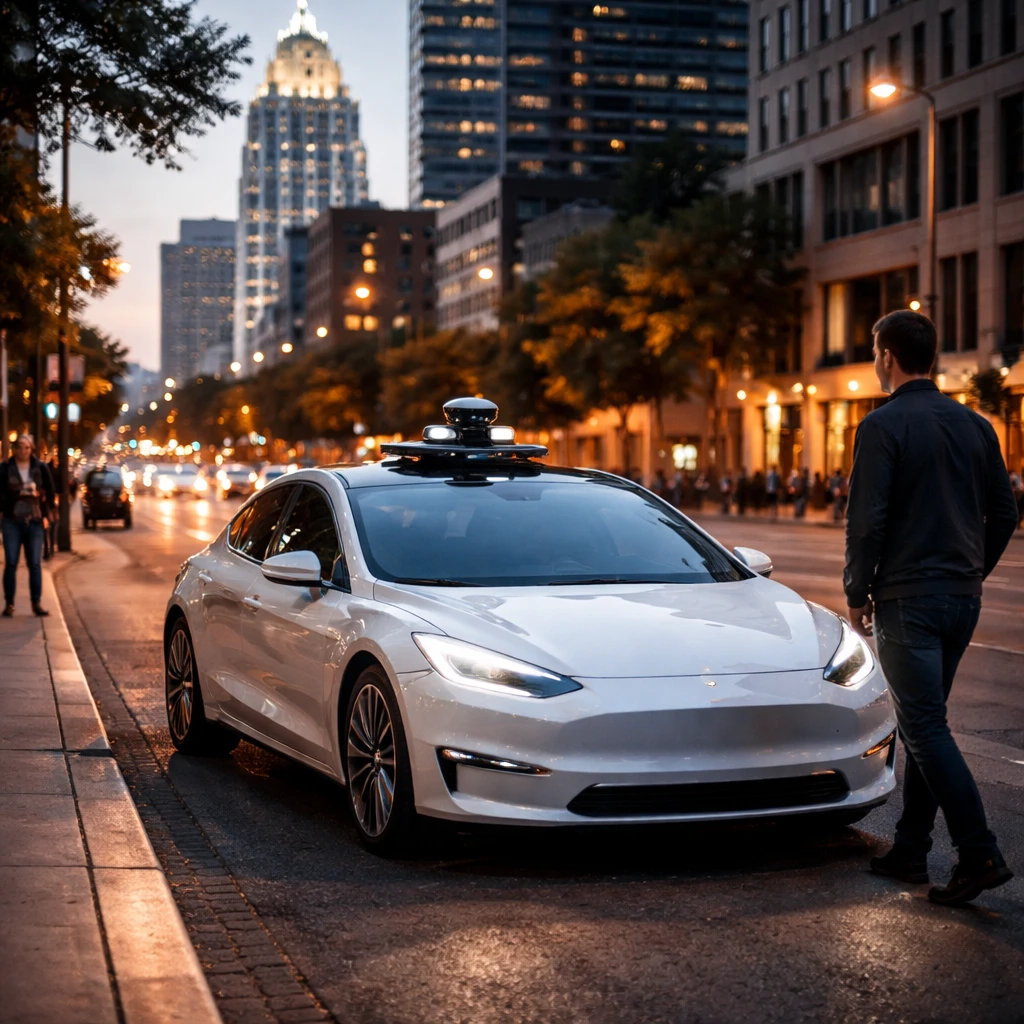
Tesla announced on Wednesday that its unsupervised robotaxi service is now active across the entire Austin Metro geofence, marking a notable step in the company’s pivot to autonomous ride-hailing and its effort to scale full self-driving software.
According to a post from Tesla’s robotaxi account on X, the company stated, "Unsupervised Robotaxi now in the entire Austin Metro area." Users monitoring the service reported seeing the change in real time. One user on X noted, "As of 10am today unsupervised is working in the whole geofence. In one currently heading to the north part of the map."
The Austin deployment is not new: Tesla’s robotaxi service has been operating in the city for nearly a year. Despite that time in operation, customers have experienced friction; the service has at times produced wait times in excess of 30 minutes for riders.
Local officials place Tesla’s robotaxi fleet in Austin at roughly 50 vehicles. That compares with a larger footprint from Alphabet’s Waymo, which operates more than 250 vehicles in the same market, underscoring a competitive gap in deployed autonomous capacity.
Company messaging and strategic emphasis suggest expanding the robotaxi footprint and increasing adoption of FSD are now central to Tesla’s growth priorities. That shift follows CEO Elon Musk’s public repositioning of the company away from a sole emphasis on electric vehicles and toward artificial intelligence and robotics.
On broader industry developments, the article notes other players are also scaling autonomous ride-hailing initiatives. Uber and Israel-based Autobrains said they plan to launch a robotaxi program in Munich in collaboration with U.S. chipmaker Nvidia, reflecting parallel efforts to expand autonomous services internationally.
Separately, Musk has recently said he expects fully self-driving cars that operate without human safety monitors to become more common in the U.S. later this year, subsequent to their rollout in Texas. The timing and extent of such a shift remain tied to operational, competitive, and deployment realities illustrated by the Austin experience.
Key points
- Tesla enabled unsupervised robotaxis across the entire Austin Metro geofence, advancing its FSD-driven growth strategy.
- The service has been live in Austin for nearly a year, but riders have faced wait times exceeding 30 minutes, and Tesla operates about 50 robotaxis in the city versus over 250 run by Waymo.
- Other firms, including a collaboration between Uber, Autobrains, and Nvidia, are pursuing robotaxi rollouts in Europe, indicating broader industry activity.
Risks and uncertainties
- Customer experience constraints - persistent wait times above 30 minutes could limit user adoption and hurt service economics in ride-hailing markets.
- Competitive pressure - Tesla’s approximately 50-vehicle fleet in Austin is smaller than Waymo’s more than 250 vehicles, a dynamic that affects market share and scaling speed.
- Rollout and operational timing - expectations for widespread driverless operation later this year are contingent on deployment realities already observed in Texas.