
Microsoft announced Project Solara on Tuesday, a platform the company says is intended to power devices through which users primarily interact with artificial intelligence agents on mobile hardware for business use.
The reveal took place at Microsoft's Build developer conference in San Francisco, where the company presented two conceptual device designs created in collaboration with chipmakers Qualcomm Inc. and Taiwan's MediaTek Inc.
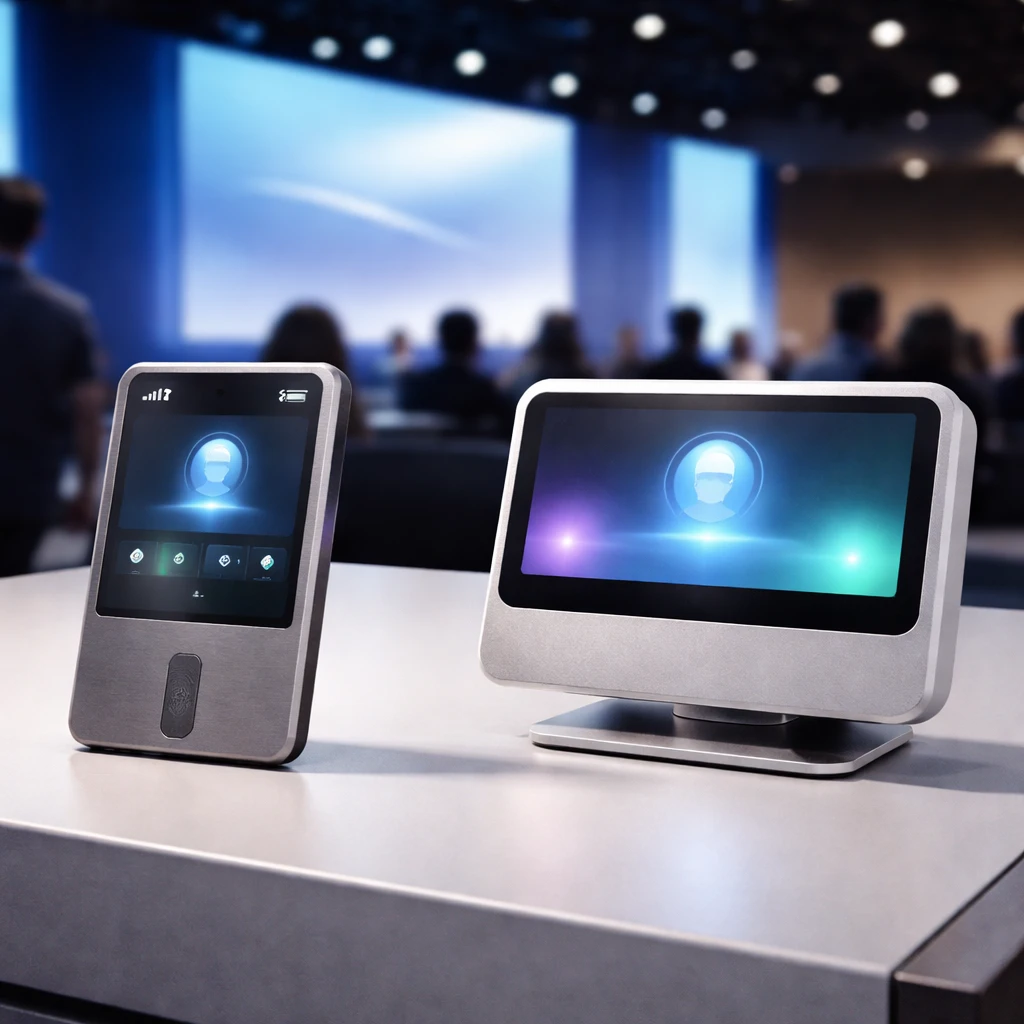
One of the concepts shown, presented by Steven Bathiche, a technical fellow in Microsoft's applied sciences group, resembled an employee badge. That design includes Wi-Fi, Bluetooth and wireless connectivity, a touch-screen display and a fingerprint reader, according to the demonstration.
The second concept is a compact desktop unit with a screen, bearing a resemblance in appearance to consumer smart displays such as those sold under the Echo Show and Nest Hub product lines.
Microsoft also showed a video featuring Chief Executive Officer Satya Nadella and Qualcomm CEO Cristiano Amon. In the discussion, the executives addressed the need for new device categories capable of running dedicated AI agents in form factors appropriate to their operating environments. They stated that existing interfaces - personal computers and smartphones - will not always be the best solution.
Microsoft said a group of corporate partners are working with the technology, listing AccuWeather, Best Buy, CVS Health and Levi Strauss as collaborators.
Market tickers and brief performance indicators appeared alongside the company coverage: MSFT -4.02%, QCOM +6.25%, 2454 +5.68%.
Project Solara was presented as a platform-level initiative rather than as a ready-to-ship consumer product. The demonstration focused on concept hardware that illustrates how AI agents might be embedded in dedicated form factors tailored to business contexts.
Details about commercialization timelines, pricing, or broader deployment were not provided during the presentation. The partners named by Microsoft indicate early commercial interest across sectors that include weather services, retail, health care retail operations and apparel.
The announcement highlights a push toward new device categories intended to host specialized AI agents, reflecting Microsoft's positioning of the platform as an infrastructure component for future device-based AI interactions.