
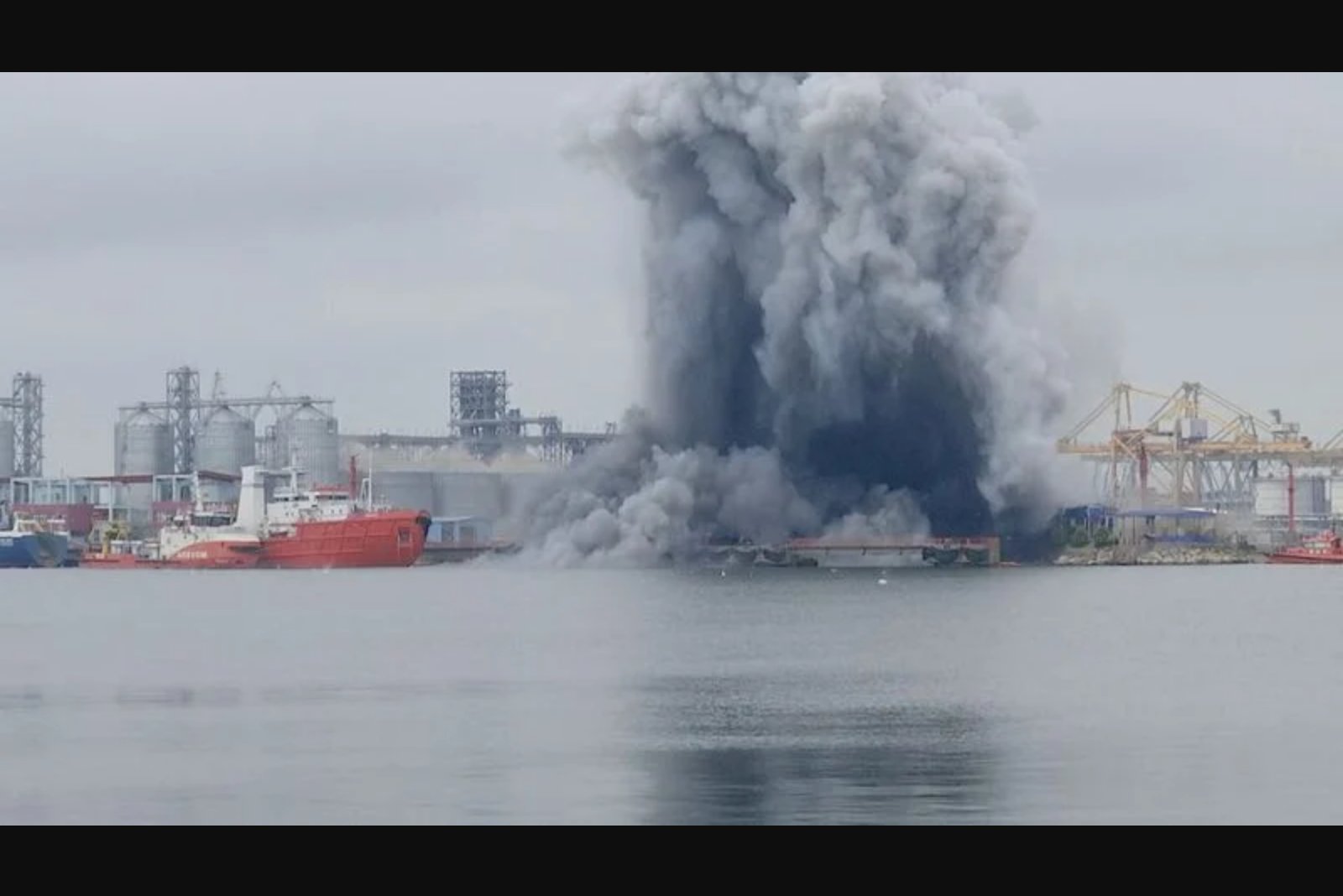
On June 5 a maritime unmanned device - the same class of naval drone seen in the conflict in neighbouring Ukraine - self-detonated in the Romanian Black Sea port of Constanta near an oil terminal, officials said. The blast caused no casualties, according to authorities.
Romanian officials did not assign the device to either Ukrainian or Russian forces. A local news website quoted Constanta county prefect Adrian Teodor Picoiu as saying Ukraine had informed Romania that the device was part of a set of five, with one of them having exploded within Ukrainian territory. Ukrainian authorities did not immediately respond to requests for comment. Russia's embassy in Romania issued a statement asserting that the drones were Ukrainian naval unmanned aerial vehicles.
This incident marks the second significant event in a populated area in Romania within a week as the risk of spillover from the war in Ukraine grows. Earlier in the week, Romanian authorities reported that a Russian drone had struck an apartment block in the southeastern city of Galati, near the Ukrainian border, wounding two people. That episode was described by officials as the first time during the conflict that a drone impacted a densely populated location within a NATO member state.
Romania's defence ministry said the object self-detonated at 10:30 a.m. local time (07:30 GMT) and clarified that it was not equipment belonging to the Romanian armed forces nor connected to recent Black Sea exercises. In response to the detonation, the port - Romania's largest - was evacuated and authorities advised residents to stay away from the Black Sea shoreline. Deputy Interior Minister Raed Arafat said ships and two helicopters were conducting surveys of the area.
"We are not panicking, our measures are purely preventative," Arafat told reporters at a briefing.
Romania shares a 650-kilometre land border with Ukraine and has experienced repeated violations of its airspace by Russian drones since Moscow's 2022 invasion of Ukraine, officials said. In addition to aerial incidents, Romanian waters have been affected by drifting mines; earlier this week the Romanian navy detonated a Russian YaRM-type anti-landing mine that had come ashore.
"This is the second significant security incident this week on the Romanian seaside," Romanian President Nicusor Dan posted on Facebook shortly after news of the detonation.
European Commission President Ursula von der Leyen commented on the situation via the messaging platform X, saying that Russia's war in Ukraine is increasingly posing a direct threat to countries along Europe's eastern frontier.
The device detonated approximately 500 metres from an oil terminal in Constanta. The port, which has 156 berths and 32 km of quays, is a key node for regional maritime traffic: Ukraine has been using Constanta as an alternative route for grain exports as well as for fuel imports. The Black Sea is a critical corridor for shipments of grain, oil and refined oil products and is bordered by Bulgaria, Romania, Georgia and Turkey, in addition to Ukraine and Russia.
Context and immediate response
Romanian authorities initiated precautionary measures including evacuations and maritime and aerial reconnaissance. Officials emphasized that the response was preventive in nature while investigations continue to determine the device's provenance and whether it was part of an operational group involved in recent regional incidents.
Ongoing implications
The detonation in Constanta, close to infrastructure used for grain and fuel shipments, underscores the vulnerability of ports and maritime trade routes in the Black Sea region amid the nearby conflict. With key export corridors and energy logistics reliant on safe passage through the Black Sea, the incident reinforces concerns about disruptions to shipping and energy supply chains should such events recur.