
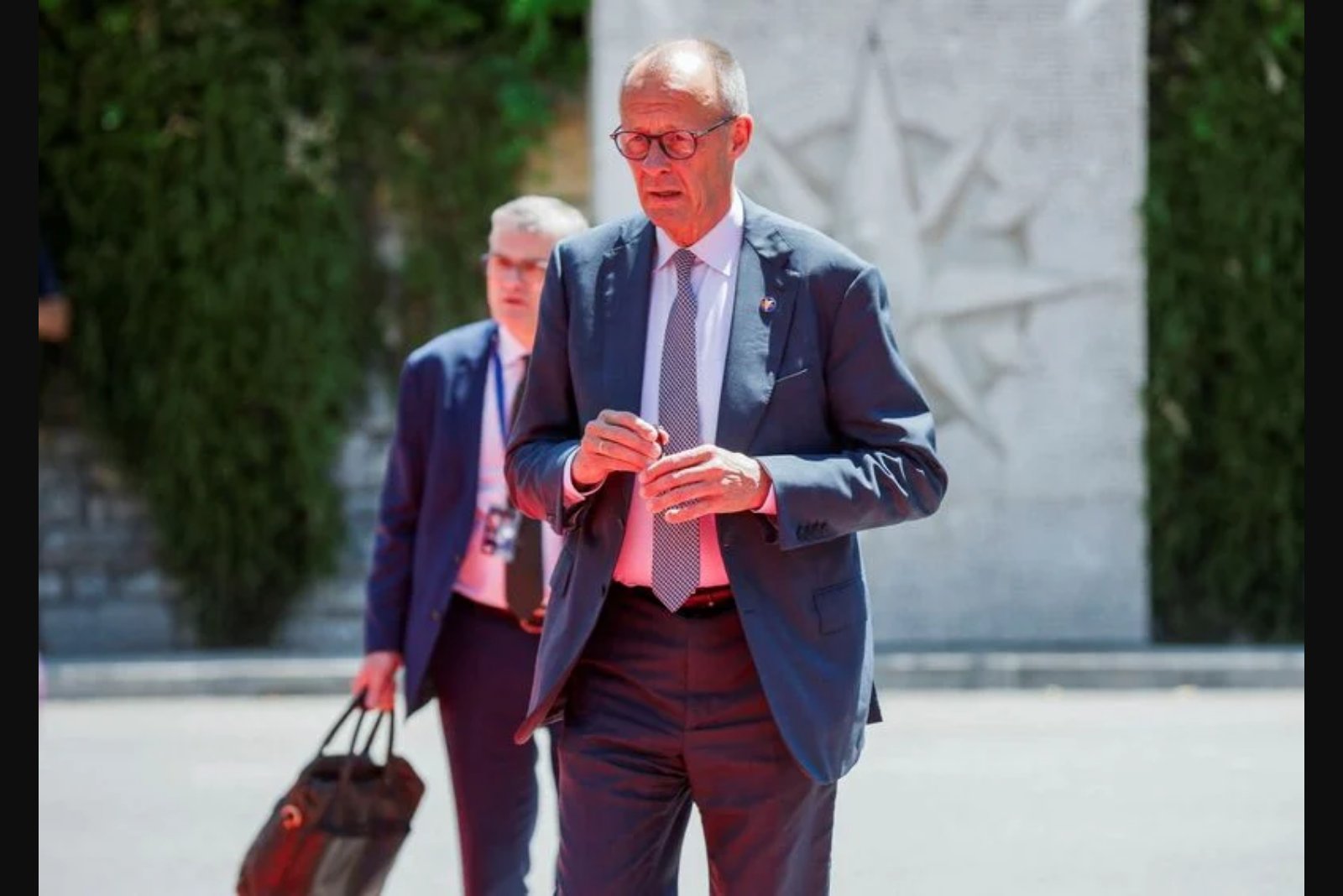
Tivat, Montenegro - June 5
German Chancellor Friedrich Merz told reporters at a summit in the Montenegrin coastal town of Tivat that the European Union must make clear it is prepared and capable of enlarging its membership. The meeting convened leaders from the EU alongside counterparts from the Western Balkans, a group of six countries pursuing membership over the coming years.
Merz framed enlargement as both a practical and political task. "The European Union has to show that it is capable of enlarging and willing to enlarge and we want to discuss that here," he said, stressing that while numerous questions remain to be resolved collectively, it must be unambiguous that this part of Europe belongs in the EU’s future.
He also highlighted the absence of enlargement activity in recent years, noting that the fact no new members have been admitted for 13 years points to shortcomings within the union itself.
Enlargement has moved higher on the EU agenda in the context of Russia’s war against Ukraine. Kyiv has expressed a desire to join the bloc in order to anchor itself within Europe’s political mainstream, and EU officials have declared that expansion would help limit the influence of external powers in the union’s neighbourhood.
The accession process remains lengthy and complex. Candidates typically face years of negotiations and legal reforms before they can join, and each step requires the approval of all 27 current EU members.
Six Western Balkan countries are seeking EU membership - Albania, Bosnia, Serbia, Montenegro, North Macedonia and Kosovo - though they are at different points in the accession pathway. Montenegro, with a population of roughly 630,000, is broadly viewed as the frontrunner and would be comparatively straightforward to integrate into an EU of about 450 million people. Even so, Montenegro confronts significant hurdles, notably in areas related to the justice system and corruption, and its publicly stated aim of joining by 2028 is seen by many as highly ambitious.
On the eve of the summit, Germany and France put forward a proposal to offer candidate countries expanded opportunities to participate in EU programmes and to gain partial access to the single market prior to formal membership. The idea is to create closer links in advance of full accession.
Separately, Merz has previously proposed last month that Ukraine could be granted an "associate member" status as an interim arrangement. That status would permit Ukrainian officials to attend EU summits and ministerial meetings without voting rights, effectively giving them a seat at the table while stopping short of full membership.
The summit underscored both the political will in some quarters to pursue enlargement and the procedural and political obstacles that continue to complicate the accession path for aspiring members.