
Russian nationalist voices reacted with sharp criticism on Friday to an open letter published by Ukrainian President Volodymyr Zelenskiy that proposed a face-to-face meeting with President Vladimir Putin to agree an end to more than four years of fighting.
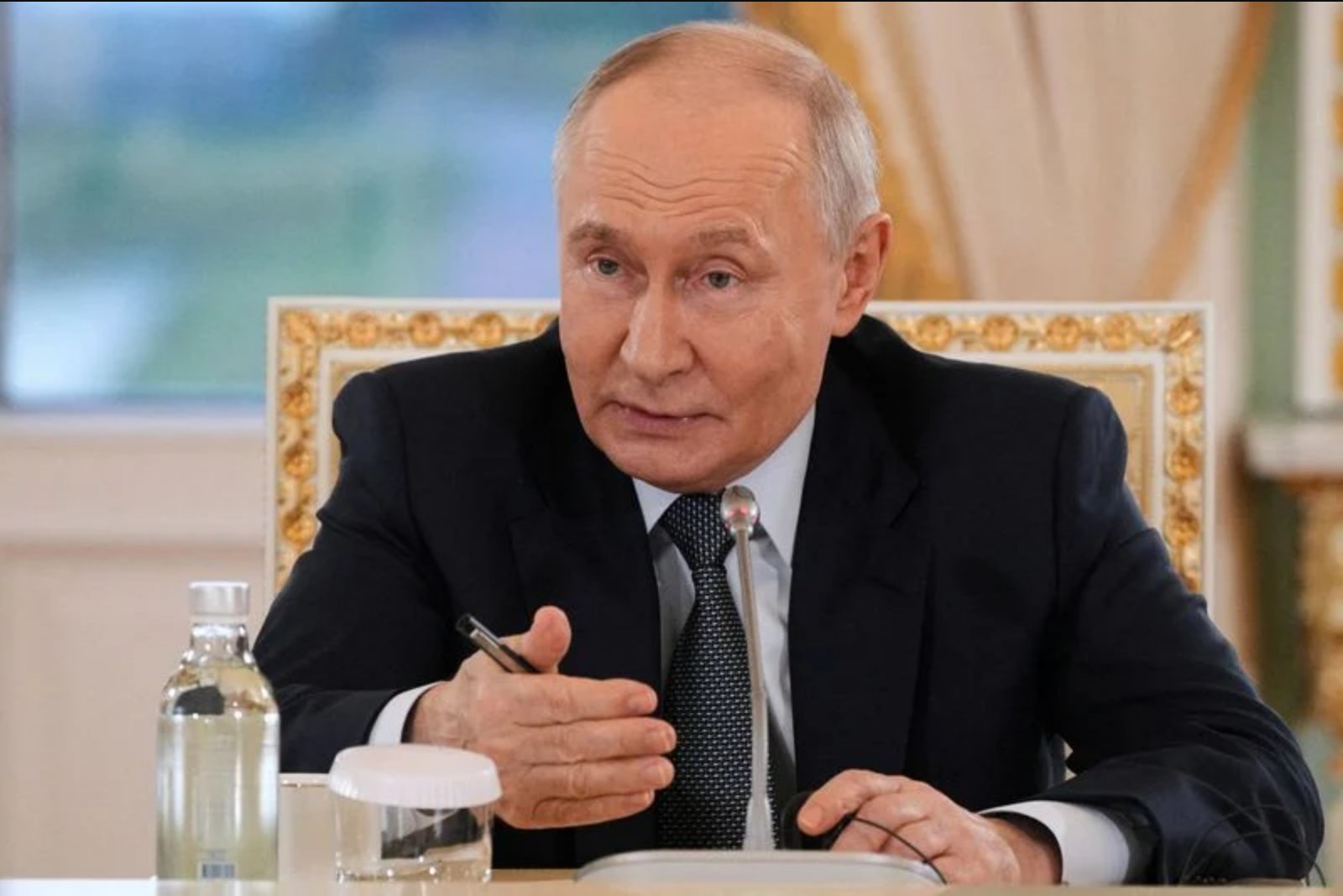
The letter appeared as Putin was hosting a session with foreign news editors at his high-profile economic forum in St Petersburg. During that meeting, Putin maintained a hardline posture on the war, saying Russian forces continued to advance daily on the battlefield. He also commented that U.S. President Donald Trump’s proposals for peace could halt the fighting if Kyiv were willing to make concessions. Both Moscow and Kyiv continue to accuse each other of refusing to compromise.
Putin - who was scheduled to speak later on Friday at the forum - had not issued a direct response to Zelenskiy’s letter. His spokesman said the president had been briefed on the letter’s contents, but no formal reply had been released.
Reactions among Russian nationalists and pro-war bloggers were uniformly skeptical of Zelenskiy’s intentions. Rybar, an influential war blogger with more than 1.5 million followers, dismissed the text as disingenuous. "If you look at the text of the statement itself, there is not a whiff of genuine diplomacy to be found," he said, calling the letter a bluff.
"A significant portion of the letter consists of direct insults, rhetoric about 'your war without cause', threats to Russian citizens of 'drones over your cities', and claims about fuel shortages and an alleged new wave of mobilisation."
"Taken together, all this amounts to yet another attempt to stir up internal discontent in Russia," he added.
Oleg Tsaryov, a former Ukrainian lawmaker now identified as a pro-Russian figure, voiced a similar interpretation of Zelenskiy’s message. "The letter... suggests that Ukraine and its Western allies believe the time has come to focus on the domestic Russian front," Tsaryov said. "The aim is to sow panic and discontent with the war."
Konstantin Malofeyev, described as a nationalist tycoon married to a top official and a Putin appointee, argued that the appropriate Russian response would be silence followed by military victory. "If he (Zelenskiy) had wanted to convey or propose something to Vladimir Vladimirovich (Putin), he would have done so through private channels," Malofeyev said. "But Zelenskiy wanted to put on a show, a publicity stunt."
War bloggers also questioned whether there was any substantive agenda for talks, given what they portray as an impasse in negotiations. They pointed to repeated statements from Putin that, in their telling, Zelenskiy had been told he must withdraw Ukrainian forces from the remainder of the Donbas region in eastern Ukraine if he wanted the war to end.
Zelenskiy has rejected that demand, characterizing it as tantamount to capitulation. He has warned that surrendering territory would have consequences for hundreds of thousands of people and would leave Ukraine exposed to further Russian attacks, a point cited by critics of any concession.
"If there are no points of common ground apart from the exchange of prisoners and the bodies of the dead, what agreements and memoranda are there?" asked Voenkor Kotyonok, a war blogger with over 300,000 followers. "What does Zelenskiy want to discuss?"
The Kremlin, according to statements cited by commentators, has repeatedly said that a face-to-face meeting between Putin and Zelenskiy could take place only after a compromise had been reached to formalize a deal - not as a precursor to negotiations.
This episode underscores the deep mistrust that continues to shape both public messaging and the diplomatic calculus surrounding the conflict. While the letter functioned as a public overture on its face, nationalist commentators framed it as an effort to influence opinion inside Russia rather than to open sincere channels for negotiation.
For now, the situation remains characterized by competing narratives: Kyiv framing the letter as a peace initiative and Russian hardliners portraying it as a strategic provocation. Putin's absence of a direct reply leaves the proposal in a state of limbo, with commentators and war bloggers filling that vacuum with interpretations that reflect entrenched positions.