
Summary
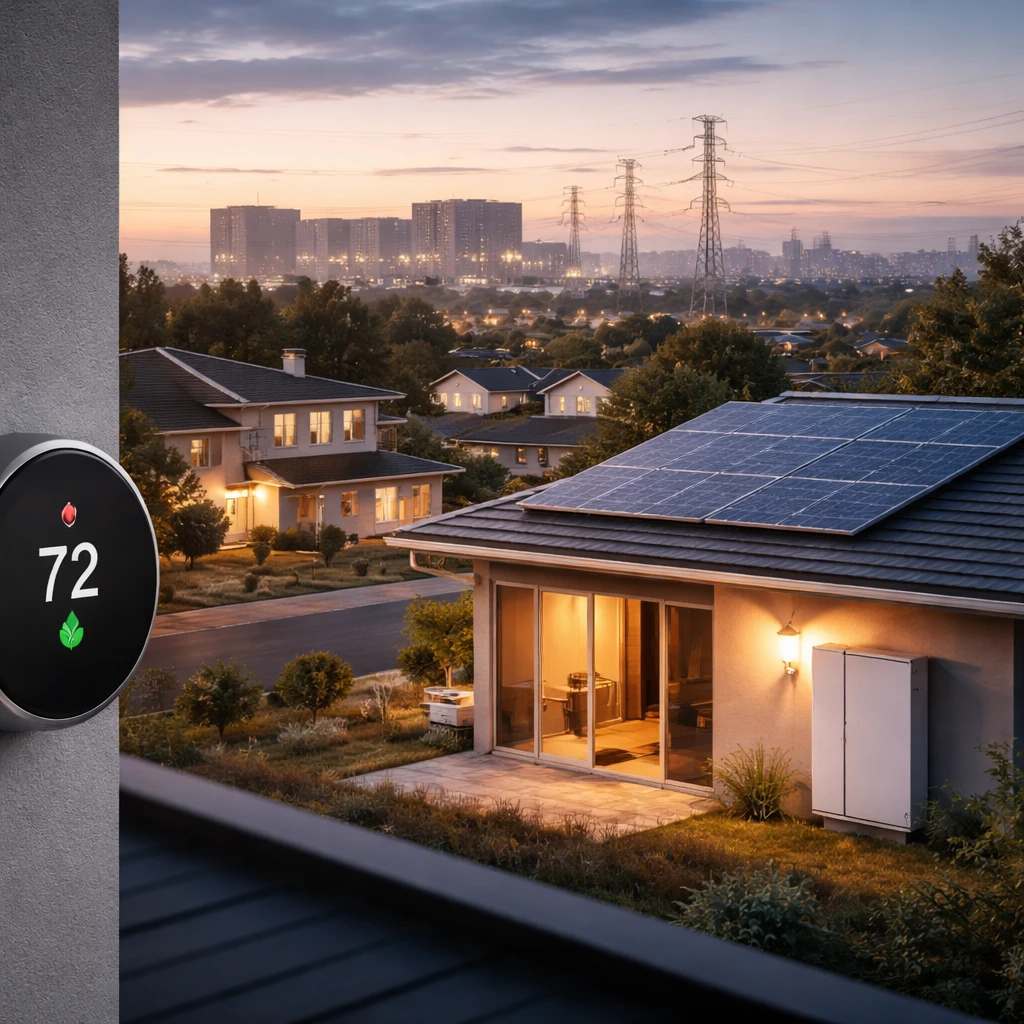
Google announced a three-year contract with grid-services provider Voltus to unlock up to 100 megawatts of flexible, distributed electricity capacity on the PJM grid - the regional system that serves roughly 67 million people in the United States. The arrangement uses behind-the-meter resources, including batteries and smart thermostats, to reduce load when the system needs relief and pays participating local homes and businesses for their contributions.
Deal mechanics and scope
Under the terms of the agreement, Voltus will orchestrate flexible distributed energy resources to curtail demand during stress periods on the PJM network. The company will compensate residential and commercial participants whose devices and storage systems are called on to lower consumption. Google framed the pact as a novel, "first-of-its-kind" smart capacity solution that both expands usable capacity on the grid and directs investment into local communities that host participating resources.
The contract runs for three years and is focused specifically on the PJM region. Google said the capacity unlocked by this program will support the grids that supply electricity to its data centers.
Company rationale
In announcing the agreement, Google highlighted research referenced in its statement that suggests U.S. consumers could save in excess of $100 billion over the coming decade by employing similar smart-grid approaches. The company said it is piloting and scaling multiple models to make more efficient use of the grid, ranging from data center demand-response programs to the Voltus partnership described in this agreement.
Objectives
Google characterized the Voltus deal as part of a broader effort to move toward a grid that is more robust, cleaner, and more affordable. The company emphasized that the arrangement is intended to create additional system capacity while channeling investment to community-level assets and strengthening reliability for infrastructure that serves its operations.
Key points
- Three-year agreement between Google and Voltus to unlock up to 100 MW of flexible distributed capacity in PJM.
- Voltus will coordinate batteries and smart thermostats to reduce energy demand when needed, compensating participating homes and businesses.
- Google cites potential consumer savings of more than $100 billion nationwide over the next decade from similar smart solutions and says the deal supports cleaner, more affordable grid objectives.
Risks and uncertainties
- The agreement is limited to a three-year term and is focused on PJM; longer-term outcomes beyond the contract period are not specified in the announcement.
- The effectiveness of unlocking capacity depends on the performance and participation of distributed assets such as batteries and smart thermostats.
- Projected consumer savings cited in Google's statement refer to broader research about similar smart solutions and are presented as an estimate rather than a guaranteed outcome.