
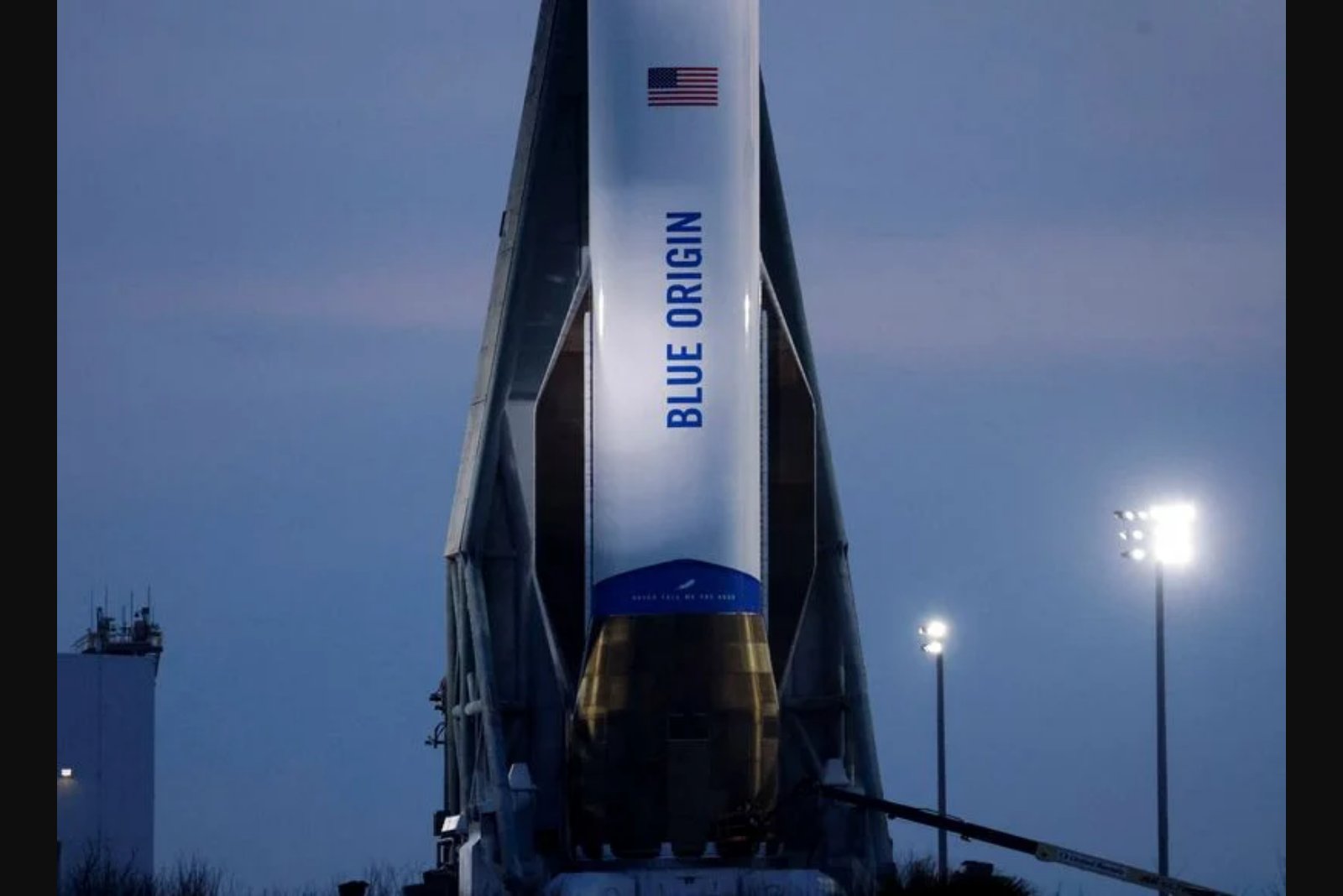
Blue Origin expects its New Glenn rocket to resume flights before year end, CEO Dave Limp said, after a recent explosion during a ground-based hot-fire test damaged the company's lone launch pad. The blast occurred as technicians prepared the vehicle for a mission that had been to loft 48 internet satellites for Amazon, Blue Origin's largest private customer. No satellites were aboard and no personnel were injured.
Limp said company teams have inspected the pad and found that the primary fuel tanks there "are all in good shape," a finding he described as "good luck," noting that replacing such tanks would take a long time if they had been compromised. He added that rocket boosters staged nearby for future flights "also look good," while cautioning that the pad's main support tower will need repairs before operations can resume.
The explosion destroyed or damaged equipment at the Space Coast facility in Cape Canaveral, Florida, and tightened an already constrained U.S. launch schedule for satellite customers. The incident follows a mission failure in April on New Glenn's third flight and comes at a time when Blue Origin faces mounting pressure to raise the pace of New Glenn launches amid competition from SpaceX, the world's most active launch provider.
Limp declined to speculate on the root cause of the blast, which occurred during a routine hot-fire test - a procedure that involves firing a rocket's engines while the vehicle is secured to the pad as part of final mission preparations. The company has not released an explanation for what triggered the explosion.
The event was among the most serious setbacks in Blue Origin's history since the company was founded in 2000 by Jeff Bezos, in part because it impacted both Blue Origin's flagship orbital rocket and the single pad from which New Glenn launches. Blue Origin has not said whether the damage will keep New Glenn grounded through the remainder of the year, but analysts and industry observers are treating the incident as likely to constrain the company's near-term flight cadence.
Amazon, which is building its own internet constellation and faces pressure to expand that system in competition with Elon Musk's Starlink, had planned to use the aborted New Glenn mission. Amazon has alternative launch agreements in place - including arrangements with United Launch Alliance, the joint venture led by Boeing and Lockheed Martin, and with French launcher Arianespace. In a recent operation, a ULA Atlas V placed 29 of Amazon's low-Earth-orbit satellites into service.
Blue Origin's current situation echoes earlier setbacks in the commercial launch sector. SpaceX experienced a launch-pad explosion with a Falcon 9 in 2016 while conducting fueling for a hot-fire test; that company returned Falcon 9 to flight roughly four months after the accident. Blue Origin itself endured a high-profile failure in 2022 during an uncrewed flight of its New Shepard suborbital vehicle, when a structural failure in an engine nozzle occurred mid-flight. That program did not fly again for one year and three months after Blue Origin's internal investigation and a U.S. Federal Aviation Administration review.
In January, Limp placed the New Shepard program on pause and redirected personnel and resources to priorities with tighter schedules: increasing New Glenn readiness and advancing the company's moon lander work for NASA. Blue Origin had intended to use New Glenn this year to launch an early version of its Blue Moon lander.
Context and outlook
The combination of an April mission failure on New Glenn and the recent hot-fire test explosion has left Blue Origin confronting a period of operational uncertainty. Repairs to the pad's support tower will be necessary before launches can resume, and the precise timeline will depend on ongoing inspections and any additional remediation work identified by engineers. Limp's statement that key tanks are intact suggests some critical infrastructure may be recoverable without extended delays, but the company has not provided a target date beyond the general outlook of returning to flight before year end.
For satellite operators, the incident tightens availability in an already competitive and capacity-constrained launch market. Amazon's use of multiple launch providers illustrates the contingency planning some constellation builders are following as providers contend with technical setbacks and scheduling pressures.
What happened
- The New Glenn rocket experienced an explosion during a hot-fire test at Blue Origin's Cape Canaveral pad.
- No satellites were on the vehicle and no injuries were reported.
- Inspection found key fuel tanks intact and nearby boosters appearing undamaged; the main pad support tower requires repair.
Existing challenges
- Blue Origin faces pressure to increase New Glenn flights amid competition from SpaceX.
- A prior New Glenn mission failed in April, adding to operational strain.
- Blue Origin paused New Shepard in January and shifted resources to New Glenn and moon lander work.