
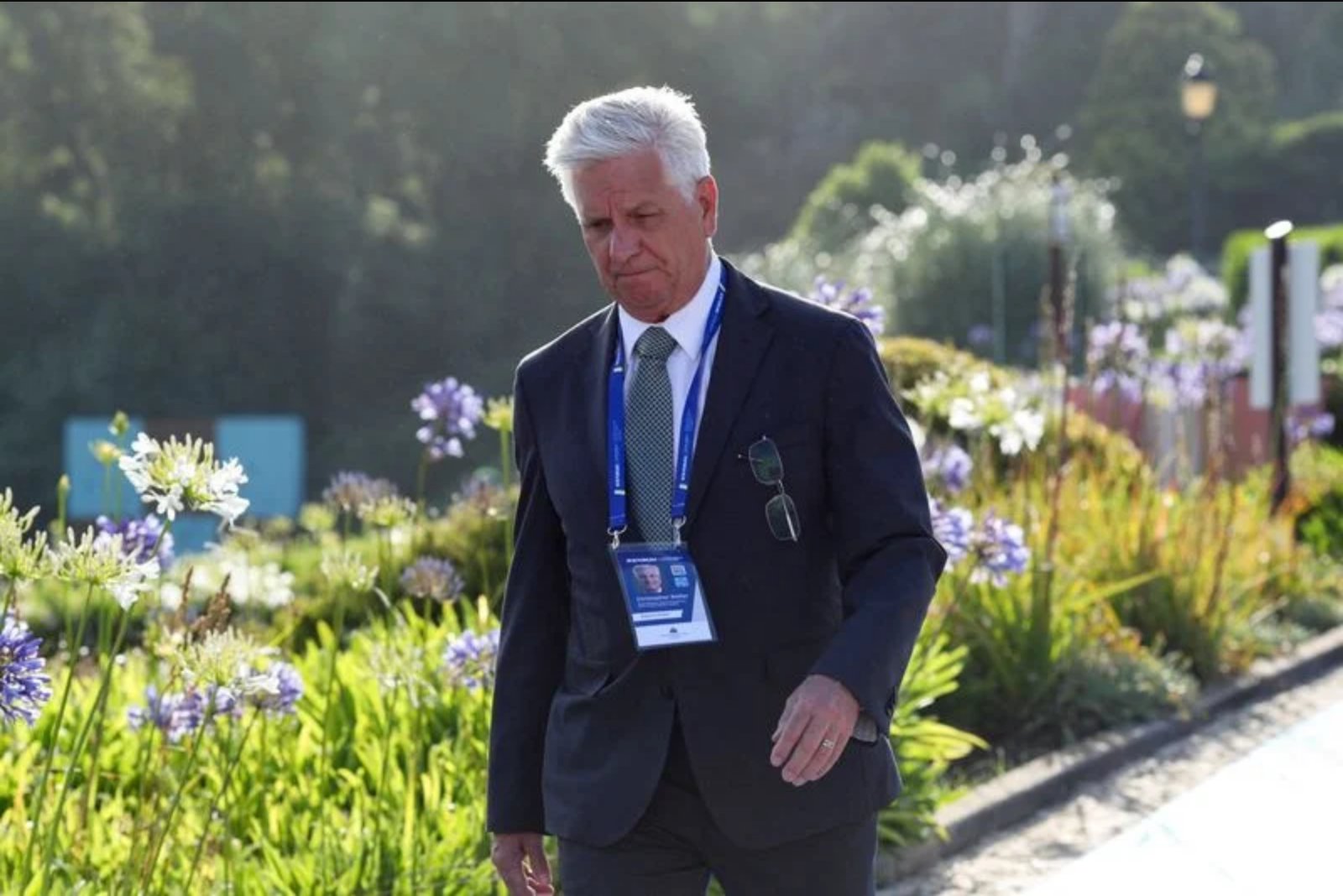
Federal Reserve Governor Christopher Waller said on Monday that the principal risk confronting the central bank is now high inflation, citing a U.S. labor market that appears to have steadied.
Speaking at an economics conference in Rome, Waller contrasted his current view with his stance a year earlier. "A year ago I was advocating for rate cuts because the labor market was not looking good, so I was willing to tolerate a longer movement back to our 2% (inflation) target based on the labor market," he said. "Those risks have completely flipped around now. The labor market seems to be stabilizing in the US. Inflation has been taking off. So then that changes how you might want to think about policy."
Waller did not directly reference the June jobs report, which showed weaker-than-expected hiring but recorded a fall in the unemployment rate to 4.2% from 4.3% in May. Nonetheless, his comments underscore how closely market participants and policymakers are watching inflation readings, particularly the consumer price index for June due on July 14. That release is the last major economic data point before the Federal Open Market Committee meets on July 28-29.
Global crude prices, which have retreated to roughly $70 a barrel - near levels seen before the start of a U.S.-backed war with Iran - could exert downward pressure on headline inflation. However, projections published by Fed policymakers after their June meeting still showed their preferred inflation gauge remaining more than one percentage point above the central bank's 2% target by year end.
Market expectations have responded: investors currently assign a higher probability to a rate increase by the Fed's September meeting, while the odds of an interest-rate move in July sit at about one in four. The outlook for policy tightening is reinforced by the fact that nine Fed officials signaled in their projections a need for tighter policy this year.
Commentators have also highlighted the possibility of a July increase. "A rate hike is on the table" when policymakers convene later this month, Tim Duy, chief U.S. economist for SGH Macro Advisors, wrote in an analysis, noting that with unemployment relatively low and inflation above target, the Fed is falling short on only one side of its dual mandate.
The central bank left rates unchanged at its June meeting in a unanimous vote, which was the first meeting under new Chairman Kevin Warsh.
Contextual note: Waller's remarks add to a broader policy debate inside the Fed about the balance between labor market conditions and the imperative to bring inflation down to target.