
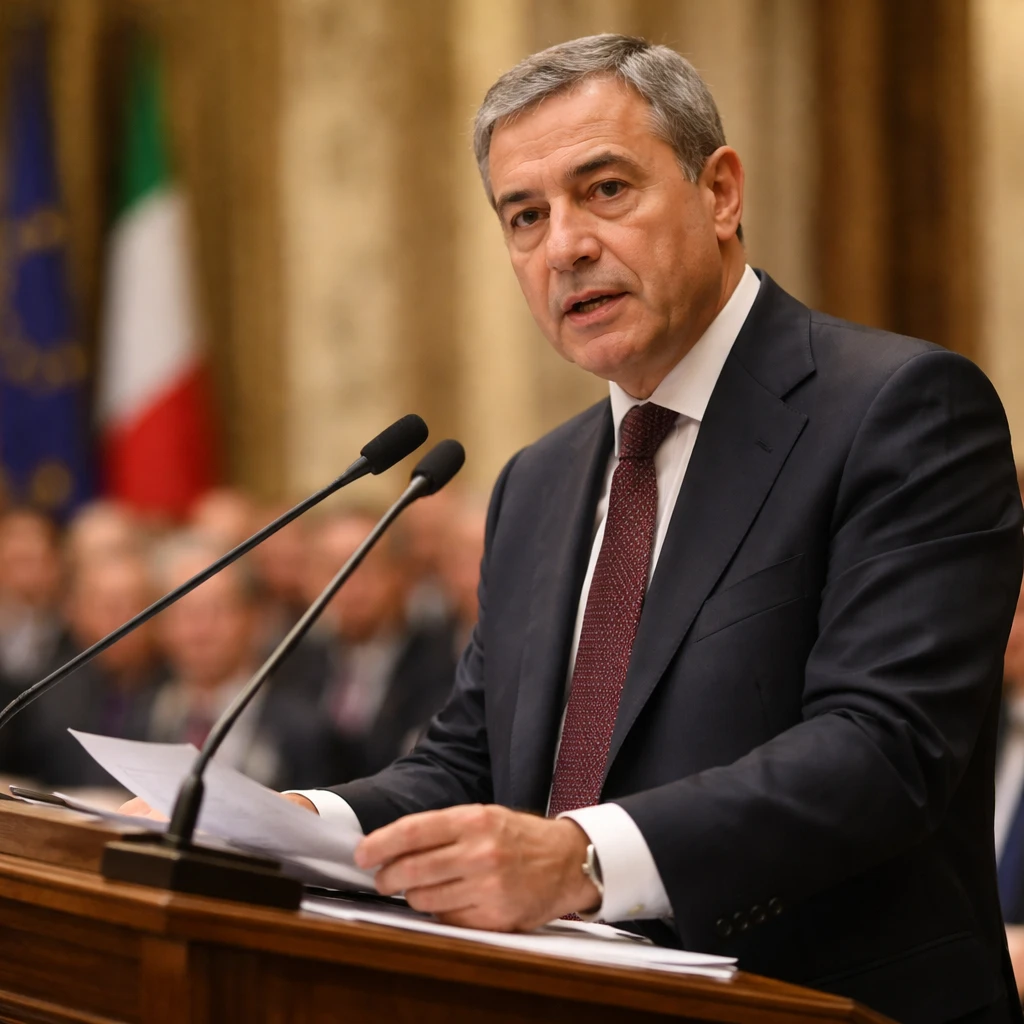
European Central Bank policymaker Fabio Panetta on Monday signaled concern that central banks in Europe may face mounting pressure from fiscal demands as governments confront higher pension costs and the need to support industry and defense.
Panetta said that Germany, France and Italy are working to find financing for stepped-up defense outlays, measures to revive industry and welfare systems strained by aging populations. He spoke after a presentation by Oxford University academic Beata Javorcik at an event in Rome.
Addressing the potential implications for monetary policy, Panetta observed: "My first reaction is thank God that we’ll retire soon because I think we will be more and more under fiscal dominance," describing a scenario in which government requirements dictate central bank decisions.
He added: "If the voters are moving in that direction, I would not expect that the central bank can stop the waves," indicating that electoral preferences could make it difficult for monetary authorities to resist fiscal-driven policy shifts.
The governor underscored the mechanism by which central banks affect government financing: setting short-term interest rates and influencing bond yields through market operations, actions that in turn help determine government borrowing costs.
Panetta’s remarks come amid signs of rising friction between heavily indebted governments and their central banks, a dynamic that observers say could challenge long-standing central bank independence.
He pointed to recent international developments as further evidence of political influence on monetary institutions. In Japan, the government led by Sanae Takaichi has been working to appoint dovish policymakers to the Bank of Japan with the aim of slowing interest rate increases. In the United States, the Supreme Court rejected Donald Trump’s attempt to remove a Federal Reserve governor last week. Separately, ECB President Christine Lagarde has not ruled out participating in next year’s French presidential election.
Panetta’s comments highlight tensions at the intersection of fiscal policy, electoral politics and central bank mandates, with potential implications for bond markets, government financing and the way monetary policy is conducted in Europe and beyond.