
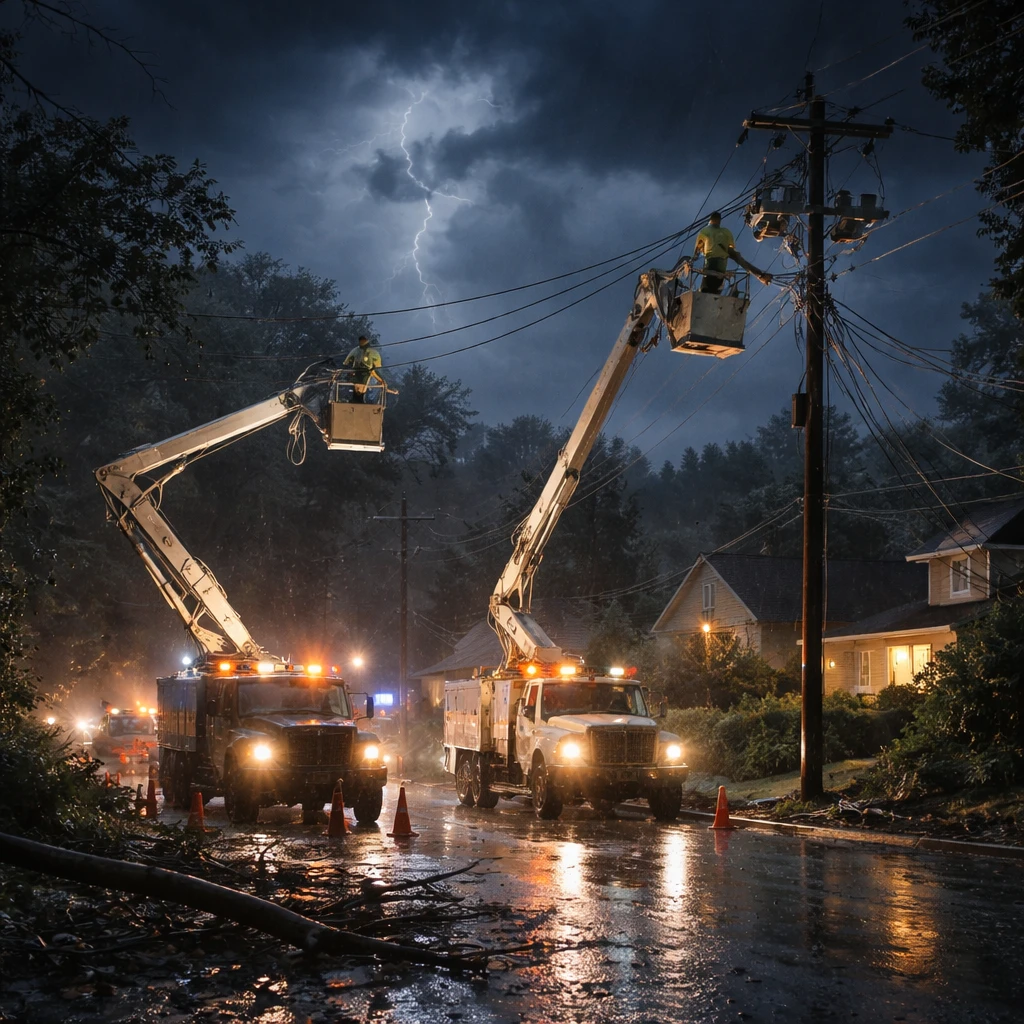
Jefferies said U.S. utilities experienced operational stress in early July as hot weather and storm systems coincided, producing meaningful customer outages during the July 4 and July 5 timeframe.
The analyst note said the electricity system weathered the heat on July 3 without widespread failure, but subsequent storm activity drove most of the disruptions. On July 2 WE Energies, a subsidiary of WEC Energy Group, was the only significant outage reported that day, leaving roughly 31,000 customers - about 3% of that utility's customer base - without power.
The most severe interruptions occurred overnight into July 4. In Michigan, outages affected customers of DTE Energy (NYSE:DTE) and CMS Energy (NYSE:CMS). New Jersey utilities also saw major impacts, with FirstEnergy (NYSE:FE) and Public Service Enterprise Group (NYSE:PEG) reporting outages. Pennsylvania experienced the largest tally of outages on July 5.
Outages in Michigan proved more persistent than in other states. DTE Energy reported that on Sunday evening more than 100,000 customers remained without power. Jefferies highlighted that reliability in Michigan remains below average, a condition it said represents a risk for investor-owned utilities operating in that state.
Grid operator PJM Interconnection reported peak electric demand of 162.7 gigawatts on July 2, which was under the forecasted peak of 167.0 gigawatts. To avoid reaching a new system record, PJM said it used up to 6 gigawatts of emergency demand response. The regional operator also declared a maximum generation emergency that evening, a designation that carries the possibility of penalties.
On the regulatory and corporate front, the New Mexico Public Regulatory Commission issued a final order in a 2-1 vote that voided a $400 million PIPE transaction between TXNM Energy and Blackstone from June 2025. The commission did not require a full refiling of the merger case, according to the order.
Other industry developments reported during the early July period included a July 2 rate filing by Baltimore Gas & Electric - an Exelon (NASDAQ:EXC) subsidiary - seeking a $156 million revenue increase. Exelon's filing would, if approved, raise the average residential monthly bill by about 4%, or roughly $8 per month. Separately, about 1,600 union workers at PECO Energy began a strike, affecting that utility's labor operations.
Context and implications
Jefferies' note framed the sequence of heat and storm events as a test of short-term system resilience across multiple regions, with localized reliability and regulatory developments adding to the near-term operational picture for utilities.