
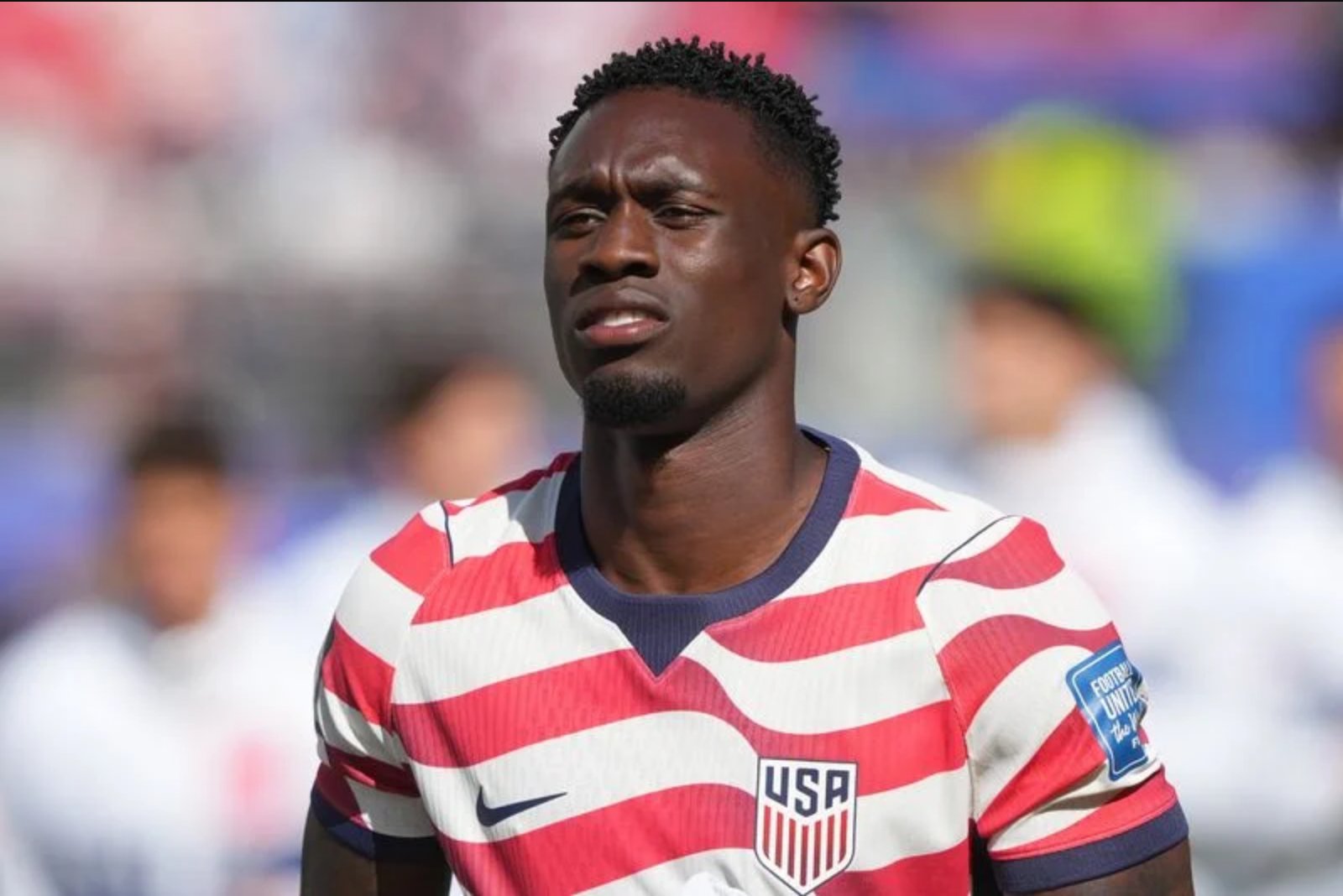
Folarin Balogun entered one of the most consequential fixtures of his career at the centre of an unusual mix of sport and politics when FIFA said it would suspend a World Cup red-card ban on the striker, clearing the way for him to play in the United States’ round of 16 match against Belgium.
The move came after Balogun was sent off following a Video Assistant Referee review in the United States’ previous group match against Bosnia and Herzegovina for what was ruled at the time to be a dangerously planted boot on the ankle of Bosnia defender Tarik Muharemovic. The incident, which many observers considered inadvertent, initially left Balogun facing a suspension that would have sidelined him for the knockout game.
FIFA’s announcement on Sunday that it would lift the ban carried an added political edge. President Donald Trump publicly called on FIFA President Gianni Infantino to revisit Balogun’s case. The involvement of the U.S. president - who has repeatedly called for ending birthright citizenship - injected the dispute into an already charged national conversation about citizenship, immigration and American identity.
Balogun’s own citizenship story has itself become a focal point. He was born in New York after his Nigerian mother was unable to return home from a visit because she was too far advanced in her pregnancy to fly. When Balogun was one month old his mother returned to Britain, where he was raised and developed through the Arsenal academy. He initially represented England at youth level before opting to join the United States programme in 2023.
The striker’s performances at the World Cup elevated him quickly to breakout-star status for the U.S. team, scoring three goals as fans began to dream of a deep tournament run and as U.S. Soccer presented a more diverse image than it has historically shown. Christian Pulisic had been the team’s long-standing front man and was still widely associated with major sponsorship appeal, but Balogun’s run on the world stage captured public attention in its own right.
Public reaction tied his personal path to broader policy debates. Supporters of birthright citizenship celebrated his emergence, framing his story as evidence of the benefits that can flow from that principle. A Miami Herald editorial summed up that view with the headline that Balogun "prove(s) birthright citizenship isn’t a loophole - it’s America." Jorge Loweree, managing director of programs at the American Immigration Council, said Balogun’s case "is an extraordinary example of the good that is made available to us by things like birthright citizenship," arguing that such legal provisions can give people opportunities they would not have otherwise.
The United States is among 33 countries, most of them in the Western Hemisphere, that allow unconditional birthright citizenship, a practice the article notes traces to an 1898 Supreme Court ruling that affirmed the 14th Amendment permits birthright citizenship. Polling cited in the coverage - from a Reuters/Ipsos survey this year - found most Americans opposed changing that practice.
On the field, Balogun’s red card followed a VAR review of a challenge on Muharemovic that was judged to be severe enough to merit a dismissal. Video replays suggested the contact may have been inadvertent. The 25-year-old striker received comfort from teammates in the immediate aftermath - Christian Pulisic was seen wrapping an arm around Balogun - and Balogun responded by saying he would channel his energies into supporting his teammates off the pitch for the next match.
Days later, and less than a week after the Supreme Court handed President Trump a significant setback in his effort to end birthright citizenship, Trump placed a call to FIFA President Gianni Infantino seeking a reprieve for Balogun. Infantino confirmed he had heard from the U.S. president but denied that the presidential contact influenced FIFA’s decision to suspend the red card.
Balogun has been outspoken about his comfort with the decision to represent the United States. In the U.S. Soccer announcement that he would play for the national team, he said, "It feels like I’m at home here." He indicated the choice was made with his family and that a vacation to Orlando played a role in his experience with U.S. fans: "I think that’s when I really saw the full force of the U.S. fans," he said at the time, adding that he was happy with his decision.
Balogun’s on-field style also drew attention from high-profile figures in American sports culture. He replicated LeBron James’ "Silencer" celebration after scoring, earning public recognition from the NBA star. The World Cup spotlight contrasted with a previous moment when Pulisic himself drew attention for a goal celebration that was labeled the "Trump dance." Such intersections of sport and political symbolism have become part of the narrative surrounding the U.S. team at this tournament.
Despite the controversy, Balogun remained engaged with the team dynamic. After the red card he pledged to support his teammates in the knockout match against Belgium, a role that FIFA’s suspension of his ban allowed him to fulfil.
Markets don't take breaks - but you can. While you're enjoying summer, the market keeps moving. The good news? ProPicks AI never stops working - analyzing thousands of stocks using more than 100 financial metrics to surface opportunities. Its Tech Titans strategy has more than doubled the S&P 500 since launching in November 2023, having caught winners like Siemens Energy (up 231.5%) and Sandisk (up 189%), according to the promotional copy included in the coverage.
The unusual convergence of a major sporting event, a contentious domestic policy debate and direct involvement from the U.S. president has made Balogun’s World Cup journey emblematic of larger national conversations. FIFA’s suspension of the ban ensured the striker could play in the round of 16, but the episode left questions about the intersection of sporting governance and political pressure prominently in view.