
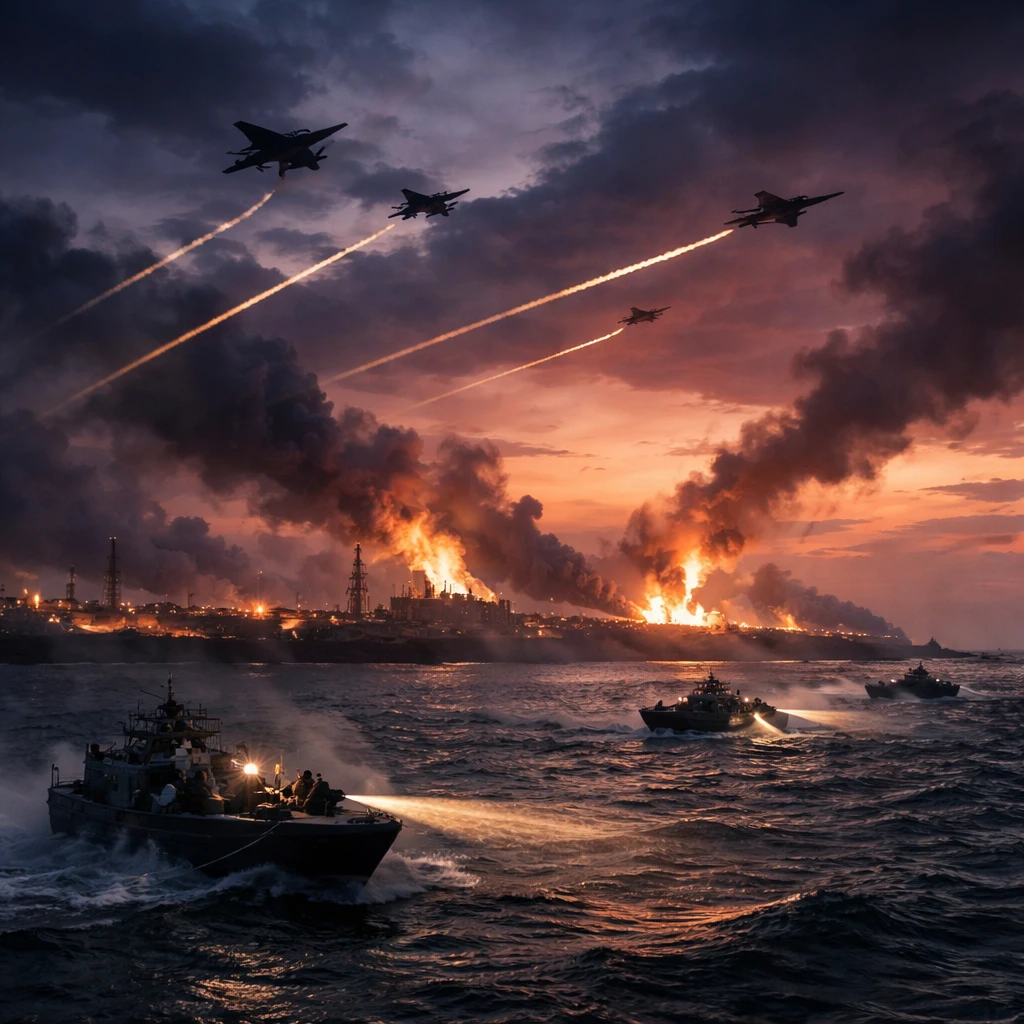
The United States and Iran carried out airstrikes for a second straight day, further intensifying a cycle of military exchanges that erupted in the Gulf. U.S. Central Command (CENTCOM) said late Wednesday and into early Thursday that American forces struck multiple Iranian military targets, characterizing the operations as acts of "self-defense" following the downing of a U.S. helicopter in the Strait of Hormuz.
CENTCOM stated it had completed its latest sequence of strikes. Iran responded by launching attacks against several U.S. military bases and allied positions in the Gulf region. Explosions from those strikes were reported across Kuwait, Bahrain and Jordan, according to accounts of the incidents.
Tehran additionally claimed it had halted all ship traffic through the Strait of Hormuz. CENTCOM rejected that claim, leaving the status of maritime movements in the waterway at the center of conflicting statements from the two sides.
Political and military rhetoric
President Donald Trump, speaking to a Fox News reporter on Wednesday evening, warned that Washington stood ready to "bomb the s*** out of Iran" if Tehran did not immediately accept a proposed peace deal. Earlier on Wednesday the president said Iran had taken too long to negotiate and "would now have to pay the price."
On Thursday, the president said he "liked the inflation" amid a spike in oil prices that followed the latest hostilities. He also asserted that the U.S. had been covertly facilitating oil flows through the Strait of Hormuz, estimating those shipments at a total of 100 million barrels of crude.
Market and regional implications
Oil prices rallied sharply on Thursday as the exchanges of strikes and Iran's claims regarding shipping prompted heightened concern about supply disruptions and their potential inflationary effects. The flare-up follows a series of intermittent strikes between the U.S. and Iran over the past two weeks.
The broader regional picture has also been unsettled. Iran had engaged in strikes with Israel over the weekend in response to Israel's actions in Lebanon and against Hezbollah. In turn, the Israeli military warned early Thursday of launches of projectiles from Lebanon.
The escalation has placed additional strain on prospects for a U.S.-Iran peace deal: both Washington and Tehran remain sharply divided on issues including Iran's nuclear program and control over the Strait of Hormuz, dimming hopes for an immediate resolution.