
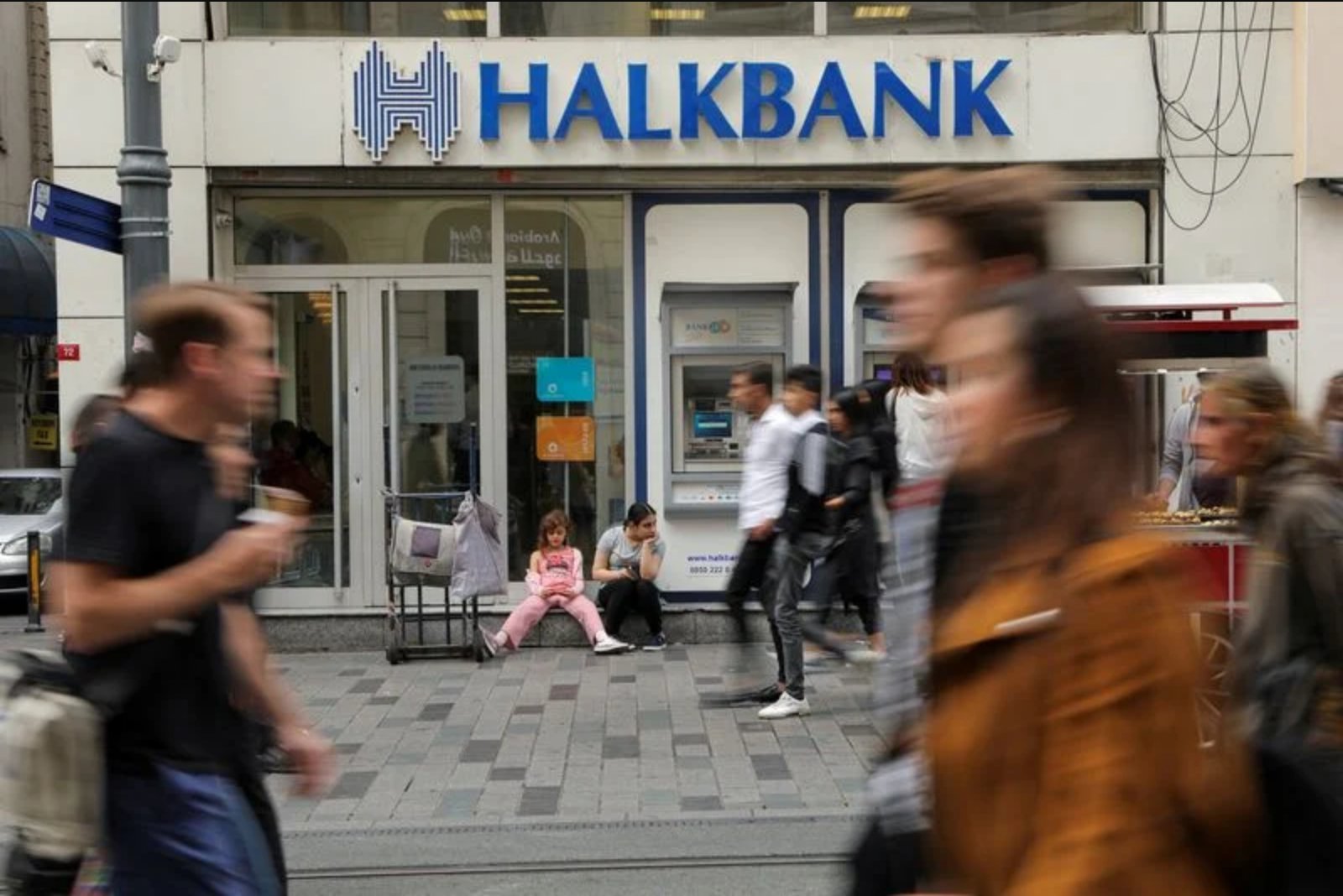
The U.S. Department of Justice on Wednesday filed a motion asking a federal judge to dismiss its criminal case against Halkbank, stating that it does not intend to pursue prosecution of the Turkish state-run lender. A lawyer for Halkbank did not immediately reply to a request for comment.
The filing follows a March agreement between Halkbank and the U.S. federal government to end the protracted criminal matter. The March settlement was presented as a measure that would remove a persistent source of friction in relations between NATO allies Turkey and the United States, and it was followed by a sharp rise in Halkbank's share price on the Istanbul stock exchange.
Halkbank had been indicted during former President Donald Trump's first term on charges that it assisted Iran in evading U.S. economic sanctions. Turkish President Recep Tayyip Erdogan previously described the case as unlawful and "ugly." The two countries, according to the court filing, are now experiencing their warmest relations in decades since Trump's return to the presidency last year.
The Justice Department told the court that dismissing the prosecution aligns with the U.S. interest in constraining support for Iran. Under the terms of the March agreement, Halkbank is barred from engaging in transactions that would benefit Iran and is subject to oversight by a monitor tasked with reviewing the bank's sanctions compliance and anti-money-laundering controls. The agreement does not involve any monetary payment and does not include an admission of criminal liability by Halkbank. The bank has pleaded not guilty to the charges.
Following the announcement of the settlement, Manhattan-based U.S. District Judge Richard Berman put the case on hold for a 90-day period to allow the bank to demonstrate adherence to the settlement's terms. As part of that process, Halkbank retained global accounting firm Ernst & Young to review its compliance policies.
In a court filing on Wednesday, timed to the conclusion of that 90-day interval, prosecutors from the Manhattan U.S. Attorney's Office reported that the compliance review uncovered no instances of noncompliance by Halkbank. The prosecutors asked Judge Berman to grant their motion to dismiss the case.
The prosecution's path through U.S. courts has been complex. In October, the U.S. Supreme Court let stand a lower court ruling that allowed the case to proceed against Halkbank. The bank had argued that, as an entity owned by the Turkish state, it should enjoy immunity from legal actions in foreign courts.
The settlement was announced after the U.S.-Israeli war on Iran began in February. U.S. prosecutors have alleged that Halkbank secretly transferred $20 billion in restricted funds, converted oil revenues into gold and cash to benefit Iranian interests, and used fabricated documentation of food shipments to justify transfers of oil proceeds. Halkbank has consistently denied criminal wrongdoing.
Diplomatic engagement between Ankara and Washington played a role in the resolution process. After a meeting between Turkish President Erdogan and U.S. President Trump last year, Erdogan expressed hope for a settlement of the Halkbank matter. Erdogan said in October that Trump told him, during a September meeting at the White House and in a subsequent phone call, that "the Halkbank problem is finished for us."
Summary
The Justice Department has moved to dismiss its criminal case against Halkbank following a March settlement that restricts the bank from Iran-related transactions and subjects it to monitoring. Prosecutors reported no compliance issues after a 90-day review and asked a Manhattan judge to approve dismissal. The agreement involves no monetary payment and does not include an admission of wrongdoing by Halkbank.
Key points
- The DOJ filed a motion on Wednesday asking a federal judge to dismiss the criminal case against Halkbank, indicating no intent to prosecute.
- The March settlement bars Halkbank from engaging in transactions that benefit Iran and requires oversight of its sanctions and anti-money-laundering compliance; no money changes hands and the bank did not admit criminal wrongdoing.
- Sectors affected include banking and financial markets, illustrated by a surge in Halkbank shares on the Istanbul exchange; diplomatic relations between Turkey and the U.S. are also implicated.
Risks and uncertainties
- Judicial process uncertainty - although prosecutors asked for dismissal, the case previously navigated complex court challenges, including a Supreme Court decision that left lower-court rulings intact, indicating legal processes could have produced different outcomes.
- Reputational and regulatory risk for the banking sector - allegations that included claims of $20 billion in restricted transfers and other misconduct highlight continuing scrutiny of banks' sanctions and anti-money-laundering controls.
- Diplomatic risk - while ties between Turkey and the U.S. are described as warming, the settlement and its constraints on transactions involving Iran remain sensitive points in international relations and could influence future regulatory or diplomatic developments.
Tags: Turkey, Banking, Sanctions, Legal, HALKB