
Global markets opened under pressure as a renewed cycle of strikes and counter-statements in the Middle East coincided with turbulence in the technology sector. The U.S. launched strikes against multiple targets in Iran, and President Donald Trump said he would order further attacks if a peace deal is not reached, while Iran’s Islamic Revolutionary Guard Corps reported it had retaliated against U.S. air bases in Kuwait and Bahrain and warned it could target any vessel transiting the Strait of Hormuz.
In commodity markets, Brent crude climbed 1.7% to $94.64 as traders priced in the potential for further disruption to regional flows. The spike in oil coincided with broad caution among equity investors, who have struggled to find a reliable floor since a wave of selling earlier this week.
Regional equities were broadly weaker. MSCI’s gauge of Asia-Pacific shares excluding Japan fell 1.3%, with losses concentrated in Taiwanese and South Korean names. Shares of companies tied to artificial intelligence chip production moved unevenly during the session, at times posting gains and at other times registering declines as market participants reassessed exposure to the sector.
Some market participants have pointed to repositioning ahead of a major equity offering as a contributor to the tech-sector weakness. Reuters has reported that investor demand for the upcoming SpaceX share offering exceeded $250 billion, which would make it the largest initial public offering on record.
Corporate developments also weighed on sentiment. Oracle disclosed spending plans that exceeded many expectations, rekindling concerns about corporate debt levels and prompting a sharp market reaction - the company’s shares plunged about 10% in after-hours trading.
Currency markets showed modest movement ahead of key policy news. The euro ticked up 0.1% to $1.1544 as investors positioned for the European Central Bank’s June monetary policy announcement and press conference later in the day, where a rate increase is widely anticipated. The single currency held gains despite the flare-up in the Iran conflict, while the U.S. dollar index remained firm at levels not seen since ceasefire talks with Tehran began in early April.
Yields edged higher in U.S. government bond markets. The yield on the 10-year Treasury was up 1.4 basis points at 4.552% as traders rebalanced expectations for future policy. A hotter-than-expected U.S. inflation print on Wednesday nudged market pricing toward a potential Federal Reserve rate increase in October according to the CME FedWatch tool, though the tool showed that expectations remained finely balanced.
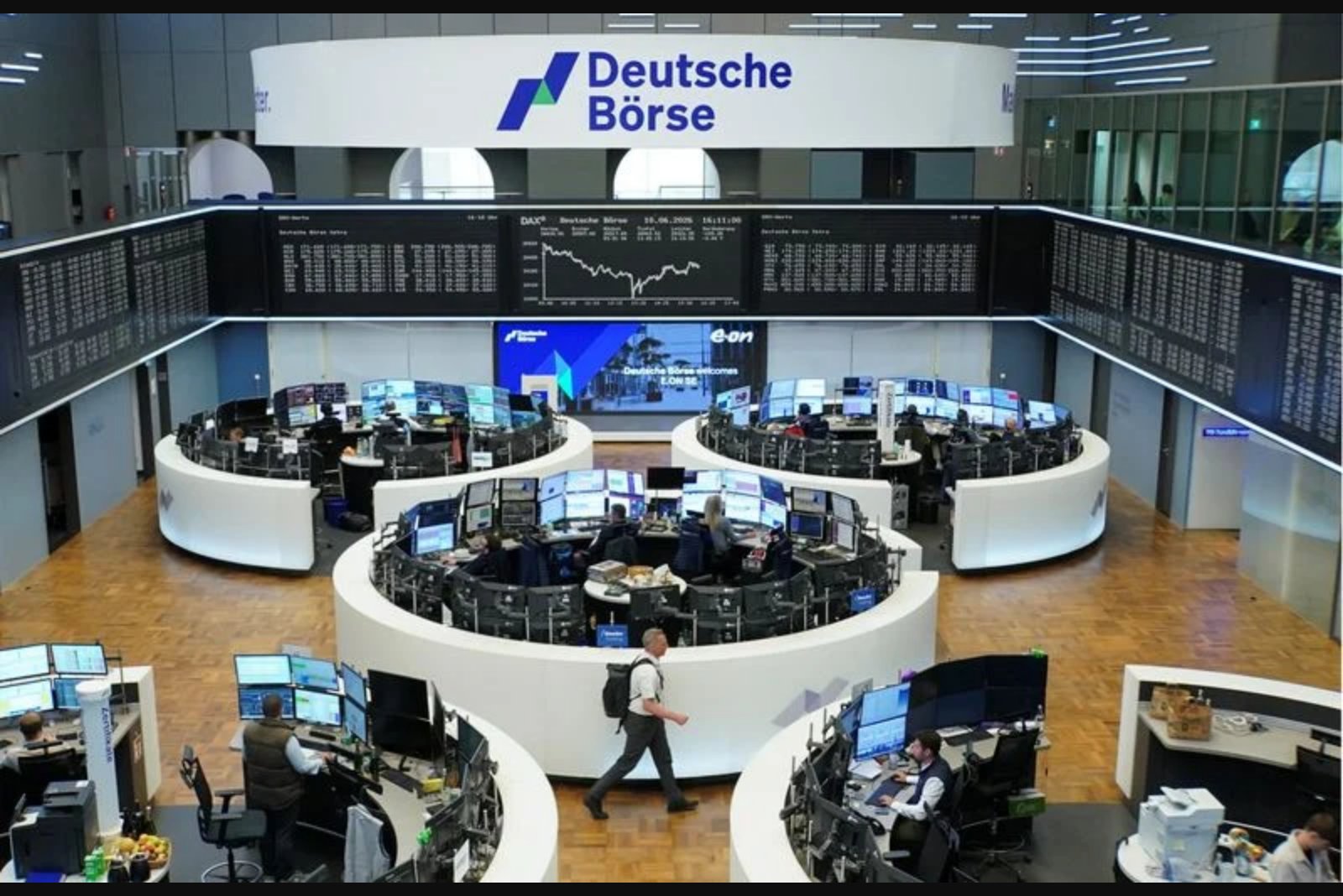
U.S. equity futures showed tentative recovery, with S&P 500 e-mini futures up roughly 0.2% and positioned to end a two-day losing streak. In Europe, futures traded lower in early deals - pan-region futures were down about 0.8%, German DAX futures fell 0.6% and FTSE futures slipped 0.8% as investors awaited fresh economic data and central bank signals.
Key scheduled events that could steer markets on Thursday include Germany’s current account balance for April, the ECB’s monetary policy decision and press conference for June, and U.S. producer price index data for May. Debt issuance in the U.K. - a three-year government bond auction - is also on the calendar and could affect gilts and short-term rates.
Market snapshots and indicators noted during the session:
- Brent crude - up 1.7% to $94.64
- MSCI Asia-Pacific ex-Japan - down 1.3%
- Euro - up 0.1% to $1.1544
- U.S. 10-year Treasury yield - 4.552% (up 1.4 basis points)
- S&P 500 e-mini futures - up ~0.2%
- Early European futures - pan-region down 0.8%, DAX down 0.6%, FTSE down 0.8%
Heading into the remainder of the day, investors will weigh geopolitical developments, corporate news flow and incoming economic data for cues on risk appetite and central bank policy paths.