
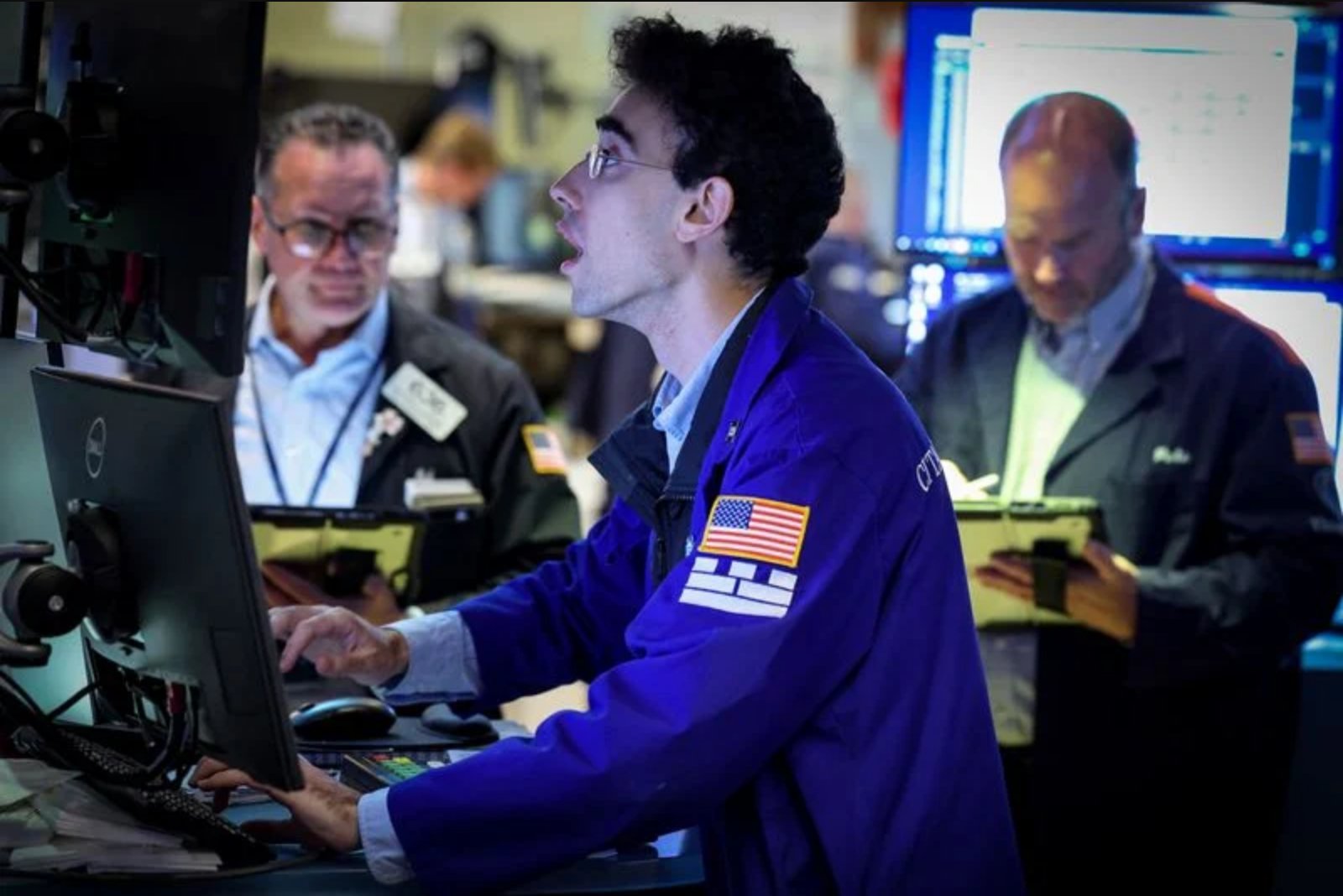
Global financial markets experienced a turbulent session on Wednesday, characterized by a pronounced retreat in technology stocks and heightened volatility driven by geopolitical tensions. A significant selloff in the tech sector pulled both U.S. and international indices lower, while investor sentiment was further unsettled by threats from U.S. President Donald Trump to target Iran "very hard," an escalation that contributed to a sharp rise in oil prices.
The broader economic landscape presents a contradictory narrative. While global trade appears to be maintaining momentum despite the headwinds of tariffs, ongoing trade conflicts, and physical warfare, there is an underlying concern regarding the quality of this growth. Current data suggests that headline economic figures may be inflated by rising price levels rather than increases in actual trade volumes, raising questions about the long-term sustainability of current growth signals.
Key Market Movements and Sector Performance
The impact of the selloff was felt acutely across major global indices. In Asia, South Korean stocks fell by 5%, while China and Japan both saw declines of 2%. In the United States, the three primary indices all dropped by nearly 2%.
Sectoral performance was highly uneven. Of the S&P 500 sectors, eight experienced declines while only three managed to rise. The technology sector saw a 2.3% decrease, and industrials fell by 3.4%. In contrast, consumer staples provided a rare bright spot with a 1.7% increase. Within the tech space, individual volatility was extreme: Super Micro Computer plummeted 28%, and Nvidia dropped 3.8%. The "SOX" semiconductor chip index also faced significant pressure, falling 3.6%.
In the foreign exchange markets, the USD/JPY pair rose to 160.50, reaching its highest level since the Japanese intervention on April 30. Meanwhile, in the commodities sector, oil prices rebounded by 2%, while gold experienced a notable decline of 4%.
The bond market saw U.S. yields rise slightly. A recent 10-year auction was met with very strong demand, particularly from indirect bidders, which serve as a proxy for foreign central bank activity.
Core Economic Drivers and the AI Cooling Trend
A primary driver of recent market volatility is the waning enthusiasm surrounding Artificial Intelligence (AI). The previous frenzy in AI-related stocks appears to be losing momentum, occurring even as the world prepares for a massive SpaceX IPO. This cooling effect has heavily impacted tech-centric indices; the "SOX" chip index has declined by 13% over the past week, and the Nasdaq has closed lower in five of its last six trading days, marking its most difficult recent run this year. Consequently, both the Nasdaq and the S&P 500 tech index have hit their lowest daily closes in over a month.
On the inflation front, U.S. consumer price inflation has climbed above 4% on an annual basis, which is more than double the Federal Reserve's 2% target. This upward trend is expected to continue in the coming months, potentially increasing financial pressure on households and consumers as the November midterm elections approach.
However, there were isolated signs of deceleration within the inflation data. Monthly core inflation slowed to 0.2%, down from the previous 0.4%, which was lower than the consensus expectation of 0.3%. Notably, core goods inflation turned negative for the first time this year, suggesting that the impact of tariffs may be diminishing and that the spillover effects from oil prices into core inflation remain limited.
Institutional Uncertainty at the Bank of Japan
A significant development in central bank policy emerged as Bank of Japan Governor Kazuo Ueda was hospitalized on Wednesday. As a result, he will be absent from the upcoming June policy meeting. This marks the first instance since 1998, when the current policy-setting arrangement began, that a BOJ governor has missed a scheduled policy meeting.
The absence comes at a critical juncture, as the Bank of Japan is anticipated to raise interest rates by 25 basis points to reach a three-decade high of 1.00%. While a strong commitment to tightening may be necessary to prevent the yen from sliding toward multi-decade lows, Governor Ueda’s absence complicates the central bank's ability to communicate its stance clearly to the markets.
Economic Risks and Market Uncertainties
1. Geopolitical Volatility and Energy Shocks: The potential for increased conflict in the Middle East, specifically regarding threats against Iran, poses a direct risk to energy prices. This volatility impacts the commodities sector and can lead to further inflationary pressures.
2. Persistent Inflationary Pressure: With annual U.S. CPI inflation exceeding 4%, there is a significant risk that rising costs will continue to squeeze consumer purchasing power. While monthly core figures showed some relief, the overall trend remains a concern for both economic stability and political landscapes.
3. Technology Sector Contagion: The rapid decline in AI and semiconductor stocks—evidenced by the sharp drops in Nvidia and Super Micro Computer—suggests a risk of continued downward pressure on broader equity indices that are heavily weighted toward technology.