
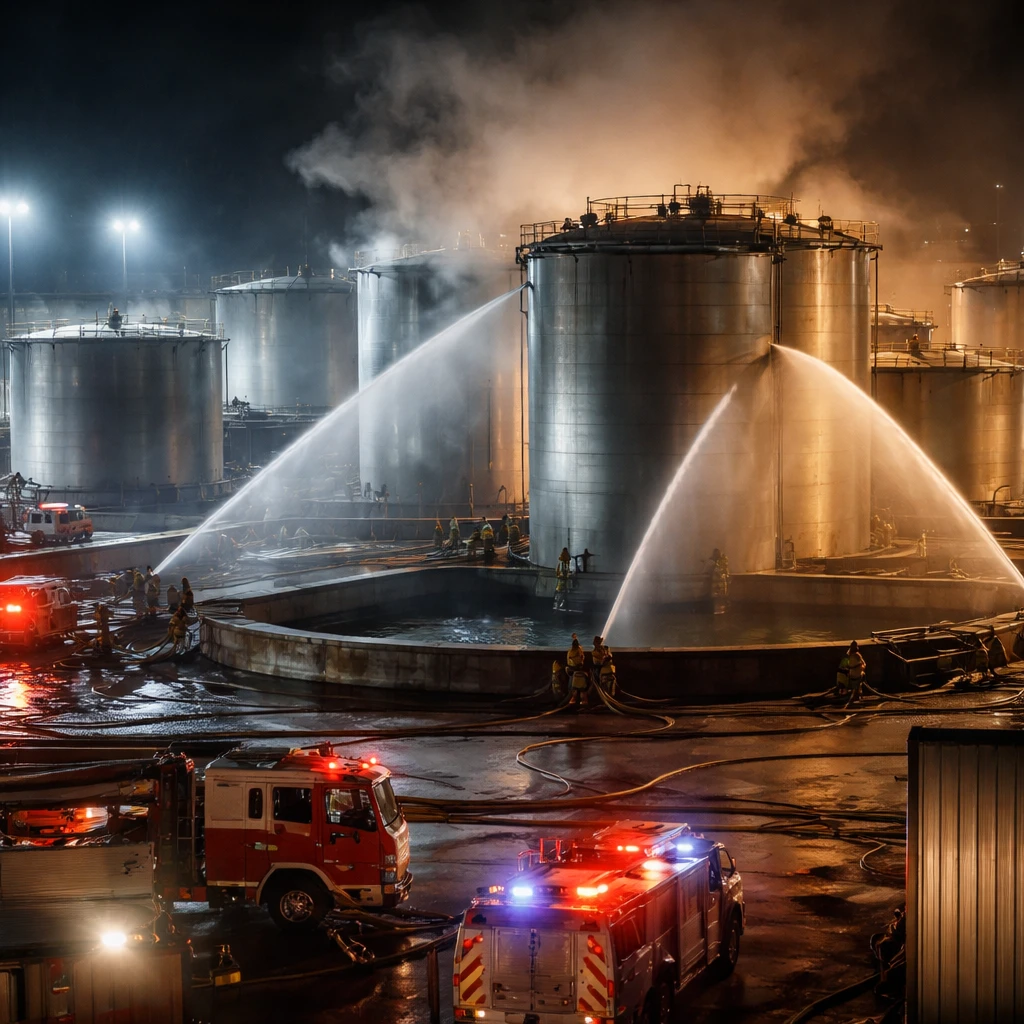
Emergency response efforts are intensifying in Southern California following a thermal escalation within a hazardous chemical storage tank. The incident, which originated on Thursday, centers on a vessel at a GKN Aerospace site in Garden Grove that holds approximately 7,000 gallons of methyl methacrylate. This flammable material is a key component in the production of commercial plastics and aviation-related manufacturing processes.
While initial drone surveillance suggested that surface temperatures had stabilized, manual physical inspections provided a more concerning outlook. Orange County Fire Authority Division Chief Craig Covey reported that the internal temperature of the chemical has reached 90 degrees Fahrenheit. Crucially, this heat is not static; data indicates an ongoing increase of roughly one degree per hour.
Operational Response and Mitigation Strategies
In response to the rising thermal profile, incident commanders have shifted to offensive operations. To mitigate the risk of a secondary explosion, emergency personnel were deployed overnight to neutralize a separate, adjacent storage tank containing 15,000 gallons of chemicals. Technical teams are currently evaluating the use of heavy-flow water cooling protocols. The objective of these protocols is two-fold: to slow down the internal chemical curing process and to reduce the structural pressure within the failing vessel.
Simultaneously, engineering crews are working on the ground to build containment dikes. These structures are designed to prevent any potential chemical runoff from entering local marine channels or storm drains in the event of a leak.
Impact on Local Population and Industry
The incident has necessitated expanded mandatory evacuation orders, affecting tens of thousands of residents within the district. Despite these orders, local law enforcement has noted that approximately 15% of people living in the designated zone have refused to leave their homes.
GKN Aerospace, which utilizes this specific facility for the manufacturing and testing of specialized canopies and windows for both military and commercial aircraft, has issued a statement. The company confirmed it is working closely with emergency experts and offered apologies for the disruptions caused to local commerce.
Key Economic and Industrial Points
- Aviation and Specialty Chemicals: The incident involves methyl methacrylate, a critical feedstock for aviation manufacturing and commercial plastics, potentially impacting supply chains for specialized aerospace components like windows and canopies.
- Industrial Safety Infrastructure: The emergency response highlights the high-stakes nature of managing large-scale chemical storage within industrial zones located near residential suburbs.
Risks and Uncertainties
- Catastrophic Vessel Failure: Local authorities have warned that the rising temperatures could lead to a catastrophic rupture of the tank, resulting in an explosion or a significant toxic chemical spill.
- Infrastructure Damage: There is an explicit risk that an explosion could compromise nearby industrial infrastructure, leading to further secondary hazards.
- Environmental Contamination: The potential for runoff to infiltrate marine channels or storm drains remains a primary concern for containment crews.