
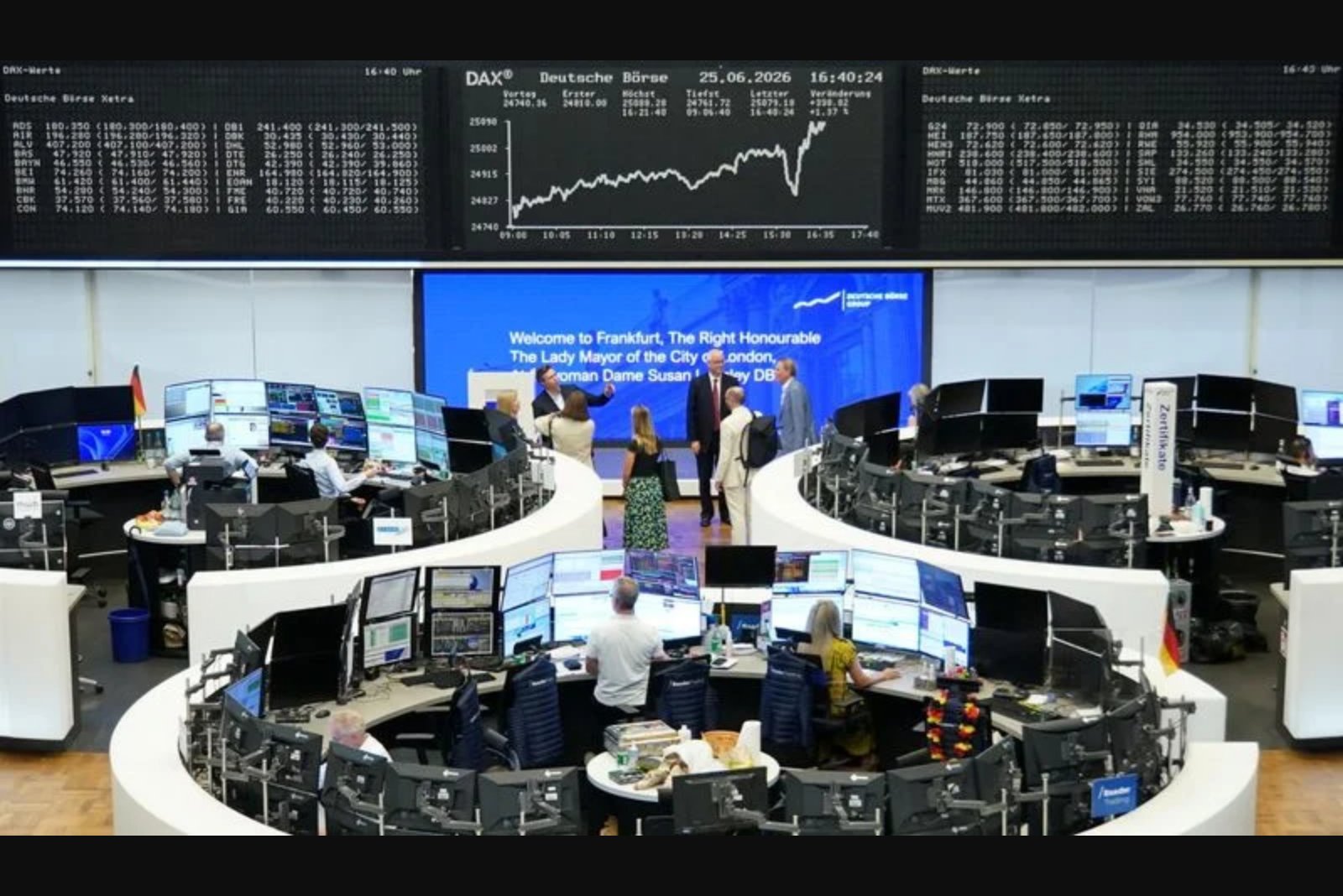
Global equities have retreated after an outsized quarter of gains, with traders citing a mix of profit-taking around quarter-end rebalancing and renewed scrutiny of the durability of AI-driven investment flows.
Reports that Meta plans to sell excess AI compute capacity have prompted questions about the company’s ongoing demand for high-performance chips, and by extension the future appetite for semiconductors across the sector. Asian markets bore the brunt of the early move lower. South Korea suffered heavy selling in its technology names, with the market initially down nearly 7% amid steep losses at large chipmakers including SK Hynix and Samsung Electronics, though the initial rout has eased and the KOSPI was last down about 3%. Japan’s Nikkei fell 1.2%.
European bourses were positioned for a flat start, with pan-region stock futures up 0.1%. In the U.S., futures showed slight gains ahead of the payrolls release - Nasdaq futures were up 0.3% and S&P 500 futures gained 0.2%.
Market focus is firmly set on the U.S. nonfarm payrolls report for June, which is being released a day earlier than usual because of the Independence Day holiday on July 4. Economists’ median forecast is for a 110,000 increase in payrolls for the month, though estimates span a wide range from 25,000 to 200,000. The timing of the World Cup is highlighted as a factor that likely created thousands of temporary positions, raising the odds of an upside surprise. The unemployment rate is forecast to remain steady at 4.3%.
Expectations for a stronger-than-forecast jobs print have fed through to bond markets. Treasury yields climbed in advance of the report, with two-year yields up 9 basis points on the week so far - a move that reflects increased market pricing for potential Federal Reserve policy tightening later in the year. That pricing is in place despite comments attributed to Federal Reserve Chair Kevin Warsh suggesting inflation risk is coming down.
Outside the U.S., central bank dynamics and energy prices are shaping sentiment. Oil fell to another four-month low on Thursday, a development that provides some relief to policymakers contending with inflation. European Central Bank President Christine Lagarde said inflation and growth risks appeared to be more broadly balanced now, and markets have trimmed the chance of an ECB rate increase as a result.
Euro-area data due later in the day includes the unemployment rate for May, where the consensus forecast is for a steady 6.3%. Separately, inflation in the euro zone eased more than expected to 2.8% in June.
Currency markets have also been active. The Japanese yen remained near multi-decade lows, hovering around 162.52 per dollar - close to a 40-year trough - and market participants expect the U.S. jobs outcome to be pivotal for the yen’s near-term direction. Japanese authorities have intensified intervention rhetoric but have not been observed in the market so far. Sources cited in market commentary say officials are moving away from explicit telegraphing of intervention and are instead preparing a more targeted approach aimed at squeezing short positions and increasing the cost of betting against the yen.
Key developments that could dictate market moves on Thursday:
- U.S. nonfarm payrolls report for June
- Euro zone unemployment rate for May
- Federal Reserve Bank of San Francisco President Mary Daly speaks in Spain
Investors and market participants are weighing these data points and central bank signals as they reassess risk positioning across equities, fixed income and foreign exchange ahead of the potentially market-moving U.S. payrolls release.