
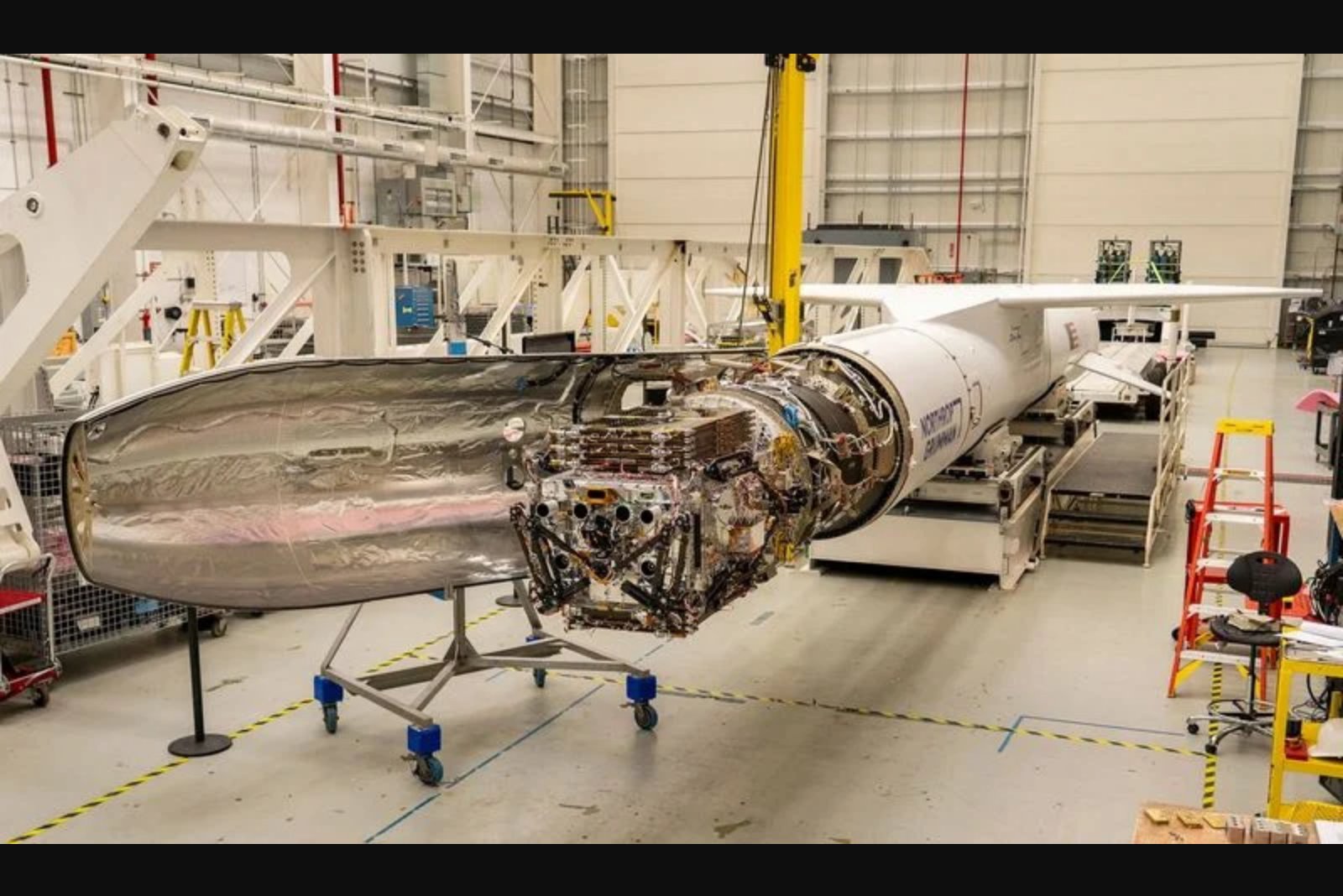
WASHINGTON, July 3 - A robotic rescue mission for an aging NASA observatory lifted off over the Pacific on Thursday, as Katalyst Space Technologies sent a half-ton craft into low-Earth orbit to capture and reboost the crippled Neil Gehrels Swift Observatory.
The Arizona-based startup, headquartered in Flagstaff, developed the spacecraft, known as LINK, on a compressed nine-month schedule under a $30 million NASA contract. LINK was carried aloft inside the cargo bay of a Northrop Grumman Pegasus rocket and released from a Lockheed TriStar carrier aircraft about 40,000 feet (12,200 m) above the Pacific at 1:36 a.m. PDT (0836 GMT), Katalyst said. The launch plane departed from a U.S. air base on the Kwajalein Atoll in the Marshall Islands and headed east before the rocket powered toward space.
The mission had encountered delays prior to Thursday - weather and a brief technical issue with the launch vehicle pushed back the attempt - but ultimately proceeded. LINK is intended to jettison from the Pegasus as it attains low-Earth orbit and then embark on roughly a month-long transit to the vicinity of the orbiting Swift observatory, which has been studying distant galaxies and black holes since 2004.
Swift, formally known as the Neil Gehrels Swift Observatory, has no onboard propulsion and is losing altitude due to atmospheric drag. Without intervention, the satellite faced a significant risk of falling out of orbit and burning up in the atmosphere as soon as later this year. Katalyst has said that, as Swift currently stands, there was a 90% chance it would fall completely out of orbit later this year because of mounting drag.
According to Katalyst's mission plan, LINK will approach the satellite during a series of carefully staged maneuvers. By late July, if operations follow the current timeline, the servicer should close to within roughly 6 miles (9.6 km) of Swift and then carry out final approach and proximity operations. LINK carries three sets of thrusters and five sensor systems to navigate those phases autonomously.
The vehicle is fitted with three robotic arms, each ending in hand-like grippers. Katalyst expects the autonomous spacecraft to take about another week from the 6-mile approach point to complete the rendezvous and use those arms to gently capture Swift. Once LINK has secured the observatory, the plan calls for a towing phase lasting roughly 60 days to raise Swift to a target altitude of approximately 373 miles (600 km) above Earth - about double the height the observatory is expected to fall to just prior to rescue.
Katalyst characterized the mission as both a satellite recovery operation and a technology demonstration. The company expects LINK to complete the primary job of boosting Swift and still retain propellant to conduct additional close-proximity maneuvers, using the now-stationary observatory as a practice object for extra operations.
Company CEO Ghonhee Lee framed the flight as historic, pointing to the rapid development timeframe and the financial case for the intervention. "The U.S. Space Command cares a lot about this, because ultimately this is a core element of space superiority," Lee said in a recent interview. He noted the return on a $30 million investment to extend the life of an asset valued at $500 million. "A normal mission like this might have taken five years to put together, and we did it in under a year," he added. "You’re showing that we can apply this to other national assets, other commercial assets, and then as a result we end up with a lot more flexibility and sustainability in space."
Lee also described a broader vision for robotic servicing at scale. He said the company foresees "hundreds of robot spacecraft by the end of the decade constantly maneuvering between lower Earth orbit and the moon, building things, moving things." He suggested that such capabilities could allow government agencies, including NASA, to purchase services rather than design one-off missions every time.
The Swift orbital boost effort is the first U.S. mission of its kind and is being watched closely because the underlying grappling and proximity technologies have potential dual-use military applications. The development follows demonstrations by other nations of close-up satellite operations; the recent U.S. mission is being observed within the context of broader geopolitical competition in space.
Operationally, LINK's timeline and success remain contingent on the planned sequence of separation, transit, approach and capture. The company outlined a stepwise schedule - separation into low-Earth orbit, a month-long voyage to Swift's neighborhood, approach to within roughly 6 miles late in July if all proceeds as planned, a week of proximity operations culminating in capture, and then a roughly 60-day tow to the target altitude of about 373 miles.
For now, LINK is on that path following Thursday's airborne release and rocket ascent. The mission will serve both to try to preserve a valued scientific asset and to demonstrate a servicing technique that Katalyst and some government observers regard as an important tool for future space sustainability and operations.
Summary
Katalyst launched the LINK servicer on July 3 from a Pegasus rocket dropped by a Lockheed TriStar over the Pacific. Built in nine months under a $30 million NASA contract, LINK aims to rendezvous with the unpropelled Neil Gehrels Swift Observatory, capture it with robotic arms, and tow it to about 373 miles altitude to extend its operational life. The mission is a first-of-its-kind U.S. demonstration of on-orbit grappling technology that has implications for scientific asset preservation and potential military applications amid U.S.-China space competition.
Key points
- LINK was developed by Katalyst in nine months under a $30 million NASA contract and launched from a Pegasus rocket released by a TriStar aircraft over the Pacific - impacting the commercial space and launch sectors.
- The mission seeks to reboost the $500 million Neil Gehrels Swift Observatory, which lacks propulsion and faces a high likelihood of orbital decay later this year - affecting scientific research reliant on space-based observatories.
- The operation is the first U.S. mission of its kind and serves as a technology demonstration with potential dual-use implications for defense and national security.
Risks and uncertainties
- Operational delays or technical issues remain possible - the launch itself had been delayed earlier by weather and a brief technical snag with the launch vehicle; such disruptions could affect mission timing and costs, relevant to the commercial launch industry.
- Swift's lack of onboard propulsion and its current descent mean there is a narrow window for successful capture - the observatory faced a 90% chance of falling out of orbit later this year, posing a risk to the scientific community if the mission fails.
- Close-proximity grappling technologies have potential military applications, creating geopolitical sensitivities and scrutiny from defense stakeholders as similar capabilities are developed and demonstrated.