
Markets and economic participants are awaiting clearer direction after two developments this week produced no definitive signal about the Federal Reserve's next move on interest rates.
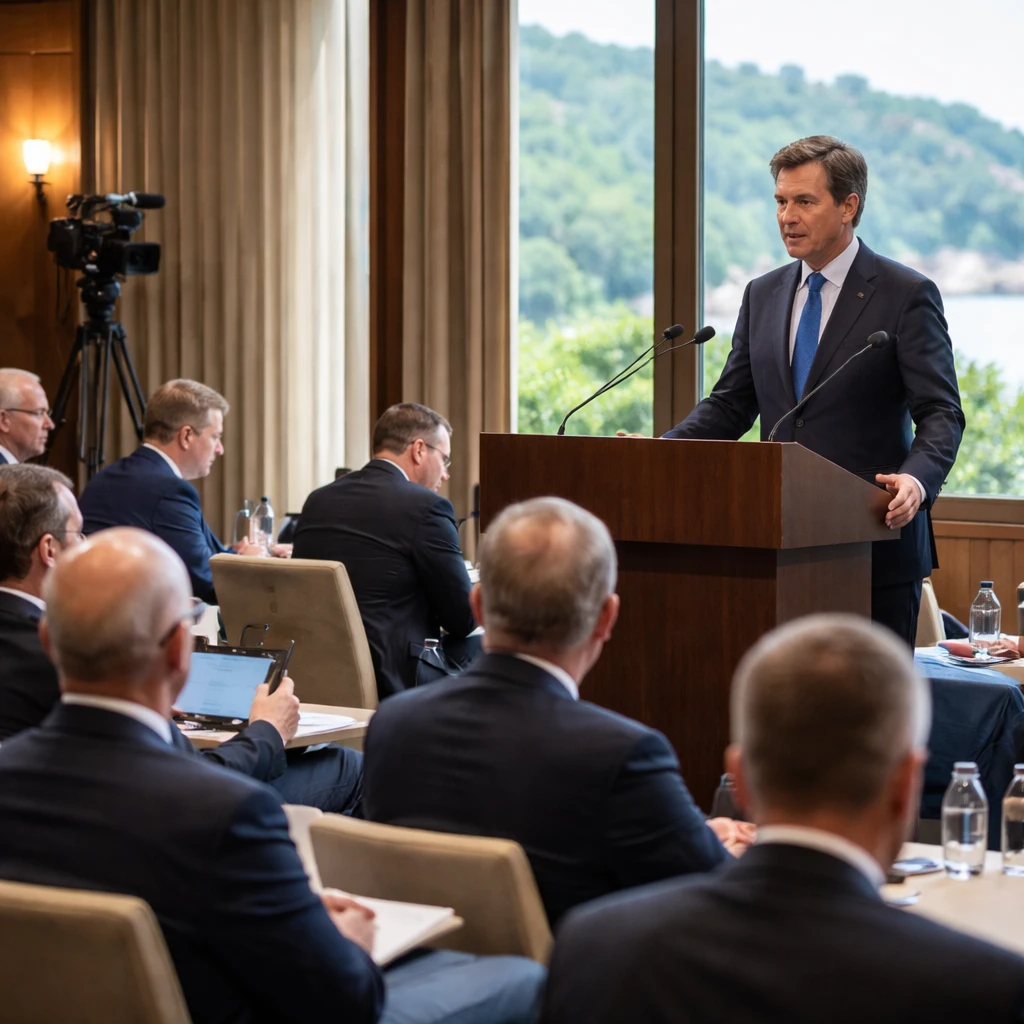
At a panel of central bankers in Sintra, Portugal, Federal Reserve Chair Kevin Warsh - who has indicated plans to change how the Fed communicates with markets - told attendees he would not offer forward guidance on the path of interest rates. Warsh also said he believed inflation risks had begun to ease. Those comments shifted focus onto his assessment of broader economic conditions but, according to Barclays, did not provide actionable clues for investors.
"Warsh’s remarks at Sintra provided no clues about how policy might respond to data just as the economy approaches a critical juncture," the Barclays analysts including Jonathan Millar and Marc Giannoni said in a note.
The day after Warsh spoke, fresh labor market data for June showed payroll gains that were smaller than market expectations, while the unemployment rate fell slightly as labor force participation declined. Barclays interprets the employment report as indicating some ongoing resilience in the U.S. labor market but also a moderation that could be tied to slower immigration and broader limits on labor supply.
Taken together, the Sintra remarks and the June jobs figures left the debate over the Fed's rate trajectory unsettled. After the jobs release, market bets that the Fed would move imminently to raise rates diminished, though investors continue to place some probability on a rate increase before year-end.
Barclays analysts note the trade-offs facing policymakers: raising rates can help rein in inflationary pressures driven by energy costs, but higher policy rates risk cooling the labor market and weighing on the broader economy. At its June meeting, the Federal Reserve left the policy rate unchanged at a range of 3.5% to 3.75%, and its updated projections signaled that officials expect a rate increase sometime in 2026.
Against that backdrop, Barclays' baseline outlook is for an extended hold on policy rates, contingent on a moderation in inflation, economic activity, and labor market conditions over the summer. The analysts warned, however, that the main risk to this view would be a renewed acceleration in employment and spending combined with persistently constrained labor supply, which could keep inflation pressures elevated and reopen the case for hikes.
In short, this week’s central bank commentary and the labor data provided important inputs but did not produce a clear near-term signal on monetary policy. Investors and markets are left to weigh the balance of slower payroll growth against lower unemployment and the Fed's own projection that a future hike is possible.
Contextual note: Barclays' assessment and the data cited above come from the firm's note and the official June employment report referenced in those observations.