
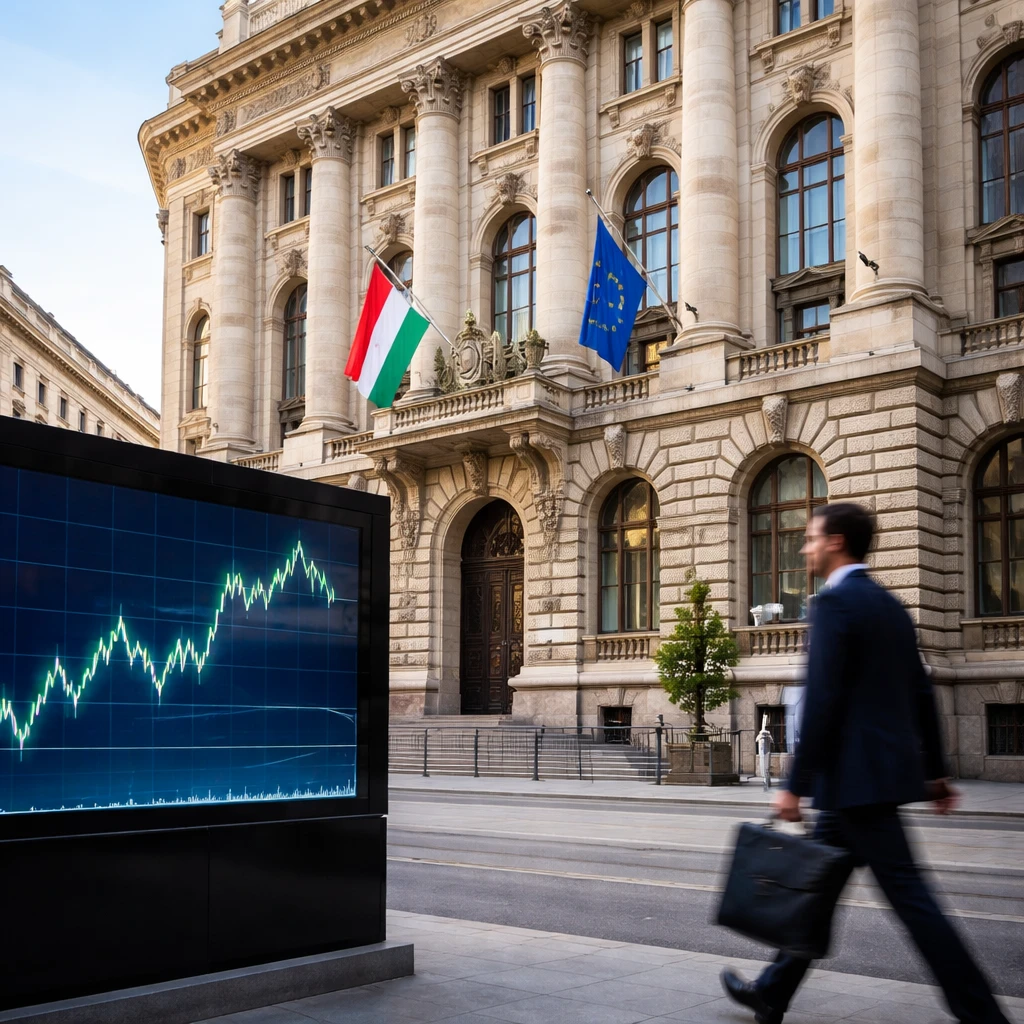
Hungary's central bank opted to hold its benchmark interest rate at 6.25% on Tuesday, maintaining a level that remains the second-highest in the European Union after Romania's rate.
Governor Mihaly Varga is scheduled to brief the public at 3 p.m. in Budapest to explain the decision and the bank's near-term outlook. Officials have pointed to recent developments in the foreign exchange market and in price data as factors shaping their stance.
According to comments made by Varga last week, the forint's recent rally has been an important element helping to rein in inflationary pressures. Separately, a deputy governor at the central bank indicated that an improving inflation outlook could permit policymakers to consider lowering rates in June, coinciding with the release of updated inflation projections.
Official data show annual inflation at 2.1% in April, which is below the central bank's 3% objective. That gap has reinforced the bank's aim to position policy so that interest rates can be reduced substantially once conditions allow. On May 21, Varga told state television that the central bank is working toward price stability and that a stronger exchange rate is contributing to slower inflation.
Hungary's approach contrasts with that of a number of other central banks which are contemplating rate increases in response to inflationary pressures linked to the Iran war, according to the central bank's commentary. The policy setting in Hungary remains higher than several regional peers - for example, the Czech Republic's key rate is 3.5% and Poland's is 3.75%.
The combination of a markedly elevated policy rate, a recent appreciation of the forint, and inflation readings below target informs the central bank's current posture and the conditional path toward easing. Officials have tied any move to cut rates to changes in inflation projections and the exchange-rate environment, with June identified as the moment when new forecasts could permit a reconsideration of policy.
Context and next steps: The governor's 3 p.m. briefing in Budapest will provide further detail on the decision and the central bank's view of risks. Policymakers have signaled that a substantial reduction in rates would depend on continued progress toward price stability and the durability of the exchange-rate improvement.