
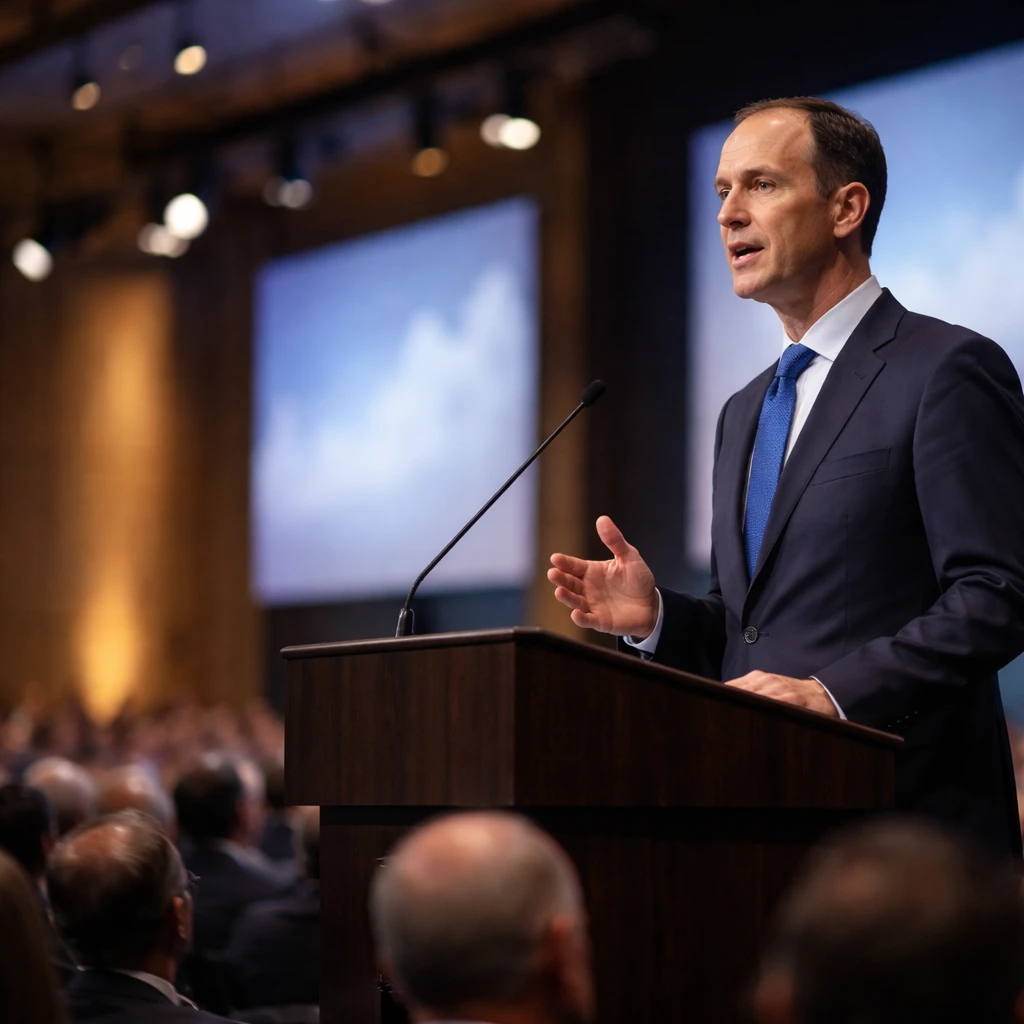
Chicago Federal Reserve President Austan Goolsbee warned that improvements in productivity might not necessarily translate into reduced inflation and, in some circumstances, could raise it if spending increases in anticipation of future gains.
Delivering prepared remarks at a Milken Institute conference in Los Angeles, Goolsbee outlined how expectations of higher future productivity can change current behaviour by households, companies and shareholders. If those groups expect rising incomes and wealth, they may boost spending today - potentially pushing demand above the economy's supply capacity before productivity gains are realized.
Goolsbee said that dynamic could force interest rates higher. "It's critical we be careful about activity driven by assumptions of future growth," he stated, adding that "the bigger the hype, the more rates would need to rise to prevent overheating."
His remarks set the stage for a potential policy disagreement with incoming Federal Reserve Chair Kevin Warsh, who has taken the position that higher productivity should exert downward pressure on inflation. The two officials differ on whether productivity improvements primarily expand the economy's supply capacity - easing price pressures - or whether expectations surrounding such improvements might lift demand first.
The former Fed governor Kevin Warsh, testifying at his Senate Banking Committee confirmation hearing last month, acknowledged uncertainty about the precise effects but offered an outlook that productivity gains from artificial intelligence and other forces could expand the economy's productive capacity more than they boost demand. He told lawmakers: "I don't claim to have perfect knowledge of how any of these are going to go, but I do have an intuition the pace of change is accelerating." He added that the impact on the economy's potential "could be considerably bigger" than the influence on demand as firms build data centers and increase electricity use.
Goolsbee also noted historical policy debates. He recalled that former Fed Chair Alan Greenspan resisted raising rates in the mid-1990s on the view that improving productivity would relieve price pressures, but that the central bank still tightened policy later in the decade even as productivity gains continued.
Looking ahead, productivity is widely expected to rise as artificial intelligence spreads through firms. Goolsbee suggested some of those effects may already be reflected in elevated equity prices, which in turn support higher spending among wealthier households.
Summary
- Goolsbee cautioned that expectations of future productivity can raise present spending and inflationary pressure.
- He said this dynamic could necessitate higher interest rates to avoid overheating.
- Incoming Fed Chair Kevin Warsh has argued productivity growth should lower inflation by expanding supply more than demand.
Key points
- Productivity gains do not automatically reduce inflation if they alter current spending behaviour - impacts financial markets and consumer sectors.
- Policymakers may face a trade-off: allow demand to rise on optimistic expectations or raise rates to preempt overheating - implications for interest-rate sensitive sectors.
- AI-driven productivity is expected to lift productive capacity, but the timing of effects on supply versus demand remains uncertain - relevant to technology, utilities (for increased data center electricity use), and equity markets.
Risks and uncertainties
- Expectations-driven spending could precede actual productivity improvements, risking an overheated economy and prompting tighter monetary policy - this would affect consumer-facing and cyclical industries.
- There is disagreement among Fed leaders on how productivity gains will influence inflation and interest rates, creating policy uncertainty for markets.
- The extent to which AI-related investments translate into larger productive capacity versus higher immediate demand is unclear, leaving companies and investors with uncertain planning assumptions.
This article presents the remarks and positions of Fed officials as delivered at public events and hearings.