
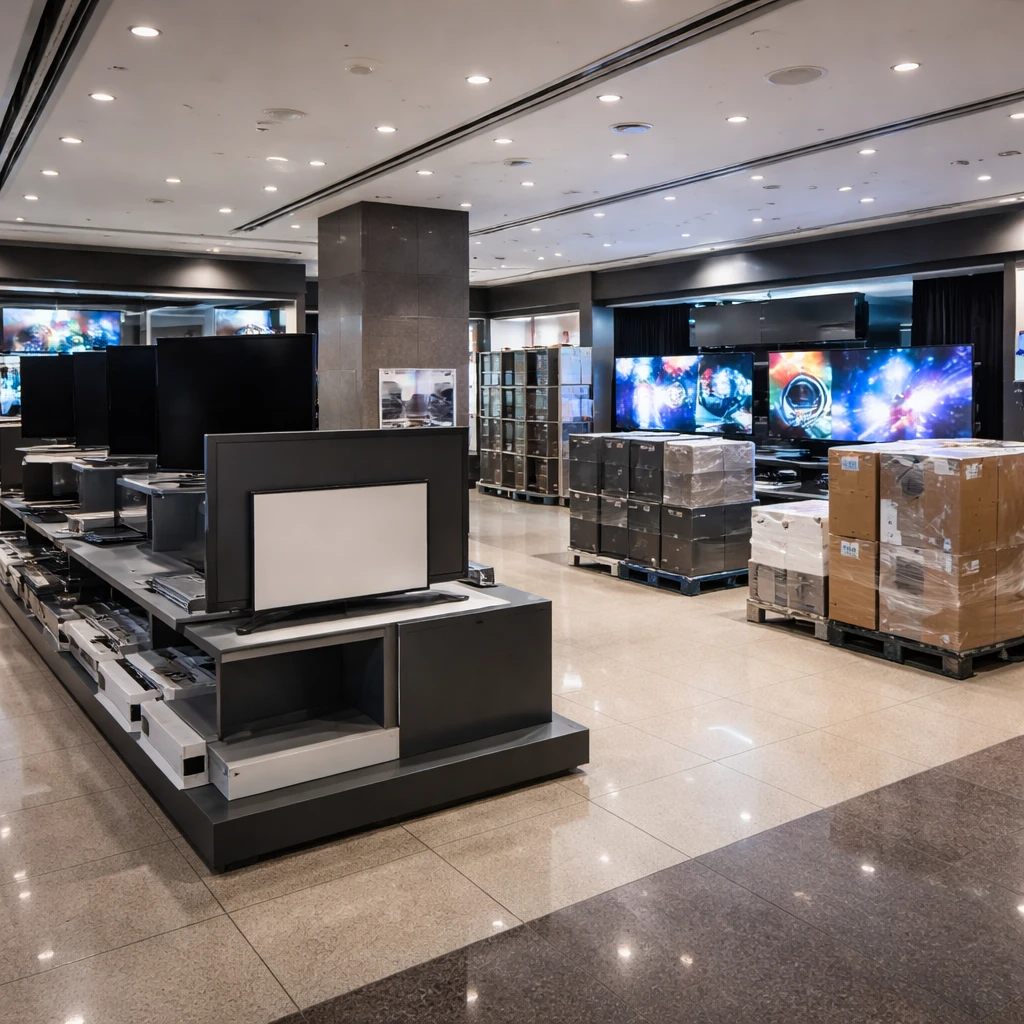
Samsung Electronics announced on Wednesday that it will discontinue sales of certain consumer electronics products in mainland China as competition in the local market intensifies, the company said in a statement.
The South Korean manufacturer of televisions and home appliances said it will take steps to limit the impact on customers and is reviewing potential support measures for its business partners, according to the statement.
The move reflects growing pressure from Chinese competitors across several product categories, including TVs, home appliances and mobile phones, both within China and in other markets, the company noted. At the same time, Samsung's memory chip business has seen a surge in profits driven by demand related to artificial intelligence.
Earlier in the week, Samsung replaced the head of its TV business, the first leadership change in that division in more than two years, the company announced on Monday.
Market movement in the TV sector has been notable: in December, Chinese rival TCL briefly surpassed Samsung in the global TV market, according to market research cited by Samsung. Samsung has long been a leader in the worldwide TV market. The statement also referenced a recent strategic partnership between TCL and Sony.
Samsung disclosed that its TV and home appliance operations recorded losses of 200 billion won ($138.31 million) last year, attributing those losses to competition and U.S. tariffs.
Despite the decision to halt sales of certain consumer electronics in mainland China, Samsung confirmed it will continue to sell mobile phones and semiconductor chips in the Chinese market.
Key points
- Samsung will stop selling select TV and home appliance products in mainland China, citing intensifying local competition.
- The company plans measures to reduce customer disruption and is reviewing support for business partners.
- Samsung will continue to sell mobile phones and chips in China; its memory chip business is experiencing a profit uplift from AI-driven demand.
Risks and uncertainties
- Potential disruption to customers who purchased affected products - consumer electronics sector.
- Uncertainty around the nature and scope of any support measures for business partners - retail and distribution networks.
- Ongoing competitive pressure and tariff-related costs that have contributed to losses in TV and appliance operations - manufacturing and trade exposure.
The company statement served as the source for these details; where the announcement referenced third-party market research and business developments, the article reports those references without further elaboration.