
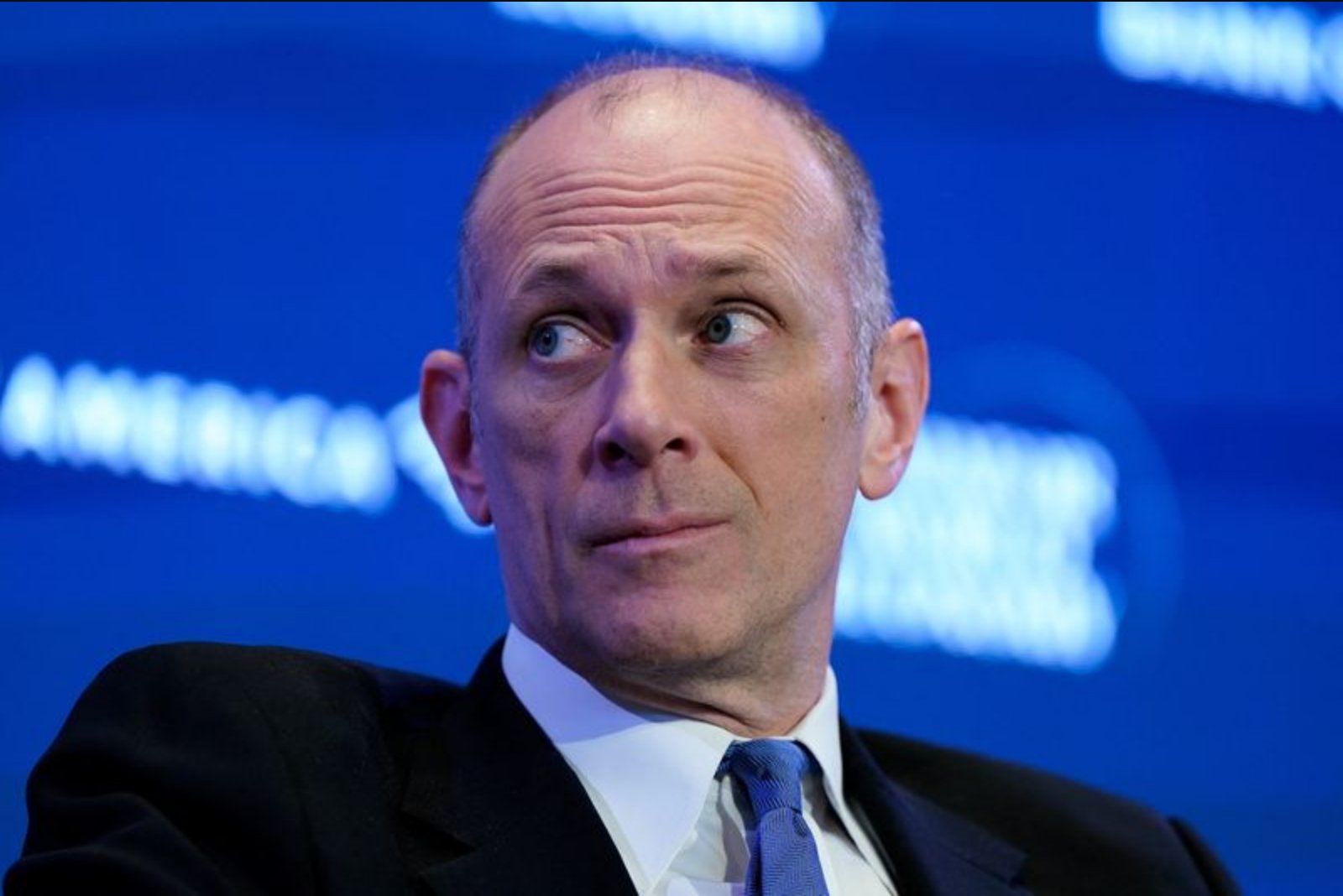
WASHINGTON, May 6 - Rising productivity is not an automatic brake on inflation and could, under certain behavioral dynamics, contribute to higher prices and tighter monetary policy, Chicago Federal Reserve President Austan Goolsbee said on Wednesday.
Speaking from prepared remarks for a Milken Institute conference in Los Angeles, Goolsbee warned that the commonly held view - that firms producing more with fewer inputs will naturally reduce price pressures - overlooks how expectations about future gains can change current behavior.
Goolsbee acknowledged that a disinflationary path stemming from productivity improvements "seems intuitive as companies learn to make more with less," but he added that "the implications for what that would mean for interest rates" remain contested.
He expanded on the behavioral channel that can link expected productivity to demand. "If people expect an increase in productivity coming in the future ... it can change their behavior today," he said, noting that households, companies and shareholders may act on assumptions of rising incomes and wealth. That anticipatory activity, Goolsbee said, "can lead to increased spending and potentially overheat the economy before the productivity boom has actually arrived. In that case, the fundamentals suggest rates would need to rise."
Goolsbee emphasized the need for caution when growth expectations are driving activity. "It’s critical we be careful about activity driven by assumptions of future growth," he said. "The bigger the hype, the more rates would need to rise to prevent overheating."
The remarks signal a forthcoming debate at the Fed as incoming Chair Kevin Warsh, who has argued that higher productivity can be disinflationary, prepares to take the helm. Goolsbee’s intervention draws a contrast between intuition about productivity’s effect and the policy response required if that intuition prompts pre-emptive spending.
Goolsbee referenced earlier episodes when productivity featured in policy discussions. Former Fed Chair Alan Greenspan resisted rate increases in the mid-1990s in part because productivity improvements were expected to ease price pressures, even if those gains were not fully anticipated. Goolsbee observed that by the close of that decade, the central bank was raising rates even though the productivity surge was still expected to continue.
Productivity today is widely expected to rise further as artificial intelligence technology is rolled out across more businesses. Goolsbee noted that some of the benefits of that deployment may already be reflected in the marketplace, citing record equity prices that are supporting spending among more affluent households.
Warsh, who testified at his Senate Banking Committee confirmation hearing last month, was measured in describing how productivity improvements might influence interest rates. He said he believed the impact of artificial intelligence on productive capacity "may end up being far greater than its impact on demand," a view that implies downward pressure on inflation. At the same time, he cautioned that there is uncertainty to be resolved.
"I don’t claim to have perfect knowledge of how any of these are going to go, but I do have an intuition the pace of change is accelerating," Warsh told lawmakers, adding that the effect on the economy’s potential "could be considerably bigger" than the influence on demand as firms expand data centers and increase electricity use. "We don’t know that. We can’t bank on that," Warsh said. "But considerable work needs to be done by the Federal Reserve in evaluating this productivity wave."
The exchange of views underscores a key policy challenge: distinguishing between productivity-driven gains that lower costs and genuine demand increases driven by expectations of future prosperity. How the Fed interprets those signals will shape the trajectory of interest rates and its broader strategy on inflation control.
For now, policymakers face a landscape where technological advances and financial market valuations interact with household and corporate behavior, creating possible trade-offs between growth, inflation, and monetary restraint. Goolsbee’s comments frame the debate in terms of behavioral responses and the need for vigilance if expectations of productivity spur higher spending ahead of realized gains.