
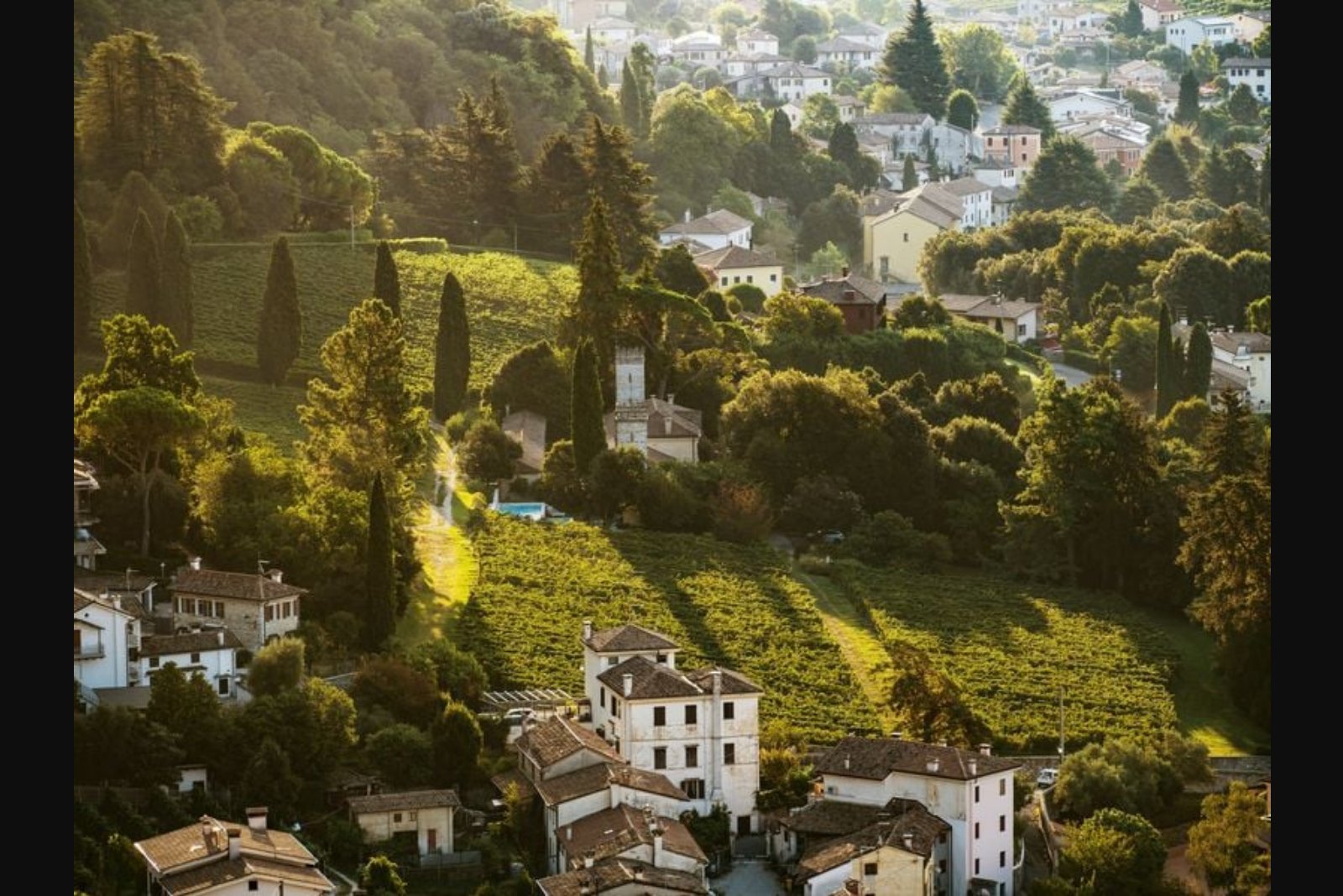
The Conegliano Valdobbiadene hills of northeastern Italy, home to some of the most prized Prosecco sparkling wine, faced one of the hottest growing seasons on record in 2026. Drought, unusually warm nights and daytime temperatures several degrees above historical norms challenged producers, yet growers and the regional consortium report this year’s harvest appears to be broadly comparable with 2025.
The Prosecco Conegliano Valdobbiadene DOCG consortium represents a premium denomination produced from vineyards that are often described as "heroic" because of their altitude and steep slopes. These vineyards sit within UNESCO-listed hills north of Venice and are distinct from the more common Prosecco DOC, though both use the Glera white grape variety.
Research commissioned by the consortium and carried out by the University of Cantabria modelled how indicators such as daytime and night-time temperatures, humidity and rainfall might evolve in the coming decades. Consortium director Diego Tomasi and several producers told consortium officials and colleagues that the growing conditions experienced during the 2026 season broadly resembled those the models had projected for around 2045.
Timing and yields
Over the past two decades the growing cycle in the premium hills has shortened by up to 16 days, and the 2026 harvest began roughly 10 days earlier than the historical average. By September 15, 90% of the harvest was complete, and the consortium reported quantities similar to 2025.
Consortium documents show production topped 70 million bottles in the first nine months of 2026, a figure less than 1% below the same period in 2025 and about 7% above the average for the past decade. The consortium sold around 98 million bottles in 2025, which was an 8% increase from 2024, and said the quantities harvested in 2026 appeared broadly comparable with those of the prior year.
Climate characteristics of the season
Aside from the extreme daytime heat, the summer of 2026 was marked by tropical nights. Tomasi said the region recorded 60 nights with temperatures above 20 degrees Celsius (68 degrees Fahrenheit), including four "super-tropical" nights in which temperatures remained above 23 C, limiting the plants’ ability to recover between hot days.
Producers and the consortium interpret those conditions as evidence that the area is already experiencing the kind of climate the consortium's models projected for the next two decades.
How Conegliano Valdobbiadene compares with other regions
The harvest outcome in the denomination contrasts with difficulties elsewhere in Europe. For example, Champagne's 2026 production is forecast to fall 38% from 2025, according to France's farm ministry, after a season affected by frost, hail, drought and heatwaves. Consortium officials noted that differences in local climate, grape varieties and vine age help explain the disparity in outcomes.
One structural factor in Conegliano Valdobbiadene is the rarity of replanting on the steep hillsides. Some parcels host vines that are 80 to 90 years old. Producers suggested that such older vines may have developed a degree of resilience over time that aided their ability to withstand the 2026 stresses.
Changes in vineyard management
Growers have adapted long-standing practices in response to repeated hot summers. Some were already altering their approach after the hot 2003 season. One producer, Primo Franco of the Nino Franco winery, said growers now trim less, or at least much less than before, and increasingly leave foliage around grape bunches, particularly on south-facing slopes, to shield fruit from the strongest afternoon sun.
That approach marks a departure from traditional management, which often aimed to maximize sunlight exposure to raise sugar levels and ultimately alcohol content. The reversal reflects an effort to protect grapes from heat stress rather than to push ripeness through exposure.
Water management and emergency measures
Rainfall is arriving in shorter, more intense bursts, making water management an increasingly critical issue. Producers are working to increase soil organic matter to improve moisture retention and are examining reservoir options to store water for dry spells.
Irrigation is contentious within the DOCG. Rules prohibit irrigation intended to boost production but permit emergency irrigation, historically used mainly for young vines. Primo Franco said he had long opposed irrigation but changed his stance last year and found a well after his oenologist advocated for the measure. This year, emergency irrigation was deployed to support mature vineyards that otherwise would have struggled.
Another producer, Franco Adami, described the physical effort required to save stressed plots: growers spent weeks hauling pipes across steep slopes to reach vineyards in need. "It saved the harvest," he said.
Financial and quality pressures
Production costs in these precipitous vineyards are already among the highest in Italy because mechanisation is limited and much work must be done by hand. Producers say adapting to climate change - through water infrastructure, altered management and other responses - is likely to increase those costs further.
Primo Franco warned growers would find it difficult to pass rising costs on to consumers in what he described as a very competitive market.
There are also concerns about changes to grape chemistry. Researchers involved in the consortium study said warmer temperatures accelerate sugar accumulation and reduce acidity, particularly malic acid, which contributes a crisp, fresh taste. Franco and Adami reported that growers observed higher pH levels and a decline in malic acid in 2026, but both maintained that overall quality remained high.
Adami said, "I was surprised by the ability of the vine in this area to cope with the stress experienced in 2026."
Market context and outlook
The global wine sector faces multiple pressures beyond climate. The industry is contending with changes in consumer behaviour driven by health concerns, inflation linked to energy costs and reduced consumer spending related to war, all of which can affect demand. Within that environment, Prosecco and other Italian sparkling wines have tended to prove more resilient than other categories, partly because of competitive pricing.
Industry figures show exports of still Italian wine fell 9.1% by value in the first half of 2026 compared with the same period a year earlier, while sparkling wines were broadly stable with a 1.6% decline. According to the Unione Italiana Vini observatory, Prosecco represents 78% of Italian sparkling wine exports by value, a category that has benefited from the fashion for aperitifs and cocktails.
Despite the solid harvest volumes in 2026, growers expressed nervousness about the future. Continued investment in water management, vineyard practices and infrastructure will be required while global warming is already affecting present conditions. "We must no longer speak of climate change," Tomasi said. "We must simply speak of the current climate."
Summary
The Conegliano Valdobbiadene DOCG faced an unusually hot and dry 2026 growing season but maintained harvest volumes close to 2025 levels. Factors contributing to resilience include century-old vines on steep terraces, adjusted vineyard practices such as reduced trimming and strategic use of emergency irrigation, and active water and soil management. Nevertheless, growers face higher operational costs, potential shifts in grape chemistry affecting acidity and pH, and the need for further investment to protect future yields and quality in a competitive market.