
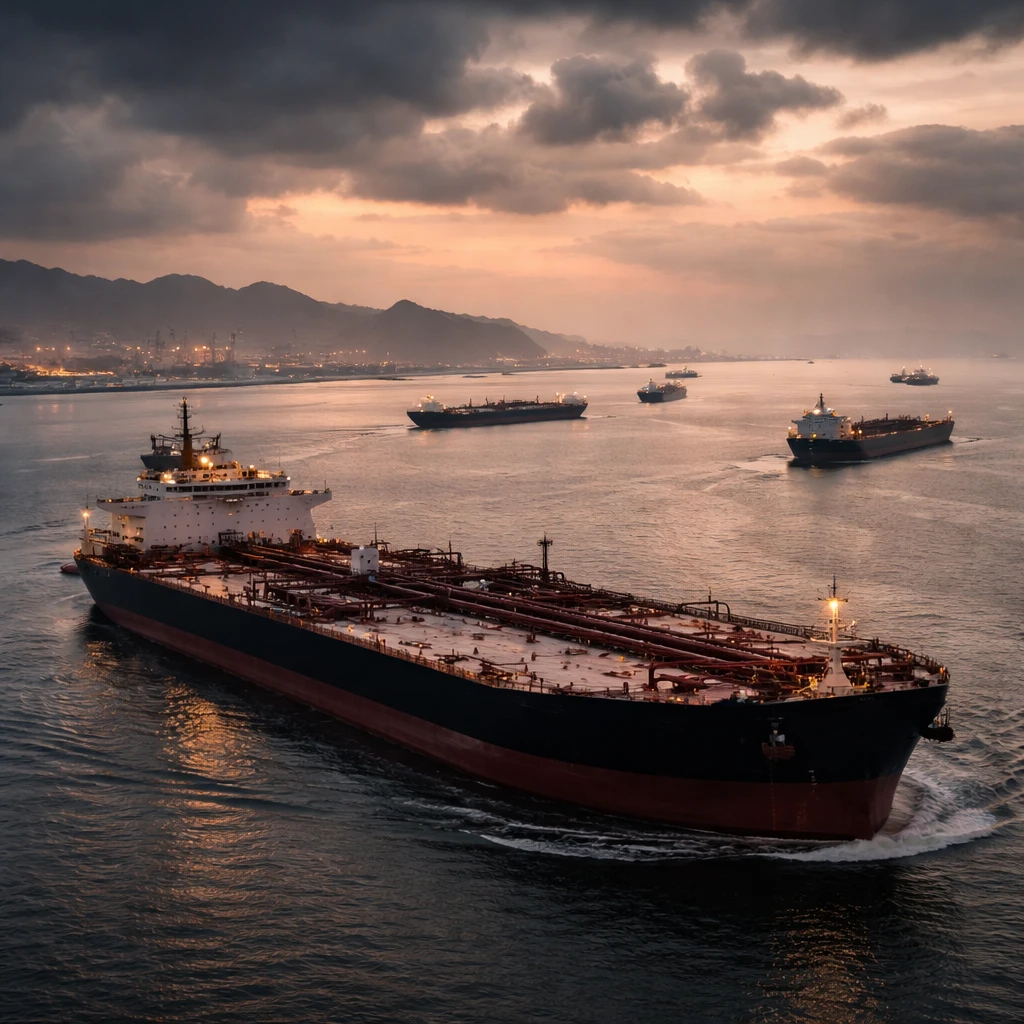
Goldman Sachs analysts warned that a fresh escalation between the U.S. and Iran is jeopardizing the ongoing recovery of oil movements through the Strait of Hormuz. The warning follows a wave of tanker attacks and rapid retaliatory military action that shook the region this week.
Spot Brent futures moved toward the $80 a barrel mark on Wednesday after President Trump said a ceasefire with Iran "was over" following renewed tensions in the Strait. The immediate flashpoint came on Tuesday when drones struck one LNG tanker and two oil tankers near the Omani coast. That event prompted U.S. authorities to revoke a waiver on Iranian oil sales and to carry out strikes against Iran that same night. Iran then launched strikes on Bahrain and Kuwait, saying it would not tolerate "interference" in the Strait, and the U.S. conducted additional strikes on Wednesday night.
In a research note, Goldman strategists led by Yulia Zhestkova Grigsby said the attacks have underscored persistent risks for vessels transiting the waterway. "The recent attacks on tankers highlight still elevated risks of crossing, and shippers may hesitate to cross under the currently unclear ceasefire status, weighing on near-term Hormuz flows," the team wrote.
Goldman noted that oil flows from the Persian Gulf had initially recovered to more than 80% of pre-war levels within the first 10 days after the Strait reopened, as tankers that had been trapped during fighting rushed to depart. That partial rebound has since faded, with flows retreating to the low-70s percent of normal. On a seven-day moving average, that equates to roughly 16-17 million barrels per day in aggregate Persian Gulf flows.
Flows specifically through the Strait of Hormuz have declined to about 8.3 million barrels per day, down from a peak of 10 million barrels per day. Goldman emphasized that this level represents roughly half of pre-war Hormuz throughput.
The strategists argued the current pattern of attacks supports their assessment that Iran’s willingness to permit tanker movements - rather than an actual shortage of transport capacity - is the primary constraint on a swifter restoration of flows. They pointed to data showing empty oil tanker capacity inside the Gulf is more than 50% higher than loaded volumes. Combined tanker capacity near the Strait is estimated at 926 million barrels, the note said.
Goldman also highlighted the potential impact of policy shifts. The U.S. cancellation of a sanctions waiver on Iranian oil sales may exert renewed downward pressure on Iranian crude imports. Although those imports had begun to recover, they remain down about 0.8 million barrels per day year-over-year, according to the strategists.
On the production side, the team estimated Persian Gulf crude output was still reduced by 10.5 million barrels per day in June versus pre-war levels. Saudi Arabia, Iraq and Kuwait account for the majority of that shortfall, Goldman said.
Looking ahead, Goldman laid out a pair of alternate scenarios. In the more constructive path, 60-day negotiations continue, the U.S. waives sanctions again and ship security guarantees are restored. Under that sequence, the bank expects Persian Gulf flows to normalize by the end of July, a process that would require an increase in Hormuz flows of about 6.6 million barrels per day.
Conversely, in a less likely but more adverse scenario, talks could break down, tanker attacks might intensify, and a potential U.S. blockade of Iranian oil could emerge. In that case, the strategists warned that flows "may decrease further."
Separately, Goldman flagged mounting supply-side pressure originating in Russia, where refinery outages have reportedly risen to 3.8 million barrels per day, a figure the strategists described as more than half of the country’s refining capacity. The note also cited sharply higher diesel refining margins: European diesel margins versus Brent rose to $60 a barrel, up from $25 a year earlier, while U.S. diesel margins climbed to $75 a barrel.
Context and market implications
- Short-term tanker risk is keeping some shippers from transiting the Strait, which can limit near-term oil availability despite substantial idle tanker capacity in the Gulf.
- Policy moves, such as the revocation of the U.S. sanctions waiver, can further dampen Iranian exports that had only partially recovered.
- Separately, refinery outages in Russia and rising diesel margins are adding pressure to fuel markets outside the Strait dynamic.