
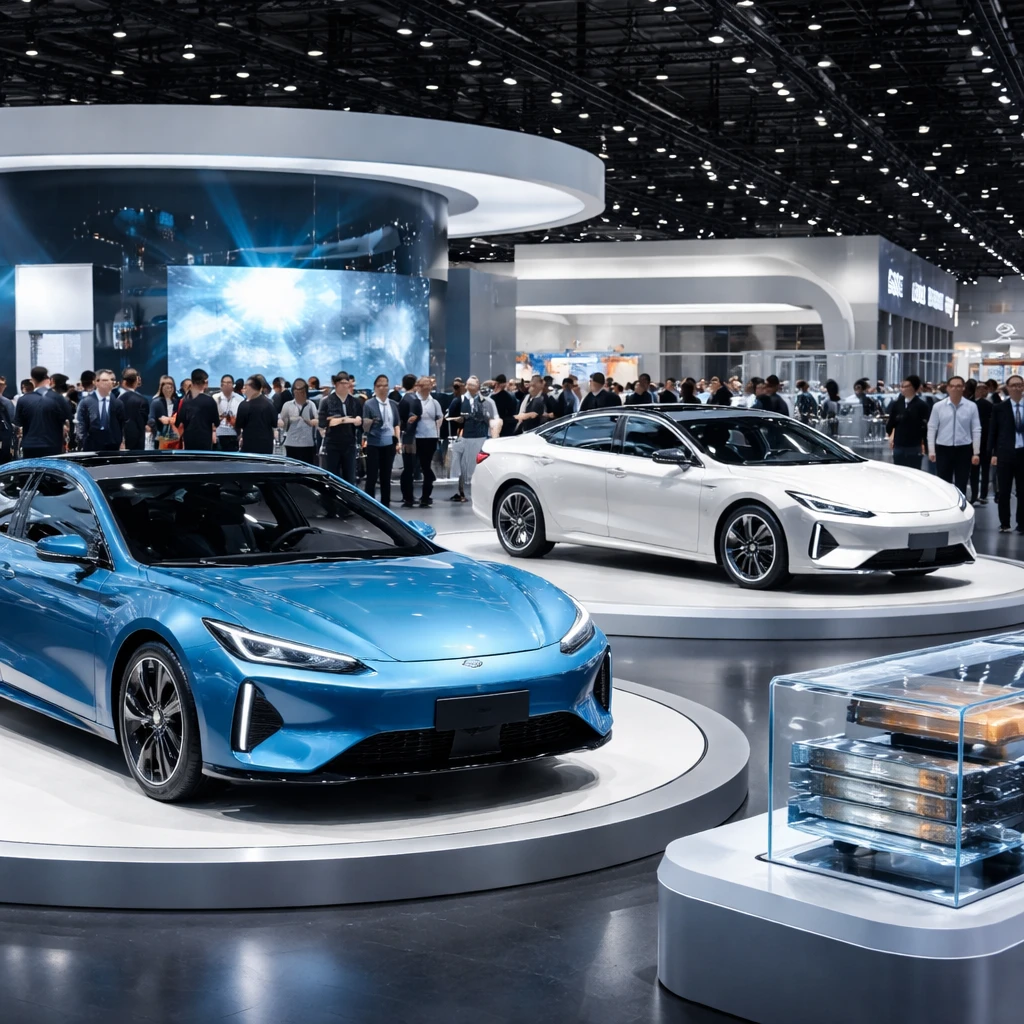
Changan Motor on Tuesday unveiled a set of ambitious targets that would substantially expand its global footprint over the coming years. The state-owned automaker said it is aiming to become one of the world’s top-10 carmakers by 2030, with a headline target of 5 million vehicles sold globally in that year and a minimum target of 4 million units.
Changan said it expects 60% of those sales to be fully electric vehicles (BEVs) or plug-in hybrid electric vehicles (PHEVs). The announcement was made in the run-up to the Beijing auto show as the company sets out its growth plan for the rest of the decade.
The company reported sales of 2.9 million vehicles last year, a figure that includes vehicles sold through joint ventures with Ford and Mazda. That total made Changan the world’s thirteenth-largest automaker by sales in the most recent reporting period. Based on industry data for 2025, reaching 5 million vehicles would place Changan at roughly the fifth position globally by sales volume.
Changan’s portfolio includes the Changan, Deepal, Nevo and Avatr brands. The automaker said it is targeting overseas sales of between 1.4 million and 1.8 million units by 2030, up from 638,000 vehicles sold outside China in 2025.
The push for higher volumes abroad comes as growth in China’s domestic car market, the world’s largest, shows signs of slowing. Several other Chinese manufacturers have put forward bold targets for the same timeframe: Geely has set a 2030 sales goal of 6.5 million vehicles, up from 4.2 million in 2025, while BYD has told investors it aims for half of its sales to come from outside China by 2030.
On the technology front, Changan said it will introduce two fully electric sedans in 2027 that use sodium-ion batteries supplied by CATL. The company noted that at scale sodium-ion cells are materially cheaper to produce than lithium-ion batteries because they use common salt as a primary raw material, which is abundant and easy to obtain.
Changan also acknowledged the current trade-off with sodium-ion chemistry: lower energy density compared with lithium-ion cells, which typically results in reduced driving range. The sedans planned for 2027 are expected to have a range of around 400 km (249 miles).
In the company’s view, the combination of larger-scale global sales, a high proportion of electrified models and a new battery technology represents the pathway to moving up the industry rankings by 2030. Changan’s stated targets reflect an aggressive expansion strategy into overseas markets and a significant shift toward electrified powertrains within its brand lineup.
Separately, promotional material referenced investment interest in a security labeled 1211, asking whether an investor should place $2,000 into that ticker and describing an AI-driven selection tool called ProPicks AI that evaluates companies across numerous financial metrics. That material presented the tool as analyzing fundamentals, momentum and valuation to identify potential opportunities, and noted past winners of its selections. The material also included an advisory note indicating a flash sale on pricing.
Changan’s goals will require sizeable execution across production scaling, overseas distribution and electrified vehicle deployment to meet the targets the company has publicly set for 2030.