
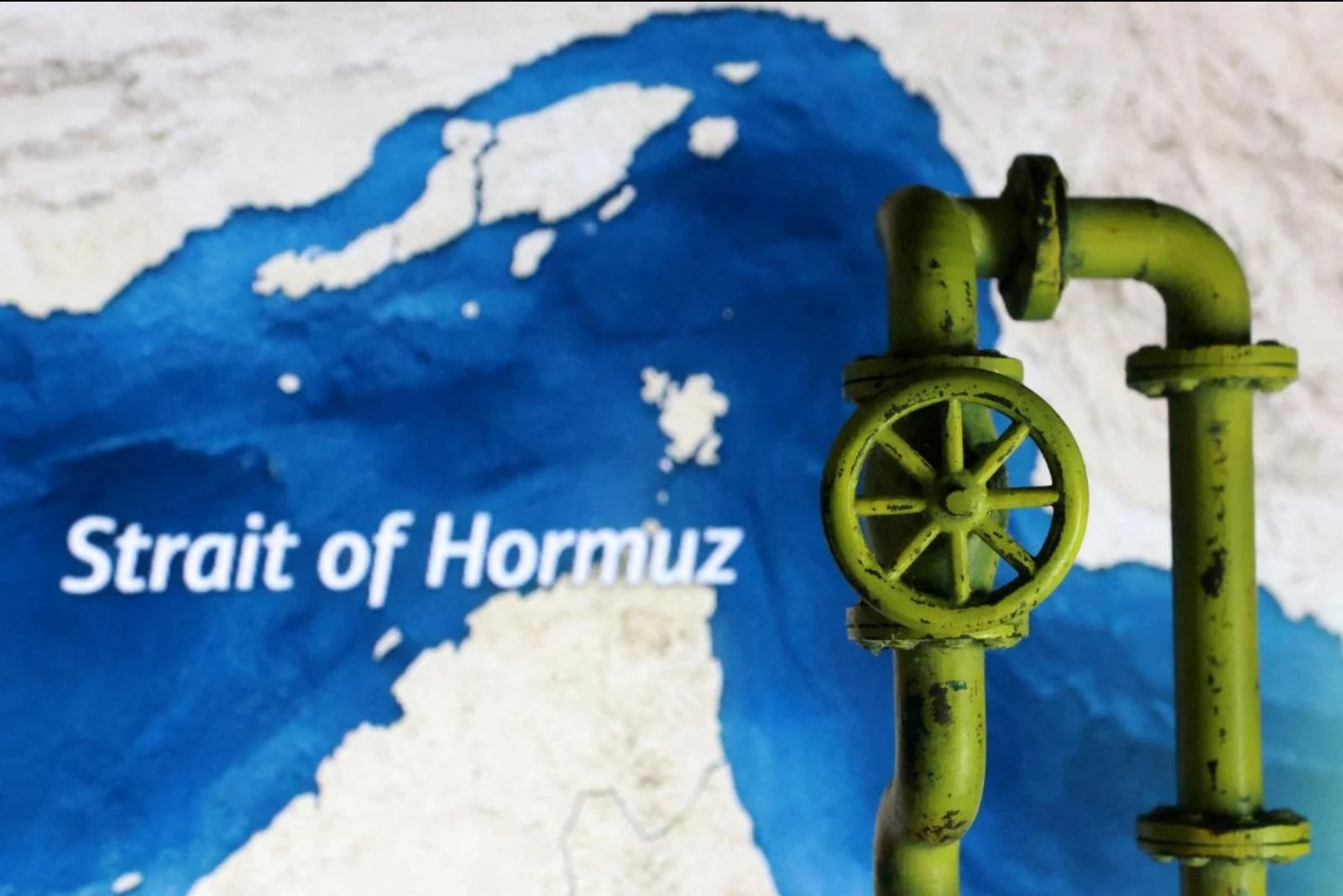
President Donald Trump said on July 14 that the United States would impose a 20% charge on cargoes transiting the Strait of Hormuz after a ceasefire with Iran collapsed amid a dispute over Tehran’s attempts to assert control over the strategic waterway.
Iran had closed the 34 km (21 mile) wide strait - the main route for roughly a fifth of global oil shipments and other critical goods such as fertilisers - following U.S. and Israeli strikes on February 28, an action that contributed to a global energy shock. With the ceasefire no longer holding, the U.S. president turned to a proposal for reimbursement for what he described as U.S. services in securing the waterway.
Trump’s announcement and prior statements
The president’s declaration represented a return to an earlier suggestion that the United States might levy tolls if the interim deal with Iran failed to hold. On June 20 he wrote on social media: "There will be NO TOLLS in the Hormuz Strait for 60 days during the Cease Fire Period, and there will be NO TOLLS after the 60 day period has expired, unless they are imposed by and for the United States of America, should the deal not be completed, for services rendered as the Guardian Angel to the countries of the Middle East for purposes of both past, present, and future reimbursement of costs."
With the ceasefire in tatters, he updated that stance on July 14, saying: "The U.S.A. will be, from this point forward, known as 'THE GUARDIAN OF THE HORMUZ STRAIT', but as such, and as a matter of FAIRNESS, will be reimbursed, at the rate of 20% on all cargo shipped." The president did not specify how such charges would be collected, nor did he set out the legal basis for demanding them.
How this contrasts with recent U.S. diplomatic statements
The president’s announced 20% surcharge diverges from comments attributed to U.S. diplomatic officials as recently as June 25. At that time, U.S. Secretary of State Marco Rubio - when meeting with Gulf states and responding to Iran’s own demand for fees - said that "no country on Earth has the right to charge for the use of international waterways" and that fees for shipping "would never be part of any deal."
The president’s return to the possibility of tolls underscores a difference between the White House rhetoric and earlier public diplomacy from U.S. officials regarding charges for passage through international straits.
How Iran’s demands differ
Iran has made control over the Strait of Hormuz a central negotiating objective, seeing the waterway as a key strategic lever and a guarantee of its security against future attacks. Tehran interprets language in last month’s interim deal - that Iran "will make arrangements using its best efforts for the safe passage of commercial vessels with no charge for 60 days only" - as an acknowledgment of its role in managing passage.
U.S. officials, however, understood that phrasing differently - as a requirement that Iran facilitate safe passage without imposing force-backed restrictions. During the conflict, Iran created the Persian Gulf Strait Authority, which it says any vessel passing through must coordinate with, insisting ships transit closer to the Iranian shoreline. The country has targeted vessels it judged to be transiting via the Omani shore without Iranian permission.
Iran has said it might eventually charge fees for passage, but it has not provided details on what any such charges would look like.
Legal framework and navigational practice
The Strait of Hormuz comprises the territorial waters of Iran and Oman, with the maritime boundary running along the middle of the channel. Under the United Nations Convention on the Law of the Sea (UNCLOS) - the convention widely regarded as governing international maritime law - states bordering straits are not permitted to demand payment merely for permission to transit. The convention does allow limited fees for discrete services such as pilotage, tug assistance or port services, provided such charges are not applied discriminately against vessels of particular countries.
Neither Iran nor the United States is a signatory to UNCLOS, though the convention is treated broadly as international law in this context and the Strait of Hormuz is regarded as an international strait. In 1968 Iran and Oman agreed with the International Maritime Organization on a traffic separation scheme intended to channel major vessels along the middle of the strait. The IMO has said, however, that mine-laying during the conflict has rendered those routes unsafe.
Reactions and potential market implications
Oman has engaged in dialogue with Iran on the subject and issued guidance for vessels transiting the strait through its waters that did not require fees. Gulf states, for whom the strait is the principal route to the open sea for essential energy exports, have expressed concern about any arrangement that could involve charges for passage.
Consumers of Gulf energy and agricultural inputs such as fertiliser are also likely to be alarmed by a proposal for a 20% surcharge on cargoes, which the president’s own statement suggested could significantly lift global oil prices. Shipping industry officials told observers that there is no modern precedent for a single state unilaterally demanding a toll to traverse an international strait.
Outstanding questions and practical uncertainties
Key uncertainties remain. The United States has not explained the mechanism it would use to impose and collect a 20% levy, nor identified a legal instrument that would authorize such a move. It is also unclear how other states, commercial shippers and insurers would respond to a unilateral claim to charge for passage, and whether they would accept any such surcharge as legitimate.
Beyond legal mechanisms, the practical safety of established transit lanes is compromised by mine-laying, according to maritime authorities, complicating the operational picture for any vessels seeking to pass through the strait.
Where this leaves markets and regional actors
The collapse of the ceasefire, Iran’s insistence on control and the president’s announcement together create a complex set of risks for regional trade flows and global commodity markets. Gulf exporters and international cargo owners face a range of potential outcomes: continuation of free passage, imposition of Iranian fees, imposition of U.S. charges, or an escalation in measures that would further restrict safe navigation. Each outcome carries distinct implications for shipping costs, insurance premiums and commodity prices.
For now, the specifics of any U.S. surcharge remain undefined, and the broader legal and operational responses from other states and commercial actors are unresolved.