
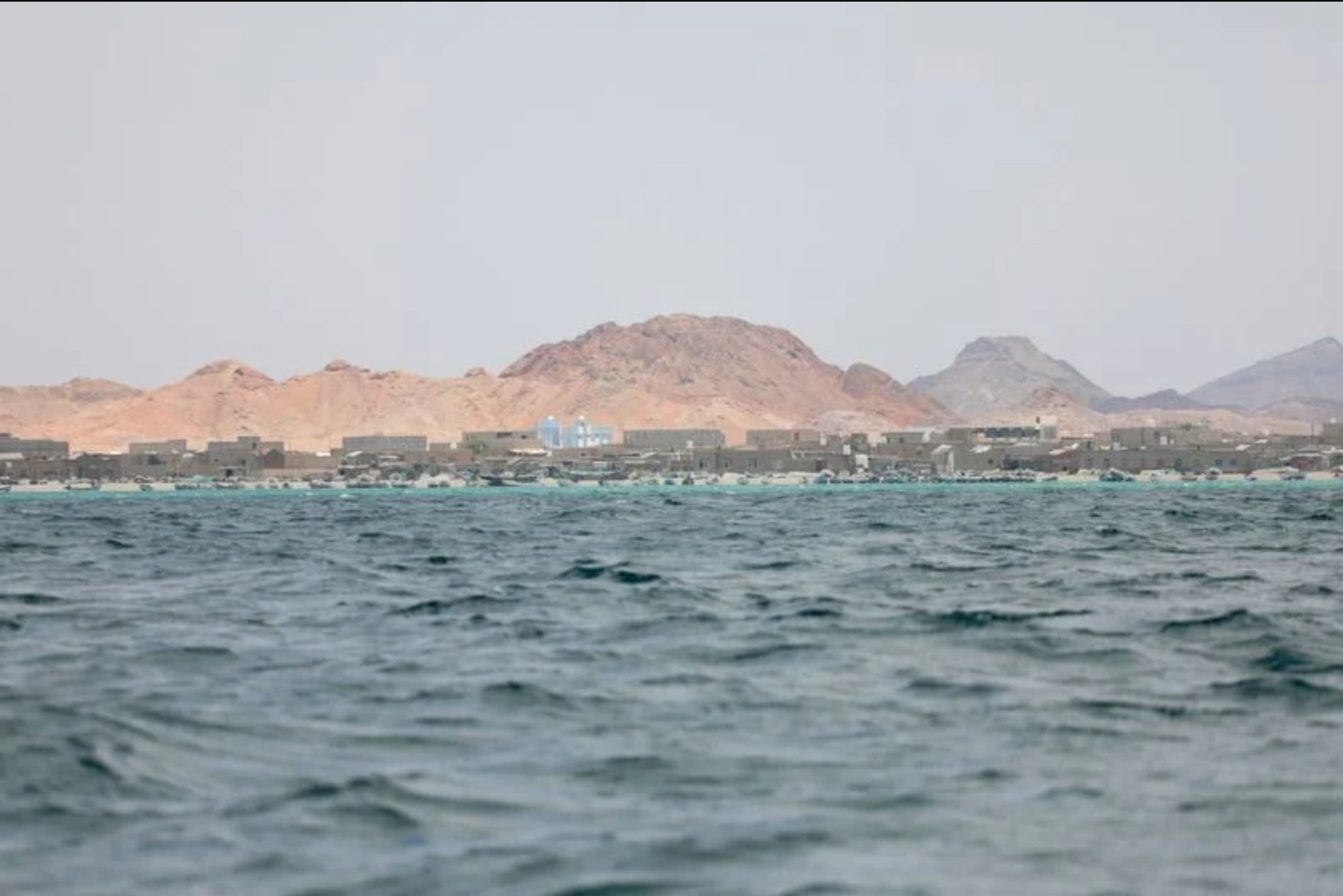
Iran’s campaign to exert leverage over global energy and trade routes appears to be widening. After demonstrating the capacity to disrupt navigation through the Strait of Hormuz, Tehran is now signaling a new threat vector - using its allies in Yemen to target the Bab el-Mandeb waterway that links the Red Sea and the Gulf of Aden.
As U.S. strikes have deepened inside Iran and Houthi attacks have intensified, analysts say Tehran is extending the theater of pressure beyond the Gulf and into the Red Sea. The aim, they suggest, is to increase the burden on Washington by threatening two of the world’s most important energy arteries rather than keeping the confrontation limited to one maritime chokepoint.
Iran has already shown the disruptive potential of its strategic leverage in the Strait of Hormuz. Now, with statements from Houthi-aligned Yemeni officials and commentary from regional analysts, attention has turned to Bab el-Mandeb - the narrow passageway through which Saudi oil exports and a significant share of global shipping transit.
On Monday a senior Yemeni official warned that the country’s armed forces were prepared to close the Bab el-Mandeb Strait if Saudi attacks on Yemen continued. The official, Mohammed al-Farah, a member of the political bureau of Ansarullah - the Houthi resistance movement - said such a closure could send oil prices soaring to $200 a barrel. He additionally accused Washington of inciting Saudi Arabia to strike Yemen and said that such a provocation would never be in the interest of the United States.
"If the current situation aggravates, the Bab el-Mandeb Strait and the Strait of Hormuz will be closed in an operational alliance. Oil prices would then skyrocket to $200 a barrel in a dreadful shock," he warned.
Analysts characterize Hormuz as Tehran’s most potent near-term lever. If that is true, Bab el-Mandeb may be the Islamic Republic’s remaining strategic reserve - a second, geographically distant point of leverage that could compound the economic consequences of any broader military escalation.
Middle East scholar Fawaz Gerges framed Iran’s posture as intentionally expansive. "Iran is willing to go all the way," he said, contending that Tehran is demonstrating to Washington that it can threaten both chokepoints simultaneously - a shift that transforms the confrontation from a bilateral dispute into a direct challenge to the sea lanes that underpin global energy trade. "Now (Tehran) is escalating both near and wide. The message is that not only Hormuz, but Bab al-Mandab, is at risk."
Analysts emphasize that the present danger does not necessarily imply an immediate slide into full-scale war between the parties. Rather, they warn of a steady "mission creep" in which each escalation raises the stakes without immediately breaching the threshold for direct interstate confrontation. This incremental enlargement of the conflict - moving from the Gulf to the Red Sea - could increase stress on trade and energy supplies and create new incentives for both Washington and Tehran to seek talks before the two major chokepoints become the central battleground.
Dennis Ross, a former U.S. Middle East peace negotiator, described the strategic dilemma from Washington’s perspective: the priority is to alter the Iranian calculus to a point where Tehran is willing to resume negotiations and to agree on an arrangement that is materially acceptable, not merely tokenistic.
The Houthis have already proven they can impose meaningful disruption on Red Sea commerce. After the Gaza war began in October 2023, the Iran-backed group launched a campaign of attacks in the Red Sea, saying it was targeting vessels linked to Israel in solidarity with Palestinians. That campaign forced major shipping companies to reroute vessels around southern Africa, pushed up transport costs and prompted U.S. and British airstrikes as well as the establishment of a multinational naval mission to protect shipping.
Andreas Krieg, a senior lecturer at King’s College London’s School of Security Studies, called the latest Houthi threat "another nuclear option" available to Iran after Hormuz - a measure the Islamic Revolutionary Guard Corps might use only if it judged a broader war unavoidable. Krieg cautioned that intensified U.S. strikes on Iran’s critical infrastructure could prompt Tehran to instruct its Yemeni allies to close Bab el-Mandeb, compounding the economic shock already associated with the Strait of Hormuz.
Abdulaziz Sager, chairman of the Gulf Research Center based in Saudi Arabia, said many Gulf states are increasingly skeptical about the prospects of diplomacy with Iran, even while recognizing the heavy price a wider confrontation would exact on the region. "Both a victorious Iran and a defeated Iran carry consequences for the region," he said, adding that some Gulf states might judge the costs of the latter more acceptable if they are seen as producing a more stable security environment.
Sager noted that the Houthis retain the capability to disrupt navigation through Bab el-Mandeb, but he assessed they are unlikely to escalate without explicit direction from Tehran. He added that any Houthi attempt to directly threaten shipping could trigger a broader military operation by the United States and its partners aimed at significantly degrading the group’s operational capacity.
The war, launched in late February by the U.S. and Israel, has already destabilized the Gulf and spread across the region, with Iran striking U.S. bases in multiple countries. Thousands of people have been killed in the broader conflict, with the bulk of fatalities occurring in Iran and Lebanon.
As the confrontation broadens geographically, the potential for economic shock increases. Threats to both the Strait of Hormuz and Bab el-Mandeb raise the prospect of major dislocations for the oil market and for global shipping, with possible knock-on effects for transport costs and energy-dependent sectors until diplomatic or military developments change the calculus of the actors involved.
For policymakers and market participants, the central question remains whether the spread of military pressure will push the parties back to negotiation or drive them toward sustained escalation that would imperil two of the world’s most consequential maritime chokepoints.