
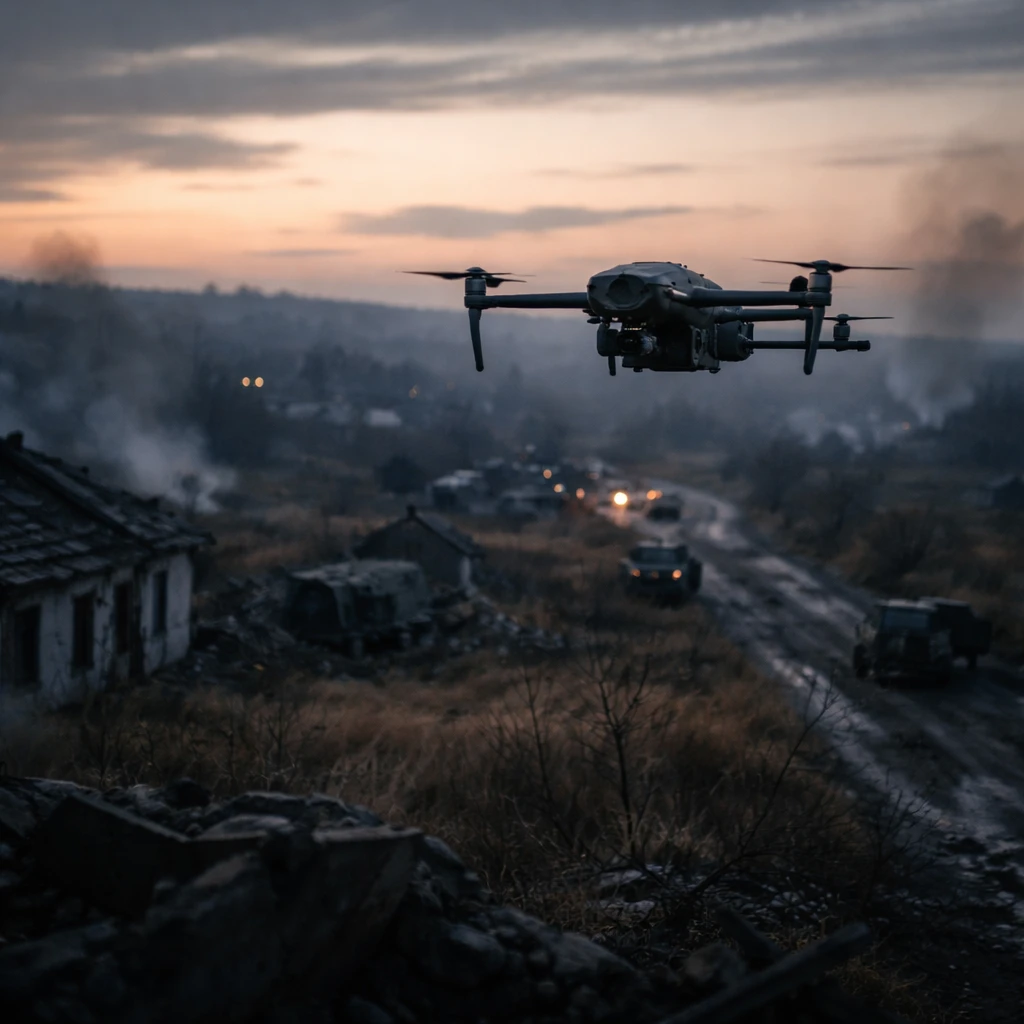
Ukrainian unmanned systems forces say they struck and killed a senior Russian officer in eastern Ukraine earlier this month, according to a public statement from the unit's commander. Robert Brovdi, who leads Ukraine's Unmanned Systems Forces, wrote on Telegram that one of his teams carried out a nighttime attack on September 12 that eliminated Major General Anton Grunis in a part of Donetsk held by Russian forces.
Brovdi said the targeted killing came a little more than two weeks after Grunis received a Gold Star Hero of Russia award at a late-August ceremony. In his post, Brovdi added that Grunis was the seventh Russian military commander to be killed by his drone forces.
Independent verification of the claim was not available. Russia's Defence Ministry does not routinely confirm battlefield deaths of senior personnel. Separately, Russian commander Apti Alaudinov posted on the Telegram messaging platform that Grunis had died, though he did not provide further details.
Grunis had drawn public attention earlier in the campaign. In a July 3 televised security meeting he spoke to President Vladimir Putin via video link and described at length how troops under his command - the 4th Separate Guards Motor Rifle Brigade - had participated in what Russian authorities said was the capture of Kostiantynivka. Putin congratulated him at the time, saying: "Luck comes to those who do the work." Photographs from a later ceremony showed a solemn-faced Grunis standing at the front of a line of officers in dress uniform when he received the Gold Star.
The territorial claim over Kostiantynivka has been contested. Kyiv denied that Russia had taken the city and said Ukrainian forces remained in control. A U.S.-based research group monitoring the conflict said Russian forces had made penetrations into the city but had not fully seized it, and described the Russian claim as part of a wider information campaign aimed at portraying Ukrainian frontlines as collapsing.
Military observers note that while Russian advances have slowed over the course of the year, Moscow's forces continue to press for control of strategic towns in the Donetsk region, including Kostiantynivka. Control of the broader Donbas area remains a central territorial objective Moscow has emphasized in negotiations that are currently stalled with Kyiv.
The announcement from Brovdi adds to a series of claims about high-ranking battlefield casualties that have circulated during the conflict. Given the lack of routine confirmation from Russian defense authorities and the contested nature of frontline reports, the full circumstances surrounding Grunis's reported death remain subject to limited independent corroboration.
Context and implications
The reported killing of a decorated general underscores the role that unmanned systems and drone units are playing in targeting high-value personnel on both sides of the conflict. It also highlights how battlefield claims and counterclaims, including ceremonial recognitions and public statements, have become intertwined with information operations.