
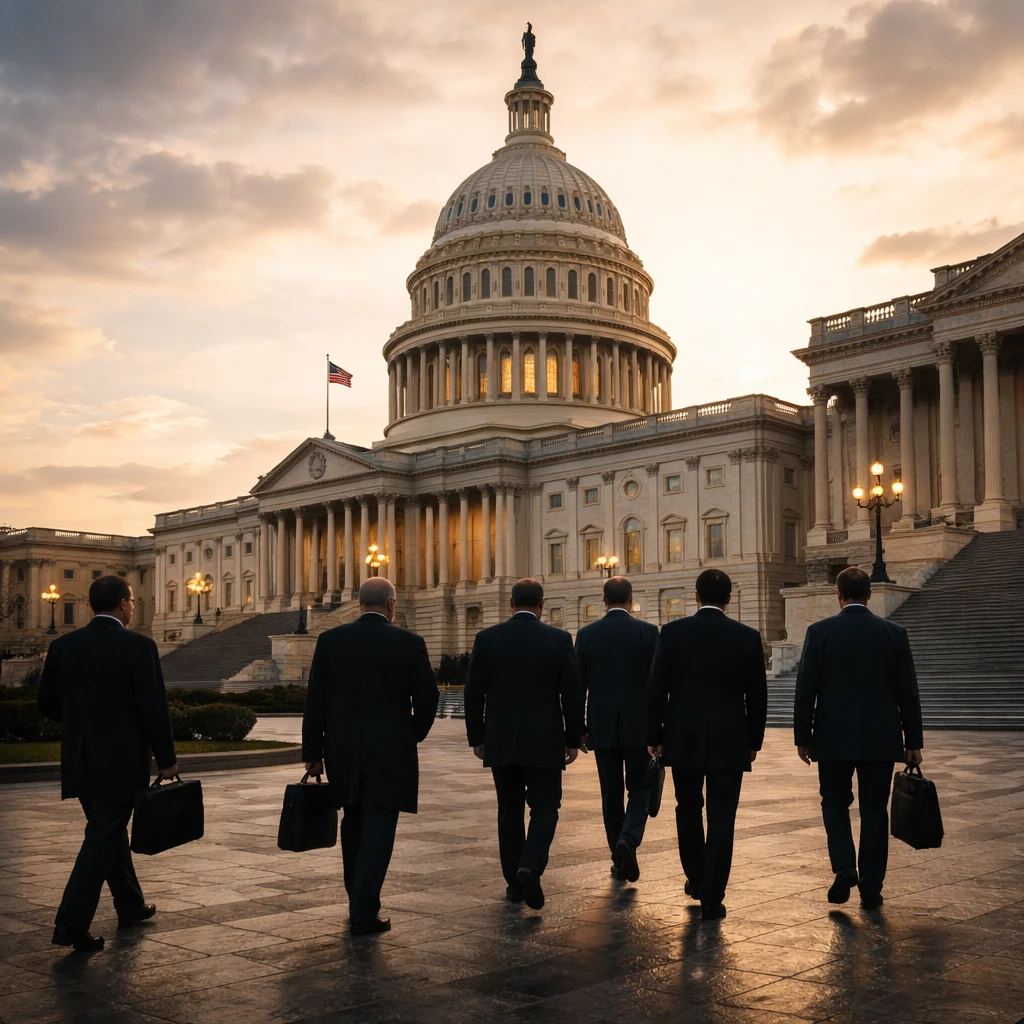
One week after a sweeping election loss that many interpreted as a rebuke of their loyalty to President Donald Trump, Republican members of Congress moved to pick the leaders who will guide the party from the minority benches next year when Democrats assume control of both chambers.
In the Senate, Majority Leader John Thune appeared to have no challenger for the post of minority leader that he is expected to occupy in January. However, a faction of hardline Republican senators advocated delaying the party’s leadership votes so members could hold a post-mortem review of the election results first.
Thune told reporters that Republicans should discuss the election setbacks before conducting the leadership election. "I’m running for leader, but I think it’s important that we have that discussion. And we will, and everyone will have a chance to weigh in, and then we’ll hopefully move forward," he said.
On the House side, a competitive contest emerged for the minority leader slot. House Majority Leader Steve Scalise and House Judiciary Committee Chairman Jim Jordan were engaged in a close race after House Speaker Mike Johnson indicated he did not intend to remain as the party’s leader. Former President Trump said he would not intervene in that contest.
Johnson, who led a fractious Republican majority in the outgoing Congress that at times stalled its own agenda, warned of disorder with Democrats in charge. He said he was sorry with the outcome - "I’m sorry that voters made the wrong choice" - and suggested Republican governance would have stayed on course had his party retained control: "If we had kept the majority, we would stay on course." He also predicted "chaos" in the House under Democratic leadership.
The forthcoming leadership elections will be conducted by secret ballot inside the US Capitol and will shape the role Republican lawmakers intend to play during the final two years of the current presidential term. Democrats secured at least 54 of the Senate’s 100 seats and at least 252 of the House’s 435 seats, handing them sizable majorities to pursue their legislative priorities ahead of the 2028 presidential campaign.
Senate Democratic leader Chuck Schumer, addressing reporters as the lame-duck session began, framed the victories in sweeping terms: "We’re about to become the largest landslide in the history of the Senate since the ’50s, and now we’re ready to roll up our sleeves, get to work, and lower costs for the American people," he said.
Despite those margins, Democrats will still require support from Republicans to advance many major measures in the Senate because the filibuster rule typically requires 60 votes for most legislation. Their majorities in both chambers also fall short of the two-thirds thresholds necessary to override presidential vetoes.
After the election, Thune pledged that Republicans would collaborate with Trump to resist what he characterized as "Democrat extremism" and to oppose efforts by Democrats to undo Republican initiatives. Thune identified border security and judicial appointments as examples of achievements Republicans would work to preserve.
At the same time, Thune has faced criticism from Trump-aligned MAGA supporters, who faulted him for not more aggressively advancing Trump-backed policies prior to the election. Critics singled out Thune for not pushing through sweeping federal election restrictions that had been sought by the president.
The outcomes of the leadership votes in both chambers will signal whether the Republican caucuses aim to take a cooperative, consensus-driven posture or a more confrontational approach in the coming legislative period. Party members and outside observers alike are watching those internal decisions closely, recognizing their implications for how Congress will address its agenda during the remainder of the presidential term.