
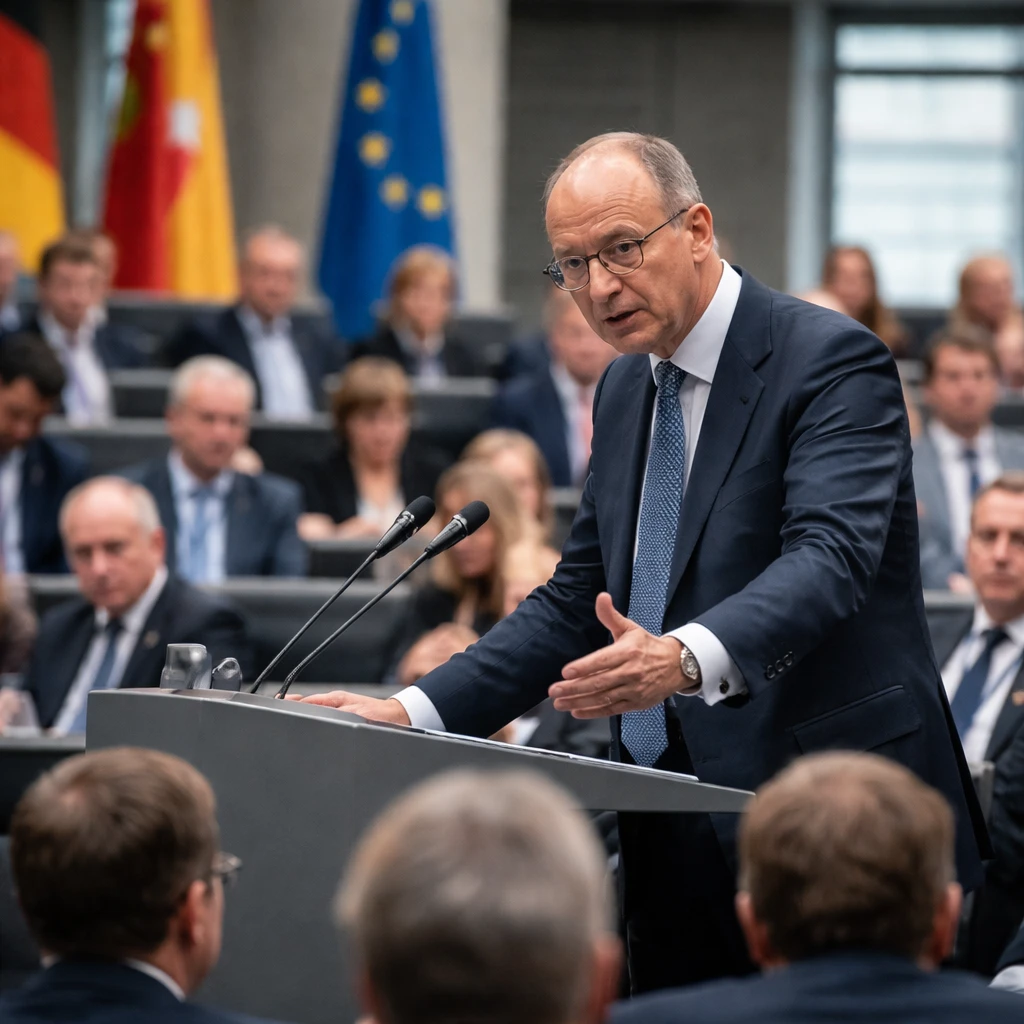
German Chancellor Friedrich Merz on Wednesday confronted the parliament with a blistering critique of the Alternative for Germany (AfD), arguing the party’s election platform both sided with Moscow on foreign policy and endorsed migration measures he said would amount to “ethnic cleansing”. His address came in the wake of the AfD’s upset victory in Saxony-Anhalt, where the party campaigned on halting migration and restoring relations with Russia.
Merz’s speech followed an earlier intervention by AfD co-leader Alice Weidel. In response, the chancellor warned of the consequences of policies labelled by the AfD as “remigration.” He said: "If what is being advocated here, namely ’remigration’, were to become reality, it would be nothing other than a synonym for ethnic cleansing based on origin and skin colour," highlighting the stark language used in the parliamentary exchange.
The AfD, in an emailed reply to Reuters, said Merz had intentionally misrepresented the party’s stance in order to demonise it, and insisted its proposals conformed with the law. In its Saxony-Anhalt programme, the AfD set out a suite of measures described as "remigration" to accelerate deportations of rejected asylum seekers and foreign criminals and to create incentives for voluntary departures. The programme also proposes segregated classes for children of refugees.
One AfD lawmaker, Bernd Baumann, countered in an email that: "By ‘remigration,’ the AfD means the consistent deportation - in accordance with the law - of all foreigners required to leave the country; nothing else. Chancellor Merz knows this, too." Baumann added that attributing ethnic cleansing to the AfD was a "desperate and sordid attempt to maintain a ‘firewall’ through fabricated demonization." The reference to a ‘firewall’ echoes the stance of mainstream parties which have so far refused to enter coalitions with the AfD.
Merz also accused the AfD of opposing continued support for Ukraine and of being "steadfastly on Russia’s side" - a charge he repeated after pointing to a planned drone attack at a German airport last month, which he said had been carried out by Moscow. Russia denies responsibility for that incident.
The chancellor is attempting to reassert control after a difficult electoral weekend that damaged his party and left his approval ratings at historic lows. Observers noted he dismissed suggestions he might step down following the loss, but the electoral setback has put his government’s reform agenda under pressure.
In debating the AfD’s migration pledges, Merz also warned of domestic economic consequences if those policies were enforced. He said forcing migrants to leave would trigger labour shortages that would have immediate practical effects: "Not a single nursing home will function. Not a single hospital in Germany will remain operational, and not a single restaurant will be able to stay in business - that would be the result of their remigration policy," he argued, laying out potential strain on health and hospitality services.
Alarm at the AfD’s advance was voiced by numerous representatives of minority communities. Eva Umlauf, a survivor of the Nazi death camp Auschwitz and now president of the International Auschwitz Committee, told Reuters she was "appalled" by the election outcome in Saxony-Anhalt.
The AfD, which began life in 2013 as a eurosceptic formation during the euro zone crisis, rejects comparisons with the Nazi Party. Opponents, however, accuse the party of minimising Germany’s Nazi-era crimes, citing a comment by one of its leaders in 2018 who reportedly described that period as "just bird shit in 1,000 years of successful German history."
Three days after the ballot, the makeup of a Saxony-Anhalt government remained unresolved. Although the AfD won a plurality of votes, it failed to secure an outright majority. Mainstream parties have maintained a policy of avoiding coalitions with the AfD, known colloquially as the "firewall." That stance, however, leaves open the possibility that the AfD could seek an arrangement with a small leftist party that shares its opposition to mass immigration.
Merz also criticised the AfD for what he said was a breach of an earlier pledge that it would only govern if it secured an absolute majority. "You failed to achieve your actual electoral goal of securing a majority of seats in Saxony-Anhalt," he said, adding: "56% of voters in Saxony-Anhalt did not vote for you."
As the national debate intensifies, the political standoff in Saxony-Anhalt is likely to remain a focal point for discussions on migration policy, the structure of state governments, and the balance of service provision in sectors that depend on migrant labour.