
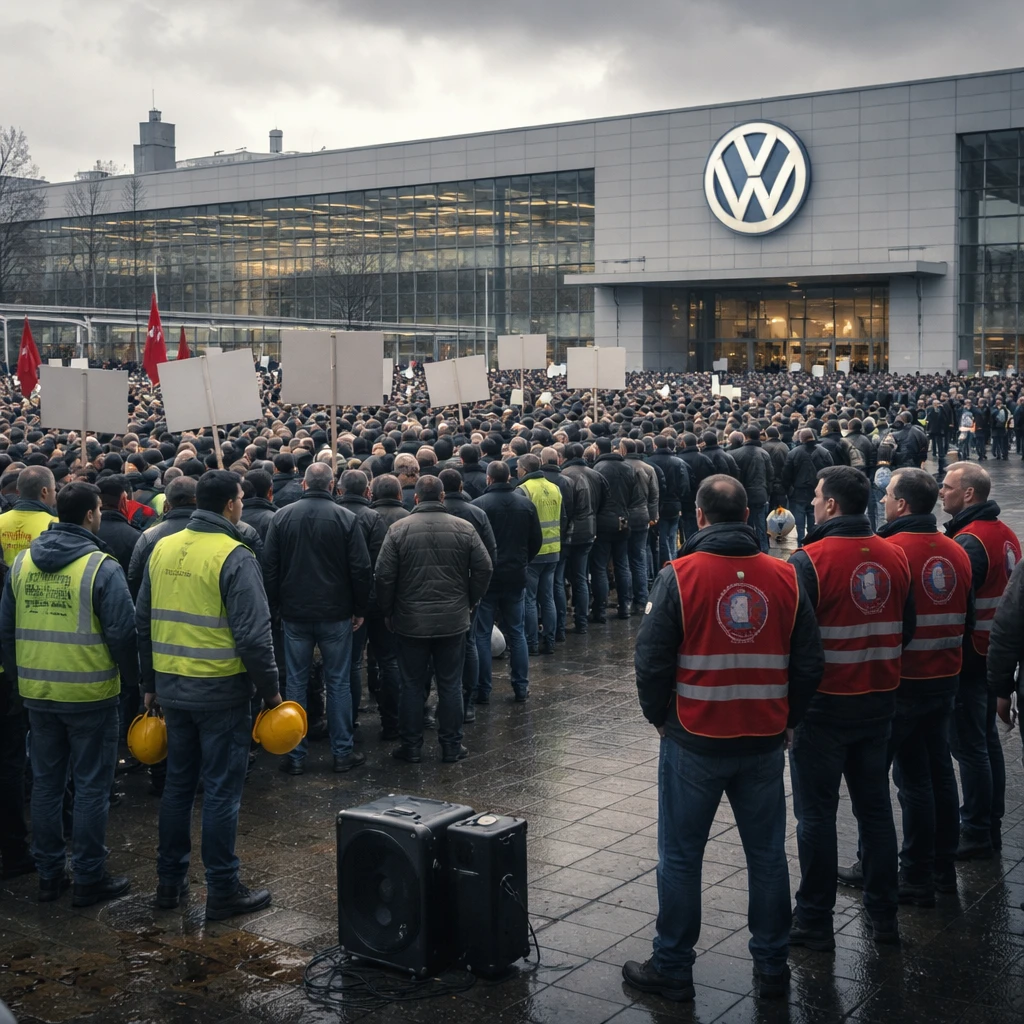
Volkswagen has initiated talks with its labour representatives as demonstrations and the prospect of industrial action shadow the opening session in Emden. The negotiations come as the company pushes a major restructuring to reduce costs across its global operations.
Management is seeking significant concessions from German employees while outlining a plan that includes deep cost reductions and workforce cuts. The broader transformation has been framed as a response to intensifying competition from Chinese automakers, hefty annual tariff expenses measured in the billions of euros and rapid technological change. As part of that drive, Volkswagen plans some 100,000 job cuts globally.
Germany has emerged as a central battleground in the overhaul. Volkswagen has told its roughly 120,000 workers in Germany that domestic production has become too costly and has flagged four German plants as candidates for potential closure early next decade. The Emden facility, where the first round of talks is being held, is among those vying to remain operational. Several hundred employees were expected to gather in a demonstration there ahead of the meetings between representatives of the IG Metall union, the works council and company management.
On the table for discussion are measures Volkswagen says are needed to restore competitiveness. Company proposals include freezing wages in 2027 and 2028 and scaling back or removing multiple benefits. Management is also seeking changes to the long-established 35-hour week arrangement, asking that staff extend working time when required without additional pay. A company letter dated Thursday detailed a broader package of proposed cuts that goes further than the public outline management released prior to the talks.
Specific items in the proposed package include the abolition of special wage agreements for managerial personnel and the elimination of anniversary bonuses that are currently paid to employees after 25 and 35 years of service. The proposals also call for ending paid 20-minute breaks within three-shift factory operations and removing paid leave currently granted on Christmas Eve and New Year’s Eve. Volkswagen management has described these measures as part of a necessary recalibration of cost structures.
The talks unfold against a tense national backdrop. Sector-wide labour actions have already begun within Germany’s auto industry as unions press for safeguards for workers. The union has warned that fresh restructuring measures by Volkswagen breach the terms of a landmark late-2024 restructuring agreement. That earlier deal had allowed for 35,000 job cuts in exchange for specific employment and investment guarantees. The union asserts the new push for cuts violates that arrangement and has indicated strikes could begin at Volkswagen from January 1 unless the dispute is resolved.
Volkswagen’s management points to a weakening business picture to justify the intensified cost measures. Since the late-2024 agreement, sales in China - a market that had long helped offset high German production costs - have dropped further. The group's core operating margin is now viewed at no more than 1% for the current year, down from 5.9% in 2024 when the earlier deal was negotiated.
As negotiations proceed in Emden, the union, works council and management will confront a difficult mix of operational and labour questions. The discussions will test whether the company can secure the concessions it deems necessary without triggering prolonged strikes that would further complicate production, investment and the wider German automotive sector.
Context and next steps
- Initial talks are taking place in Emden, a location that houses one of the German plants facing possible closure.
- The union and works council are meeting Volkswagen management amid planned demonstrations by workers.
- Key managerial demands include pay freezes for 2027 and 2028, removal of certain bonuses and benefits, and flexibility on working hours under the 35-hour week.