
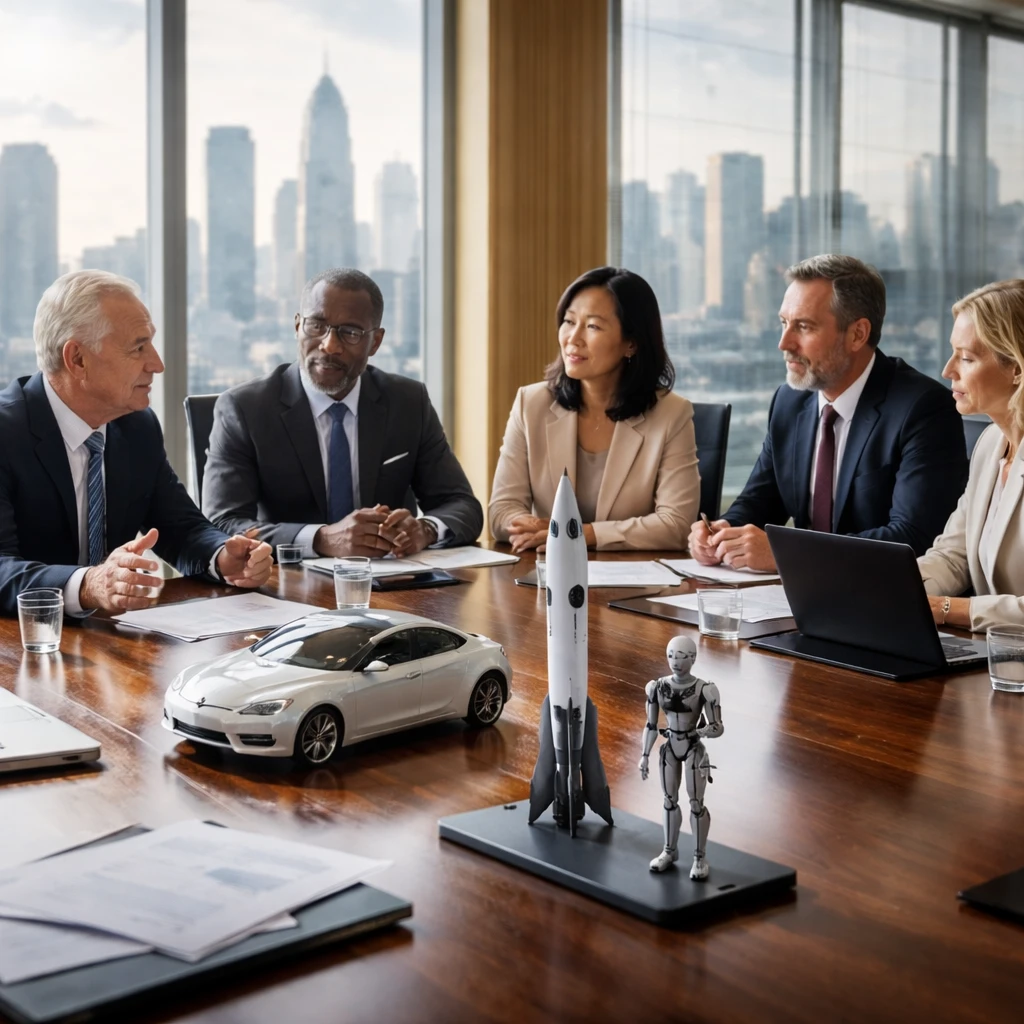
Elon Musk's two public companies have appointed five directors to steer negotiations between separate special committees that are discussing a potential merger, according to media reports. The appointments consist of two SpaceX directors - Roelof Botha and Randy Glein - and three Tesla directors - Robyn Denholm, Kathleen Wilson-Thompson and Jack Hartung.
The special committees are working with external advisers as they refine the financial models that will underpin their negotiating positions for an all-stock transaction. The advisers reportedly include Morgan Stanley and Goldman Sachs on behalf of SpaceX, and Evercore for Tesla. Those advisory teams are said to be examining which parts of the proposed combined business would overlap as they build the models.
During SpaceX's third-quarter earnings call last month, Elon Musk described a merger that would bring together his AI, robotics, electric vehicle and aerospace initiatives under a single corporate structure as "a good idea." He also confirmed that each company had formed independent director-led special committees to explore the possibility of a union.
Reports indicate the committees have engaged investment banks to fine-tune valuation and structural scenarios. Those bankers are evaluating the operational and strategic intersections across the proposed conglomerate. The resulting models are expected to form the basis for bargaining positions if the boards advance toward a binding agreement.
Despite the preparatory work, significant obstacles remain. Analysts and advisers are reportedly aware of steep regulatory constraints tied to SpaceX's U.S. defense contracts and Tesla's commercial exposure in China. Those matters are among the primary regulatory and geopolitical risks that could complicate any proposed combination.
Some accounts have suggested a deal could be announced as early as December, though timing remains uncertain and dependent on the committees' analysis and regulatory considerations. The reports also note governance questions raised by the size and composition of the five-director group overseeing the talks, an issue that could affect investor and stakeholder confidence as negotiations progress.
Market response and procedural notes
Market references included in coverage showed notable price moves for the companies' market symbols as discussion of the talks circulated. The special committees have reportedly not only retained advisers but are using those advisers to prepare the quantitative frameworks that will guide negotiation strategy.
The reporting on these developments has not been independently verified here, and the companies did not supply comment outside regular business hours in response to requests tied to these accounts.
What happens next
- Advisers will continue to refine valuations and test structural scenarios for an all-stock merger.
- The special committees must address governance questions about their composition and ensure independence in any proposed transaction.
- Regulatory reviews related to defense contracts and international business exposure will be a key determinant of feasibility and timing.