
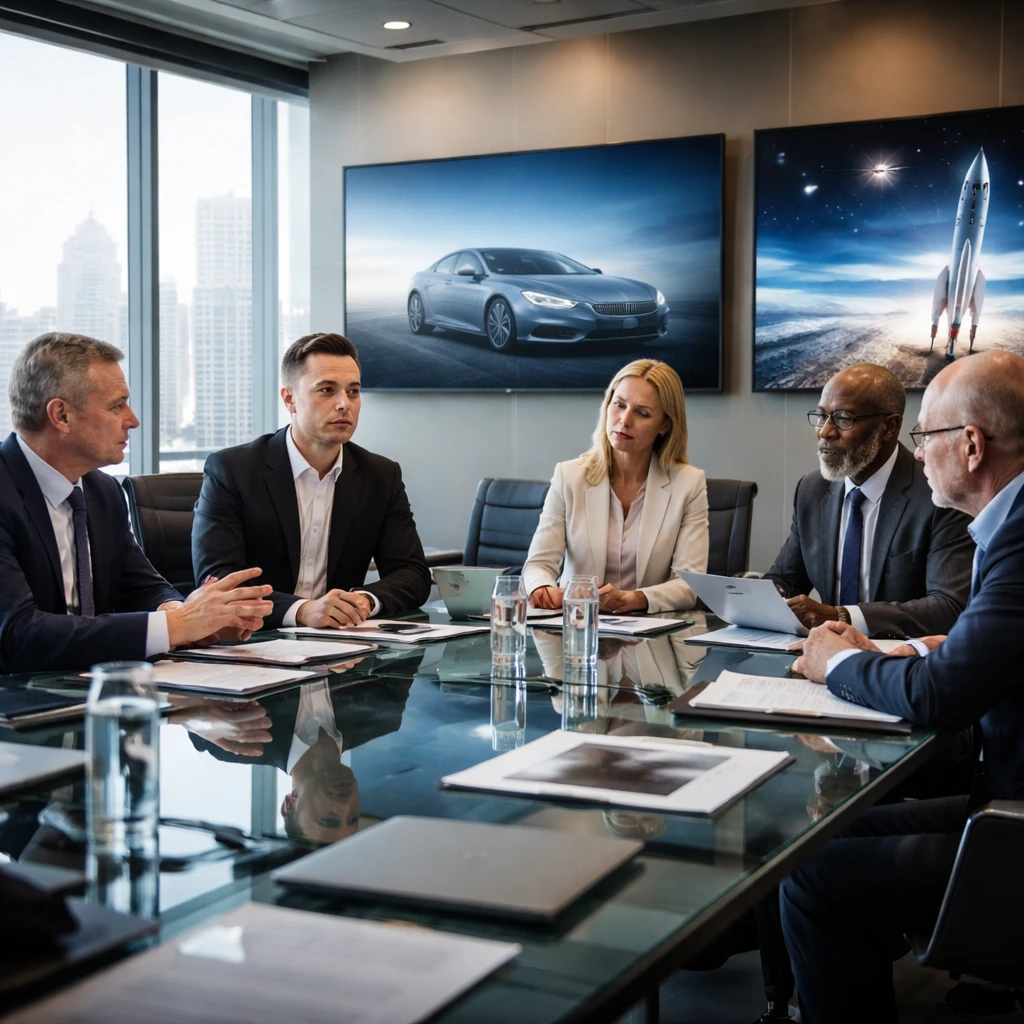
Directors appointed by Space Exploration Technologies and Tesla Inc have begun formal negotiations over a proposed $3.5 trillion all-stock combination that, if completed, could create one of the world’s largest corporate groups. Separate special committees from each company have been established to oversee the process and to evaluate the proposed merger, people familiar with the process said.
The committees are composed of three directors from Tesla and two from SpaceX. Named to the Tesla group are Robyn Denholm, Kathleen Wilson-Thompson and Jack Hartung. Representing SpaceX on its committee are Roelof Botha and Randy Glein.
Both sides have retained external financial advisers to assist with valuation, transaction structure and related analyses. Morgan Stanley and Goldman Sachs are advising SpaceX, while Evercore has been engaged by Tesla. The advisers are helping the committees to develop financial models and to negotiate an appropriate exchange ratio for shareholders in an expected all-stock transaction.
Those involved in the talks say discussions are trending toward a potential year-end timeline, but they also cautioned that the special committees have not yet reached agreement on terms. The committees are responsible for independent oversight of the negotiations.
The proposed transaction raises notable governance issues because the two companies share a chief executive. Under applicable Texas corporate governance rules, the chief executive is barred from formally taking part in active negotiations, and the special committees are intended to provide independent review. The committees may, however, consult senior executives for information as they evaluate the proposal.
Shareholder approval will be required for the merger to proceed. Tesla is expected to hold a separate extraordinary shareholder meeting for the vote, and the deal would require more than 50% of all possible votes to pass; abstentions and uncast votes would count against approval.
Regulatory scrutiny is another potential obstacle. The transaction could face review by authorities in the United States, China, Europe and the United Kingdom. Observers note that Tesla’s operations in China, and SpaceX’s rocket technology together with its Starlink satellite business, could complicate approvals due to national security and geopolitical considerations.
The structure of voting control between the companies is also a central feature of the proposal. The chief executive controls about 84% of voting rights at SpaceX but holds roughly 20% of voting power at Tesla, meaning the merger would materially affect the distribution of control within any combined entity.
Context and next steps
The two special committees will continue working with their advisers to refine valuation scenarios and to settle on an exchange ratio that could be presented to shareholders. While some participants are moving toward a year-end target for decisions, those overseeing the talks emphasize that the committees are not close to an agreed transaction and that multiple governance, shareholder and regulatory milestones remain ahead.