
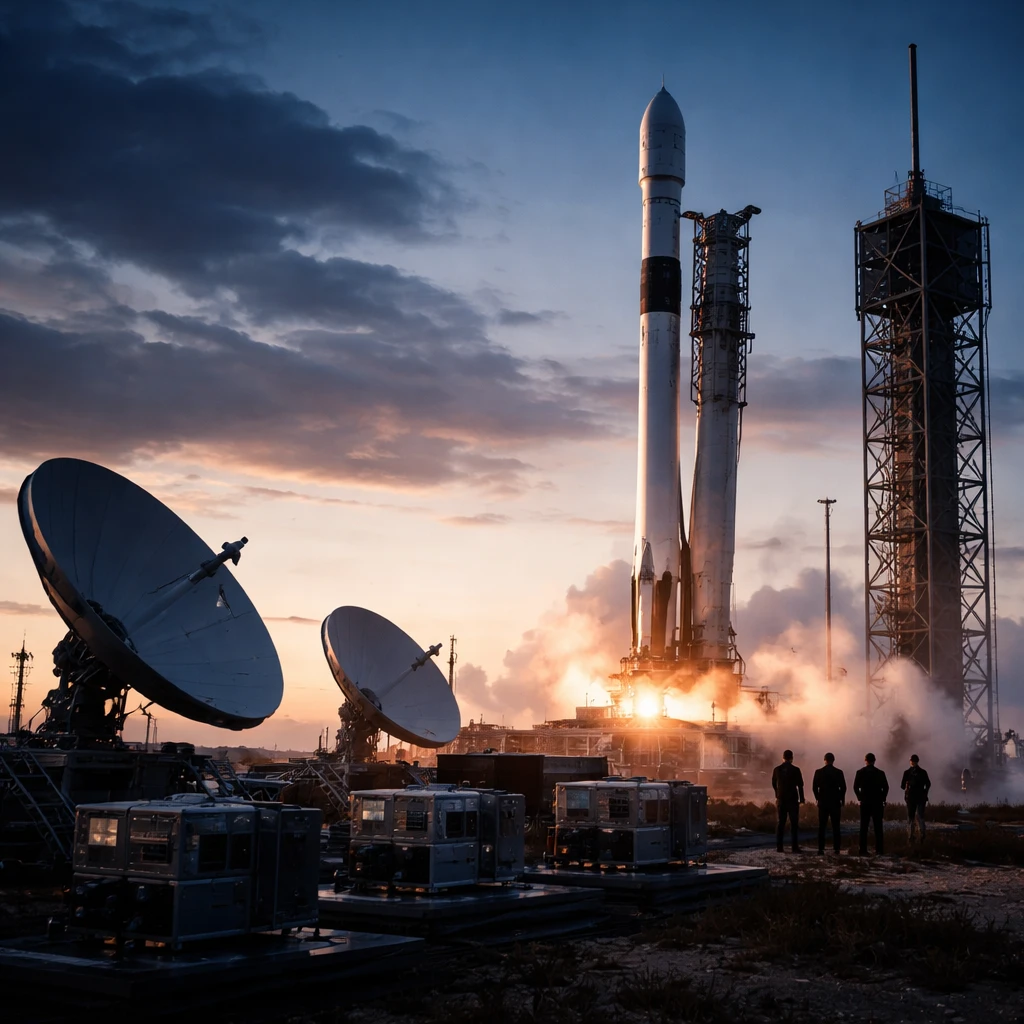
SpaceX is preparing what would be one of the largest public market debuts on record, planning to sell roughly 555.6 million shares at $135 each to raise $75 billion and pursue a target valuation of $1.75 trillion in an IPO slated for next week.
The Elon Musk-led rocket and satellite company intends for the offering to be composed entirely of newly issued shares, and its marketing roadshow is expected to commence this Thursday. Earlier accounts indicated that the company could name the offering terms as soon as Wednesday afternoon.
SpaceX is widely described as the largest private participant in the space industry and has been promoted by its CEO as having expansive long-term goals - including conducting extended space missions and operating artificial intelligence data centers in space. The company’s satellite communications arm, Starlink, is the only unit reported to have produced profits so far.
However, the broader business presents notable financial contrasts. SpaceX reported revenue of $18.67 billion in 2025, alongside a net loss of $4.94 billion. The company’s net loss was said to be largely linked to its acquisition of xAI. Observers note that two of SpaceX’s three operating units are regarded as significant cash drains, while Starlink remains the only profitable segment.
The planned IPO comes as a wave of large listings is expected; artificial intelligence-focused companies OpenAI and Anthropic are also scheduled to list in the coming months. SpaceX’s move to offer only new shares and its effort to secure a $1.75 trillion valuation make this a high-profile test of investor appetite for mega deals tied to space infrastructure and AI ambitions.
Key points
- SpaceX intends to raise $75 billion by selling about 555.6 million shares at $135 per share, targeting a $1.75 trillion valuation.
- The offering will consist entirely of new shares, with the IPO roadshow expected to begin this Thursday and term-setting possibly occurring as soon as Wednesday afternoon.
- The listing is timed amid other major planned public debuts, including AI companies OpenAI and Anthropic in the coming months; sectors affected include the space industry, satellite communications, and AI infrastructure.
Risks and uncertainties
- Two of SpaceX’s three business units are described as major cash drains, creating uncertainties around overall profitability and cash flow dynamics.
- SpaceX posted a net loss of $4.94 billion in 2025, a result largely attributed to its acquisition of xAI, which could weigh on investor sentiment.
- Timing and terms of the IPO have been fluid; while the roadshow is expected to begin Thursday, reports indicate terms could be set as soon as Wednesday afternoon, leaving scheduling uncertainty.
This offering will be closely watched by market participants given its scale and the mix of profitable and loss-making units within the company. The combination of a substantial fundraising target, an all-new-share structure, and high stated ambitions for space-based AI capabilities positions the deal as a major test for investor appetite in sectors tied to space and advanced computing.