
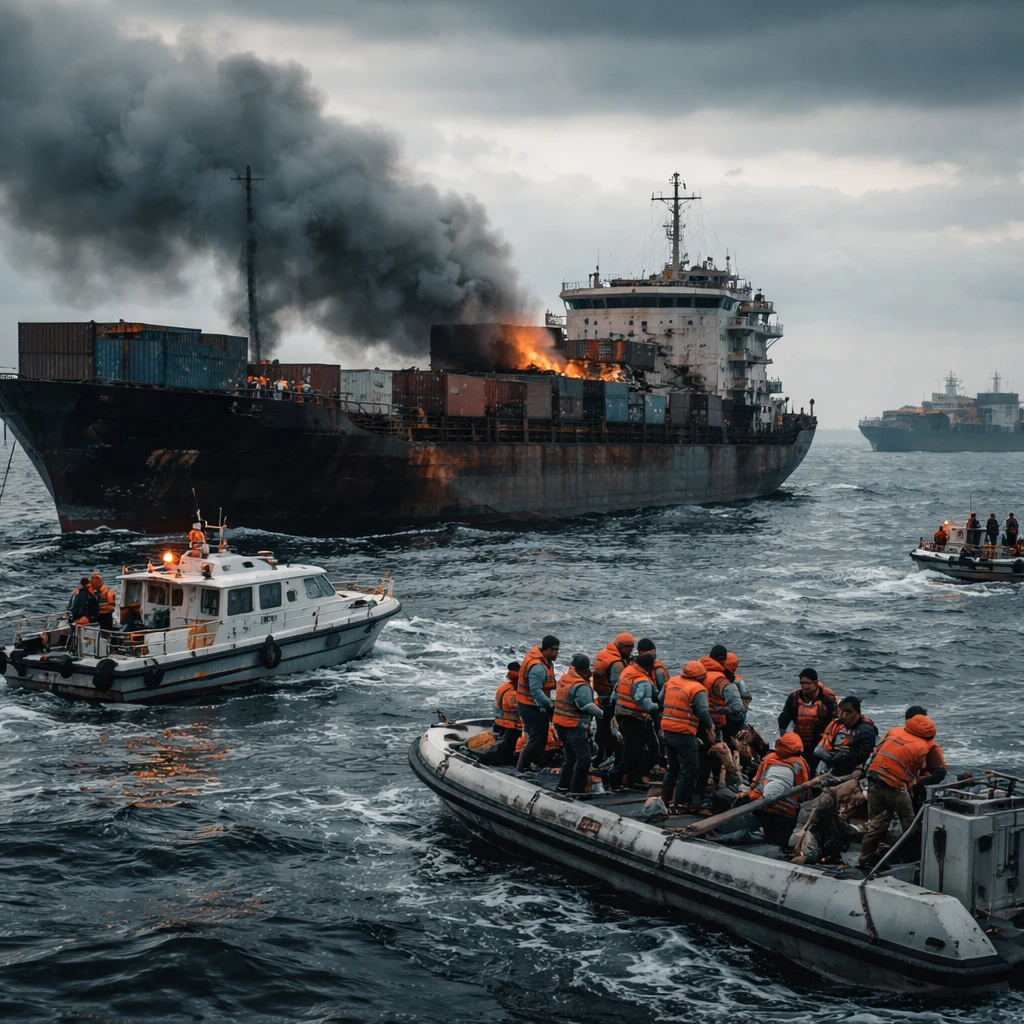
MOSCOW, June 5 - Azerbaijan’s Foreign Ministry said on Friday that five Azerbaijani citizens were killed and three others injured when two cargo vessels came under attack in the Sea of Azov. The ministry specified that the crews of the ships included 25 Azerbaijani nationals in total, and added that the vessels themselves do not belong to Azerbaijan.
The ministry’s comment responded to questions about damage in Taganrog Bay, an inlet of the Sea of Azov where the two cargo vessels were reported hit. Officials provided the casualty and injury figures and reiterated that ownership of the ships is foreign to Azerbaijan, while offering no further detail about the circumstances aboard the vessels at the time of the attacks.
Earlier on the same day, Ukrainian authorities said their drones had struck five ships located in the ports of Mariupol and Berdyansk, as well as in coastal waters under Russian control. According to Ukrainian statements, the strikes affected multiple vessels in those locations.
Robert Brovdi, who commands Ukrainian drone forces, issued a statement saying that his drones had struck dry cargo ships and a tanker. The statement alleged the targeted vessels were engaged in what he described as "stealing" Ukrainian grain and in transferring military cargo and fuel. Brovdi also said the ships had their names painted over and were operating with their radars switched off.
The accounts from Azerbaijan’s Foreign Ministry and Ukrainian officials provide overlapping but distinct descriptions of the incidents: Azerbaijan focused on the human toll among its citizens on board two cargo vessels in Taganrog Bay, while Ukrainian forces described a broader set of strikes on multiple ships in ports and coastal waters and explained the motives they attributed to those operations.
No additional details about the identities of the ships, the nationalities of the shipowners, the exact timeline of the attacks beyond the reported statements, or independent confirmation were included in the statements released by the parties. The available information is limited to the casualty figures released by Azerbaijan’s Foreign Ministry and the operational claims made by the Ukrainian drone commander.
Summary
Five Azerbaijani citizens were killed and three injured after two cargo vessels were struck in the Sea of Azov, the Azerbaijani Foreign Ministry said. The crews included 25 Azerbaijani nationals in total, but the ships are not Azerbaijani-owned. Separately, Ukraine said its drones hit five ships in ports and coastal waters under Russian control, with a Ukrainian drone commander stating the vessels were involved in moving grain, military cargo and fuel.