
Overview
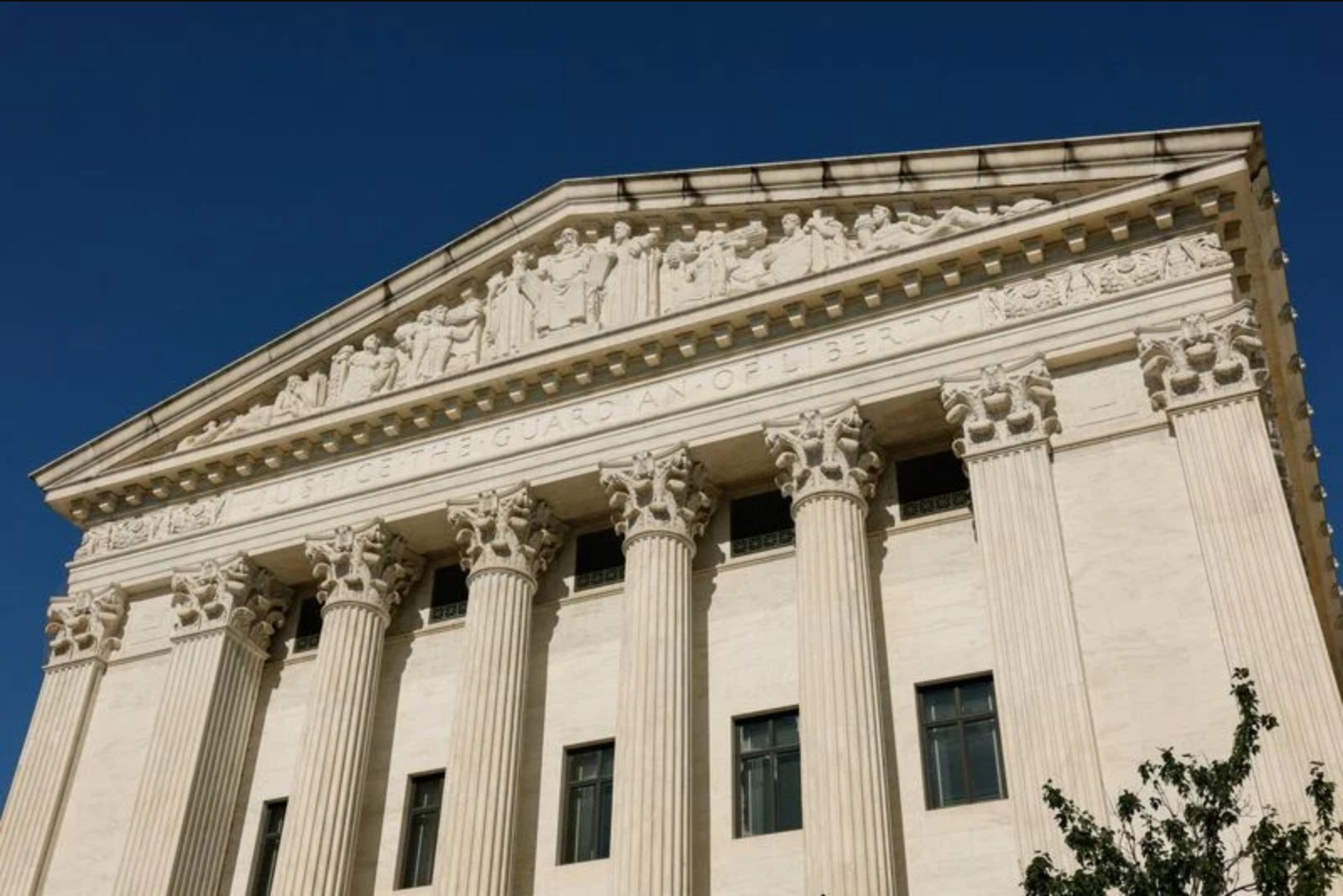
The Supreme Court’s term, which began in October and stretches toward the end of June, has presented the justices with an unusually broad docket of consequential disputes. The cases span the shape of American public life - from who can vote and which districts they vote in, to the reach of presidential power over tariffs, personnel decisions at independent agencies and immigration policy. The court also weighed rules on gun ownership, transgender participation in school sports, limits on campaign spending, speech restrictions related to mental health therapy, data-driven investigative techniques and several business and tort disputes with direct implications for corporate defendants.
Some matters reached final rulings that change legal practice immediately. Others remain on the court’s calendar, with decisions expected by the end of June. Below, each topic is presented with the factual posture and what the justices said or did publicly during argument or decision announcements. The presentation avoids speculation and confines itself to the actions and statements the court has made.
Voting Rights Act - Section 2
On April 29 the court issued a ruling that significantly altered the practical reach of Section 2 of the Voting Rights Act. The court blocked an electoral map that had created a second Black-majority U.S. congressional district in Louisiana and made it more difficult for minority voters to mount successful challenges to maps they say are racially discriminatory. Section 2, enacted to prevent electoral arrangements that dilute minority voting strength, had been a principal tool since another key part of the law was curtailed in 2013. The April 29 decision therefore reduced Section 2’s effectiveness as a safeguard against maps that challengers assert weaken minority voting power.
The ruling has immediate political implications because Black and Latino voters tend to support Democratic candidates. The decision opens a pathway for state governments - particularly Republican-led Southern states cited in the court’s ruling - to redraw or dismantle majority-Black and majority-Latino districts. The court’s action occurred in the run-up to the November midterm elections and thus affects the electoral map-building process in that timeframe.
Birthright Citizenship
On April 1 the justices expressed clear skepticism about the legality of an executive action by the prior administration that sought to restrict birthright citizenship. At oral argument the court questioned the administration’s lawyer about both the legal foundation for the directive and how it would operate in practice. A lower court had already blocked the policy, which instructed federal agencies not to recognize the citizenship of children born in the United States if neither parent was a U.S. citizen or lawful permanent resident. That court concluded the policy violated the Constitution’s Fourteenth Amendment and a federal statute codifying birthright citizenship. The Supreme Court is expected to deliver a ruling on the issue by the end of June.
Trump-Era Tariffs and the IEEPA
In a February 20 decision that reined in presidential authority over trade, the justices struck down a set of sweeping tariffs that had been imposed under a federal law intended for national emergencies, the International Emergency Economic Powers Act (IEEPA). The court, in a 6-3 judgment, affirmed a lower court’s conclusion that the president had exceeded the authority the law grants. The court emphasized that the Constitution assigns the power to levy taxes and tariffs to Congress, not the president, and held that the IEEPA did not furnish the presidential authority used to impose the contested tariffs.
The ruling affects a tariff program at the center of a global trade dispute that was initiated after the president began a second term. Those tariff actions altered commercial relations with trading partners, affected financial markets and heightened economic uncertainty. By limiting the executive branch’s reliance on IEEPA for tariff actions, the decision constrains a tool that had been used to pursue trade policy without Congress’s direct involvement.
Attempted Firing of a Federal Reserve Governor
Arguments on January 21 brought the justices face-to-face with a question that goes to the independence of the Federal Reserve. The court heard a challenge related to the president’s effort to remove a sitting Federal Reserve governor, Lisa Cook. The justices signaled skepticism toward the administration’s bid to lift a judicial order that had barred immediate removal pending Cook’s legal challenge. Congress set up the Federal Reserve with statutory provisions designed to insulate the central bank from political interference, including language that a governor can be removed by the president only "for cause." The statute, however, does not define the term "for cause" or lay out clear procedures for removal.
The president cited unproven allegations of mortgage fraud as the reason for the proposed firing - allegations that Governor Cook has denied. Cook remains in office while the dispute proceeds, and she has characterized the accusations as a pretext tied to disagreements over monetary policy and pressure for lower interest rates. The justices’ remarks at argument suggested they were unlikely to permit immediate removal while the lawsuit is pending; a decision is expected by the end of June.
Temporary Protected Status for Immigrants
On April 29 the court heard appeals concerning the administration’s moves to terminate Temporary Protected Status (TPS) for significant numbers of immigrants from Haiti and Syria. The administration sought to end humanitarian protections that had been extended to more than 350,000 Haitian nationals and more than 6,100 Syrian nationals. Two federal judges had enjoined the moves to terminate TPS, and the administration appealed those orders.
During argument several conservative justices expressed sympathy for the administration’s contention that courts are limited in second-guessing executive determinations to end TPS. Some justices also questioned challengers’ claims that the administration failed to follow mandatory statutory procedures when making those termination decisions. The court’s decision in the TPS appeals is expected by the end of June.
Federal Trade Commission Membership and Presidential Removal Power
The court took up an appeal regarding the president’s firing of an independent agency official and, during arguments on December 8, the conservative justices signaled they would likely uphold the legality of the dismissal. The case centers on the removal of a Democratic Federal Trade Commission member, Rebecca Slaughter, whom the president dismissed in March before her term had expired. A lower court had found the firing exceeded presidential authority, concluding Congress had provided tenure protections to certain heads of independent agencies.
At argument the conservative justices appeared inclined to accept the administration’s view that statutory tenure protections for agency officials unlawfully encroached on the president’s constitutional authority. While the court considered the appeal, it allowed the president to remove Slaughter. A ruling in the case is expected by the end of June, and observers note the court’s approach could have broad implications for the balance of power between the executive branch and independent agencies that regulate market activity.
Transgender Athletes in School Sports
On January 13 the court heard appeals from Idaho and West Virginia challenging lower-court rulings that had struck down state statutes banning transgender athletes from competing on female teams. The conservative justices at argument appeared prepared to uphold the state laws. The cases involve students who argued the bans violated the Constitution and a federal anti-discrimination statute. Twenty-five other states reportedly have laws that similarly restrict transgender students’ participation in female sports.
At oral argument the justices expressed concern about imposing a single uniform national rule when states are sharply divided on the issue and when scientific or medical questions - such as whether puberty blockers or gender-affirming hormones remove male physiological advantages - are unsettled. The court’s decision in these consolidated appeals is expected by the end of June.
Restrictions on LGBT "Conversion Therapy" Speech
On March 31 the justices reversed a Colorado law that had prohibited licensed psychotherapists from engaging in so-called "conversion" therapy aimed at changing an LGBT minor’s sexual orientation or gender identity. The court, by an 8-1 vote, sided with a Christian counselor who argued the law constituted an unlawful restriction on speech protected by the First Amendment.
The court rejected the state’s argument that the measure regulated professional conduct rather than speech. Justices reversed a lower court decision that had upheld the statute. The counselor, Kaley Chiles, had brought the case, arguing the Colorado ban unconstitutionally abridged free speech rights. The decision underscores the justices’ readiness in this instance to foreground expressive-protection concerns over the state’s asserted regulatory interest.
Hawaii’s Gun-Carrying Rule
Arguments on January 20 focused on a Hawaii statute that restricts carrying handguns on private property open to the public unless the property owner gives explicit authorization. The conservative justices expressed skepticism about the law and appeared ready to expand gun rights in that context. The law requires what the statute calls the property owner’s "express authorization" for a person to bring a handgun onto private property that is open to the public, such as many businesses. Four other states have laws akin to Hawaii’s.
A lower court had ruled the Hawaii statute likely complies with the Second Amendment. The Trump administration supported the challengers to the law. The Supreme Court’s eventual ruling is expected by the end of June.
Gun Ownership by Drug Users
On March 2 the court heard arguments in a federal challenge concerning a law that bars possession of firearms by users of illegal drugs - a statutory provision that traces to the Gun Control Act of 1968. The Justice Department defended the federal prohibition in a case brought in part from Texas involving a dual U.S.-Pakistani citizen. A lower court had found that the restriction largely conflicted with the Second Amendment; the government appealed that ruling.
The case drew attention because one of the statutes under which Hunter Biden, the son of President Joe Biden, was charged in 2023 included similar prohibitions. The Supreme Court’s decision in this matter is expected by the end of June.
Campaign Finance and Coordinated Party Spending
On December 9 the court heard a Republican-led challenge to federal limits on political party spending coordinated with candidates. The complaint was brought by Vice President JD Vance and others seeking to overturn restrictions on coordinated party expenditures. During argument some conservative justices showed sympathy to the challenge; the court’s three more liberal justices appeared inclined to preserve the existing spending limits. The dispute asks whether federal ceilings on party spending coordinated with candidates violate the First Amendment’s speech protections.
The challengers appealed a lower court ruling that had upheld the restrictions. A decision in the matter is expected by the end of June.
Mail-in Ballot Grace Period in Mississippi
On March 23 the conservative justices displayed skepticism in a challenge initiated by Republicans to a Mississippi statute that allows a five-day grace period for mail-in ballots received after Election Day. Under the law, ballots that were postmarked on or before Election Day may be counted if received up to five business days after the election. Absentee voting in Mississippi is restricted to specific categories of voters, including elderly individuals, those with disabilities and voters living away from home.
The administration supporting the challenge argued for stricter uniform voting rules nationally. A lower court had ruled against Mississippi’s law. The Supreme Court’s ruling in the case could influence how other states shape absentee and mail-in voting policies. The court’s decision is expected by the end of June.
U.S. Asylum Processing and "Metering"
On March 24 the justices considered whether the government may refuse to process asylum seekers at border crossings when officials determine the ports of entry are overwhelmed. The practice known as "metering" allows immigration authorities to stop asylum seekers at the border and decline indefinitely to process their claims. The policy had been adopted by the prior administration and later dropped by the Biden administration in 2021; the current case involves the government defending its authority to use the measure.
The court’s comments suggested it might rule in favor of the government’s authority in this context. A decision in the metering dispute is expected by the end of June.
Weedkiller (Roundup) Cancer Litigation
On April 27 the court heard arguments in Bayer AG’s appeal of state-court decisions that allowed thousands of claims alleging the company failed to warn that glyphosate, the active ingredient in Roundup, causes cancer. The court appeared divided during argument. Bayer sought to have the Missouri jury verdict - which awarded $1.25 million to a plaintiff who said he developed non-Hodgkin lymphoma after years of exposure to the herbicide - thrown out or at least to bar such state-law suits under federal pesticide law.
The lower court had rejected Bayer’s contention that federal statutes governing pesticides precluded state-law claims. The Supreme Court’s forthcoming ruling could determine the availability of state-court remedies for plaintiffs who say they were harmed by alleged pesticide-related risks. A decision is expected by the end of June.
Human Rights Litigation and the Alien Tort Statute
The court on April 28 heard an appeal in a long-running suit brought under the Alien Tort Statute by members of the Falun Gong spiritual movement. Plaintiffs accused Cisco Systems of assisting the Chinese government by developing technology used to surveil and persecute Falun Gong adherents. Cisco sought to narrow the statute’s scope and asked the court to curtail the ability of foreign plaintiffs to bring international-law claims in U.S. courts. The appeal asks whether the Alien Tort Statute should be limited further when it is used to pursue civil suits against U.S. companies.
The lower court’s 2023 ruling had allowed the 2011 case to proceed; Cisco’s appeal seeks to reverse that development. The Supreme Court’s decision is expected by the end of June.
SEC Disgorgement Power
On June 4 the court rejected a challenge to the Securities and Exchange Commission’s power to require disgorgement - the repayment of ill-gotten gains - as a remedy in enforcement cases. The justices upheld a lower court decision endorsing a broad application of the SEC’s disgorgement authority. The underlying enforcement matter involved a defendant ordered by a California court, at the SEC’s request, to repay more than $3 million in ill-gotten proceeds plus interest in connection with a financial fraud case. The Trump administration had defended the SEC’s authority in the litigation.
The court’s ruling affirmed a significant remedial tool for the SEC in pursuing financial fraud and related cases.
FCC Forfeiture System and Wireless Carriers
Also on June 4 the justices sided with the Federal Communications Commission in a dispute with wireless carriers over the agency’s system for imposing fines. The court rejected challenges from carriers including AT&T and Verizon to the FCC’s forfeiture process. The administration had supported the FCC’s authority to levy civil penalties through its internal procedures. The carriers had argued that the agency’s in-house proceeding structure deprived them of a right to a jury trial guaranteed by the Constitution. The Supreme Court’s decision upheld the FCC’s established enforcement framework.
Geofence Warrants and Digital Location Data
The court heard arguments on April 27 in a case assessing whether so-called geofence warrants - orders compelling third-party companies to search customer location data for devices near crime scenes - violate the Fourth Amendment’s prohibition on unreasonable searches. The specific matter involved law enforcement obtaining Google data to identify potential suspects near a credit union robbery. The defendant made a conditional guilty plea but preserved his right to seek suppression of evidence he contends was gathered in an unconstitutional search. The court’s ruling on the matter is expected by the end of June.
Crisis Pregnancy Centers and State Subpoenas
On April 29 the justices revived a federal lawsuit brought by First Choice Women’s Resource Centers, an operator of Christian faith-based crisis pregnancy centers in New Jersey. The centers are contesting a 2023 subpoena from the state attorney general seeking donor and doctor information as part of a probe into whether the facilities engage in deceptive practices. A lower court had dismissed the centers’ federal lawsuit; the Supreme Court’s revival allows the centers to pursue claims seeking to block the state investigation. The First Choice facilities aim to steer women away from abortions, and their challenge seeks to limit state investigative power in this context.
Rastafarian Inmate’s Lawsuit Over Religious Rights
The court entertained argument on November 10 in a case brought by a Rastafarian inmate in Louisiana who alleged prison officials shaved his head despite his religion requiring that hair be allowed to grow. The suit sought monetary damages under a federal statute protecting incarcerated people against religious discrimination. A lower court had dismissed the claim on the grounds that the statute did not permit suits against individual officials for money damages. During arguments conservative justices appeared inclined to reject the inmate’s bid to pursue monetary relief from the officials in question. The court’s disposition is expected by the end of June.
Death Row Inmate and Intellectual Disability
On May 21 the court left in place a judicial finding that a man convicted of a 1997 murder in Alabama is intellectually disabled and therefore ineligible for execution. The justices dismissed Alabama officials’ appeal of a lower court’s method for determining intellectual disability, which involved assessing multiple IQ test scores along with expert testimony. The court’s ruling preserved the finding that the inmate, Joseph Clifton Smith, is barred from execution under a 2002 precedent holding that executing an intellectually disabled person violates the Eighth Amendment’s ban on cruel and unusual punishment.
Jury Selection and Racial Discrimination
On May 28 the court ruled in favor of a Black death row inmate in Mississippi who alleged prosecutors struck potential Black jurors from his trial in a discriminatory manner. The court found state courts did not adequately evaluate the claim under Batson v. Kentucky, the 1986 precedent prohibiting racially motivated exclusion of jurors. The decision requires state courts to reassess the handling of the juror dismissal claims.
Sentence Reductions and the First Step Act
The justices also on May 28 held that judges lack authority to order the early release of prisoners based on the notion that they would have received shorter sentences under revised sentencing laws enacted after they were sentenced. The court upheld lower-court decisions denying compassionate-release relief to two Pennsylvania men convicted of armed robbery who had sought re-evaluation under the First Step Act, which Congress passed after their sentencing. The ruling affirms limits on the retroactive application of sentencing reforms to older convictions.
Cox Communications and Music Copyright Liability
On March 25 the court unanimously ruled that Cox Communications cannot be held liable for contributing to piracy by its internet subscribers for music owned by record labels including Sony Music, Warner Music Group and Universal Music Group. The 9-0 decision reversed a lower court’s order for a retrial to determine the internet service provider’s liability and potential damages. Cox had argued that a retrial could have led to a verdict against the company as high as $1.5 billion. The ruling closes a long-running billion-dollar-plus dispute between the internet provider and major music labels over contributory copyright infringement.
Pharmaceutical "Skinny Labels" and Patent Claims
On June 4 the court resolved a patent dispute between generic drugmaker Hikma and Amarin Pharma concerning a generic version of a cardiovascular medication, Vascepa. The justices found that Hikma’s version did not infringe Amarin’s patents. The ruling overturned a lower court decision that had been favorable to Amarin and may reduce the vulnerability of generic manufacturers to patent suits based on so-called "skinny labels" - labeling that omits patented indications. Generic manufacturers had warned that a ruling for Amarin might deter competition, raise barriers to lower-cost drugs and increase U.S. drug prices.
What Sectors and Markets These Cases Touch
- Financial and Securities Markets - SEC disgorgement authority affects enforcement remedies and potential liabilities for firms and individuals in financial fraud matters.
- Telecommunications - The FCC forfeiture decision and the Cox ruling affect wireless carriers, internet service providers and their exposure to regulatory and copyright enforcement actions.
- Pharmaceuticals - The Hikma-Amarin ruling bears directly on generic competition and patent litigation risk that can influence drug pricing and market entry.
- Technology - Cases involving geofence warrants and the Alien Tort Statute touches companies that store or process data, including major technology platforms asked to provide location or other user information.
- Trade and Manufacturing - The IEEPA-tariff decision constrains unilateral presidential tariff authority with implications for trade policy and supply-chain planning.
- Media and Entertainment - The Cox decision directly affects the relationship between content owners and internet platforms.
- Consumer Retail and Property - Gun-carrying laws that hinge on private-property authorization and rulings affecting crisis pregnancy centers or the rights of owners may intersect with retail and property management sectors.
Key Points
- The Supreme Court has issued rulings that limit the scope of some federal protections and authorities - notably in Section 2 voting challenges and the president’s use of IEEPA for tariffs - while upholding other federal enforcement powers such as the SEC’s disgorgement remedy.
- Many high-profile cases remain pending with decisions anticipated by the end of June, including matters involving birthright citizenship, TPS terminations, agency removal protections, geofence warrants, and several criminal justice and immigration issues.
- Across the docket, outcomes affect a broad set of market sectors including financial services, telecommunications, pharmaceuticals, technology platforms, media and retail, with enforcement processes, liability exposure and regulatory authority at issue.
Risks and Uncertainties
- Legal and Regulatory Uncertainty - With multiple major decisions pending, regulated industries face near-term uncertainty over enforcement standards, agency reach and liability exposure; this particularly affects financial institutions, tech platforms and pharmaceutical manufacturers.
- Electoral and Political Effects - Changes to voting law doctrine and the ability to challenge redistricting under Section 2 can influence political representation and legislative control, which in turn can affect policy-making that impacts markets.
- Operational and Compliance Risks for Businesses - Decisions on geofence warrants, the Alien Tort Statute and FCC processes affect corporate compliance burdens and litigation exposure for companies that handle user data or operate in regulated communications markets.
Conclusion
The Supreme Court’s term has produced a cascade of decisions and arguments that recalibrate legal boundaries across governance, regulation and private dispute resolution. Some rulings have already narrowed legal tools that had offered protections or enforcement reach - as in Section 2 voting challenges and the limitation on presidential tariff authority - while others reaffirmed agency powers that underpin regulatory enforcement. For stakeholders in affected sectors, the court’s actions raise immediate questions about compliance, litigation exposure and policy risk. Several consequential rulings remain pending with anticipated dispositions by the end of June, and those outcomes will further shape the legal landscape across the areas described above.