
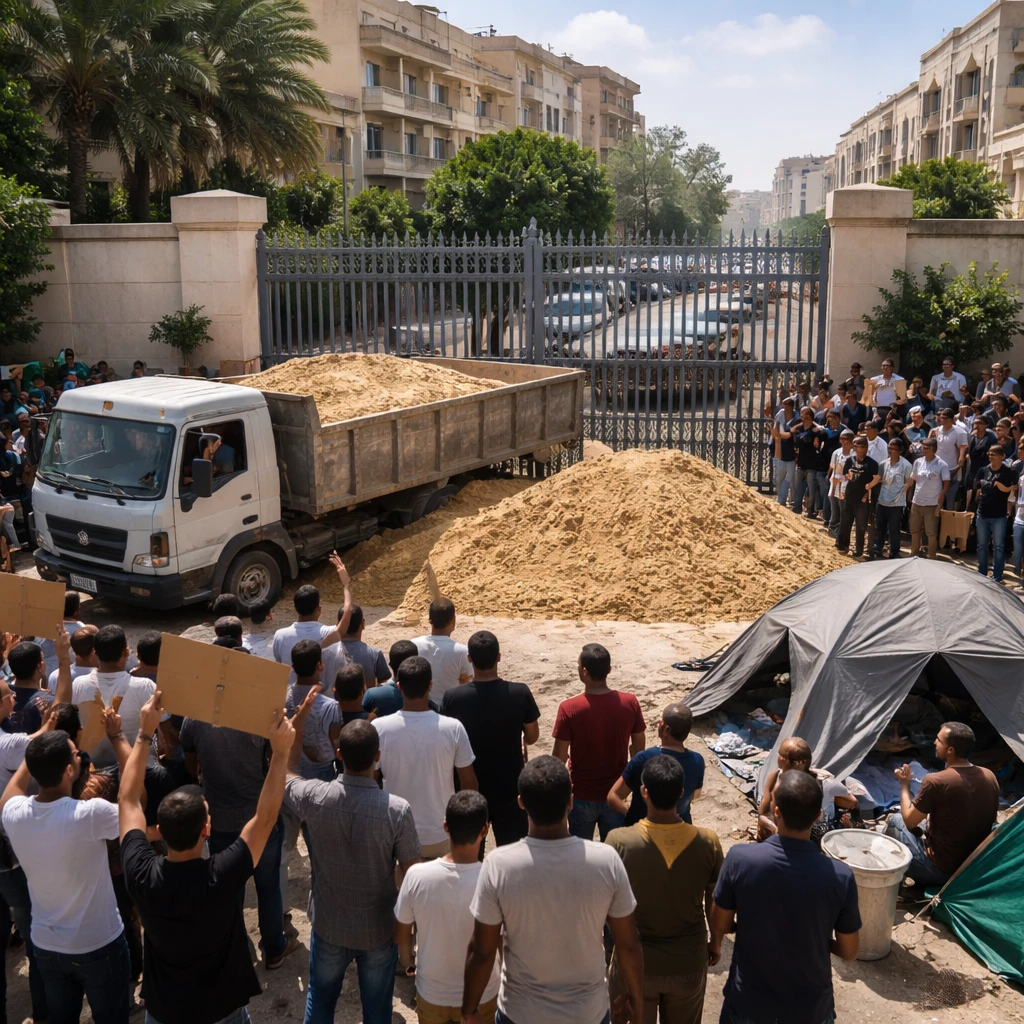
TRIPOLI, June 4 - Hundreds of Libyans gathered outside the U.N. refugee agency's principal office in Tripoli on Thursday, blocking access as part of a protest against migrants who have arrived in the country seeking employment or routes to Europe. The demonstration took place in the Sarraj neighbourhood and was described by witnesses as the biggest of several recent actions targeting migrants.
Since the NATO-backed uprising in 2011, Libya has served as a transit corridor for large numbers of migrants, many fleeing conflict and poverty in sub-Saharan Africa. The country also draws workers to its oil-dependent economy, where migrants frequently fill low-paid, menial roles - including cleaning and construction work - that many Libyans are reluctant to take.
Protesters assembled in front of UNHCR's main Tripoli office, chanting slogans such as "No, No to settlement, Libya only for Libyans" and "Get out of Libya, take them all out of Libya." Demonstrators set up tents and brought a truck loaded with sand to create a barrier, closing the main gate to the building. They shouted, "The Libyan people have said their word," and held signs stating "No to intruders in our country, take them out." A portion of the crowd later marched to the office of the U.N. mission in Libya.
UNHCR did not respond to a Reuters request for comment.
Libya's total population is estimated at about 7 million, and the U.N. estimates the country is hosting well over 900,000 migrants. One protester, Ahmad al-Ghasa, said he blamed migrants for break-ins and assaults and complained that some migrants sleep in the streets, adding: "These phenomena were not present in Libyan society before."
In a related development, Taher al-Baour, the acting foreign minister in Libya's internationally recognised government, told the Libya Alahrar channel in a television interview on Wednesday that there was no plan "to settle migrants in Libya." He said, "Libya is not capable of handling these numbers," and added that Libyans should not attribute political and security problems leading to higher migrant numbers to others.
Thursday's demonstration reflects growing local tensions over the visible presence of migrants and their perceived effects on public order and social conditions amid 15 years of conflict and political fragmentation in the North African country.